
 E-Paper



Gen Z is not saving chikankari, ajrakh, kundan for weddings: It is turning Indian clothes and jewellery into an everyday fashion statement

 Prefer HTon Google


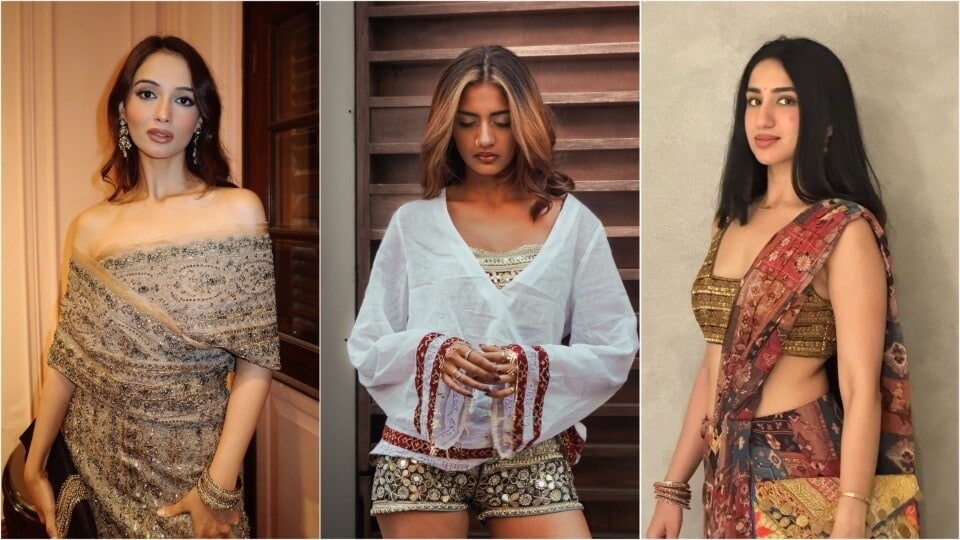
Chikankari with baggy jeans, jhumkas with blazer, kundan with bodycon dress. Young Indians no longer believe Indian wear needs a wedding or festival to be worn.
For most of us growing up, wearing ethnic clothes came with terms and conditions. You needed a reason. A wedding invite. A Diwali puja. You needed matching accessories, safety pins in bulk, and at least one relative saying, "Where at least something Indian." Also read | Jharkhand farmer Nishant Kerketta breaks internet with curated model-like outfits: Even Bhumi Pednekar and Shibani Dandekar are fans
Chikankari? Only for Eid. Ajrakh? Too much for daily wear. That kundan choker? Locked away until your friend's wedding. Gen Z has cancelled that rulebook. Scroll through any college campus, any coffee shop in Delhi, Mumbai or Bengaluru, or Instagram now and you'll see it.
A short olive kurti with baggy blue jeans and sneakers. Oxidised silver payals peeking from under chunky heels. A bodycon dress made desi with a kundan choker that should not work, but actually does. It's not costume. It's just daily wear.
To understand how heritage went from occasion wear to everyday wear, HT Lifestyle spoke to three women living this shift in real time: luxury content creator Antara Asthana, designer and entrepreneur Ria Mehta, co-founder of Nishorama, and content creator Arshia Kaur Vijan, founder of Tint Cosmetics. They all said the same thing in different words: we are done waiting for an occasion to wear desi clothes and accessories.
From occasion wear to everyday wear
"Gen Z has stopped waiting for an occasion to dress Indian," 22-year-old Ria Mehta, who built her brand around this thought, said. She added, "A short kurta with jeans or jhumkas with a basic tank doesn't necessarily feel 'traditional' to us. It's just personal style. We're taking pieces we grew up seeing around us and putting them into our everyday lives. Gen Z isn't bringing Indian wear back. We're removing the occasion attached to it."
For Antara Asthana, who lives in that luxe-meets-street lane, the shift comes from Gen Z just being better at fashion: "I think we're embracing that more now because Gen Z understands colour better. I've seen college students wear a red kurta with a pair of light blue washed jeans and style it with some junk jewellery. I love how they're playing with colour and mirror work too."
Arshia Kaur Vijan explained why it resonates beyond aesthetics: “Desi maximalism has been a trend for a while, and Gen Z is bringing Indian-ness back. They want to reconnect with their roots, but style Indian wear in their own, more modern way.”
Same craft, different context
Here's what Gen Z wants to tells you: chikankari, mulmul, and ajrakh were not meant to be difficult. The heavy, costume-y feeling only came when we forced them into lehenga-saree mode. Wear them differently, and they breathe differently. "Chikankari and Mulmul were never supposed to be costume-y unless it's a chikankari lehenga or saree," Antara pointed out, adding, "A beautiful chikankari georgette kurta with wide, straight pants or jeans is what makes it an everyday look."
Ria's design philosophy at Nishorama was built on this tweak. Don't change the craft; change the world around it. "For me, the craft doesn't need to change. The context around it does. Ajrakh can become a fitted top, mulmul can be a sheer layering piece, Chikankari can work with denim. At Nishorama, we try to keep the Indian craft intact but put it into silhouettes that a 20-year-old would genuinely reach for on a random Tuesday," she shared, adding, "The craft doesn't need to become modern. The way we wear it does."
Arshia agreed, and for her it's all about architecture: "It's all about the silhouette. A cross-back halter kurti or a modern cut can make traditional fabrics feel really fresh and wearable.”
The art of high-low is the whole point
If there's a starter pack for this new desi, it's contrast. The women doing it best are actively breaking the rules of how Indian pieces are supposed to be worn. Jhumkas aren't just for kurtas anymore. Kundan isn't just for sarees. "I once styled a Bodycon dress with an Indian kundan necklace and silver jhumkas with a black blazer," Antara said.
Her mantra: "Knowing what looks good on me and my body, trying to create something different with every look, and not following basic norms of fashion. Comfort does come first, but sometimes you need to step out of your comfort zone."
Ria lives for this exact clash. "I actually love when Indian pieces aren't styled exactly how they're 'supposed' to be," she said, adding, "Jhumkas with a blazer, a block-printed top with baggy denim, a kurta with sneakers. That contrast makes it feel young. I'd rather design pieces that can enter someone's existing wardrobe than expect them to build an entirely separate 'Indian wardrobe.' Indian wear shouldn't need its own section in your wardrobe."
"I'm actually quite traditional when it comes to Indian wear," Arshia added. "If I'm wearing Indian, I'll go all out with my bindis and jhumkas. With blazers or baggy jeans, I prefer keeping things classic," she shared.
So what makes a kurta feel like an everyday top?
It's small intentional design choices. "A belt styled with a kurta or a kaftan, pockets in a long kurta-dress, wearing silver Payal with jeans and a simple Chinese collar kurta," Antara said. Arshia broke down the pattern: "Shorter lengths, fitted silhouettes, cinched waists, crossback tie-ups and halter necks. Even tube kurtis can look incredibly cool and modern."
Ria added, "Honestly, sometimes it's as small as changing the length or neckline. Crop it slightly, add pockets, make the fit more flattering, make it easy to move in. The goal is to make you think 'cute top' before you think 'I need an occasion to wear this.'" As she said, “The shift happens when you see a cute top, not an outfit you need an occasion for.”
Is this just for social media?
I wanted to know: is this reclamation or just an Instagram trend? "I think it's a little bit of both and more than anything about comfort," Antara said, adding, "There is nothing political about loving your culture and embracing where you come from. I've worn Kurtis in London when I was doing a course there, and it was never about decolonising my wardrobe. It was always about feeling happy in what I wear and keeping a little bit of home with me."
Ria framed it as fashion independence: "We don't need the West to tell us when Indian fashion is cool. There's definitely a generation reconnecting with what we grew up around, but there's also this realisation of: why are we constantly looking West to tell us what is cool? We already have incredible textiles, prints, crafts, and silhouettes here. Wearing them every day becomes a way of saying, I don't need to look elsewhere for my fashion identity."
Arshia credited the Covid-19 lockdown. "I think lockdown played a big role. We had time to reconnect with our roots, appreciate handmade pieces, and discover things that felt more authentic and personal. Social media then made these styles cool and aspirational again... It started as a trend, but it's become something deeper. It's about being proud of where we come from," she shared.
"Silver jewellery was always cool," Antara reminded us. "Whether it was Rani Mukerji who styled it in the most iconic way with sarees or Deepika Padukone styling it with Kurtis in Piku, it was always iconic," she said. Ria agreed: "The jhumka didn't change. The outfit around it did. Social media exposed us to so many different ways of styling things we already had at home. Suddenly the oxidised jhumka your mum has owned forever is being worn with a white shirt and jeans, and it feels completely new."
Ultimately this isn't about fashion. It's about identity. Gen Z doesn't see heritage as dusty treasure preserved in a trunk. They see it as alive and perfect for college, work, coffee, and travel. Ria summed it up: “I'm not observing Gen Z from the outside. I'm part of it. I know we want to feel connected to culture without dressing exactly like the generation before us. Maybe the biggest shift is that 'Indian' and 'aspirational' no longer feel like two different fashion categories.”


Catch your daily dose of Fashion, Taylor Swift, Health, Festivals, Travel, Relationship, Recipe and all the other Latest Lifestyle News on Hindustan Times Website and APPs.


