
 E-Paper



Children with Down Syndrome: Doctor shares how parents can support them to develop social skills and make friends

 Prefer HTon Google


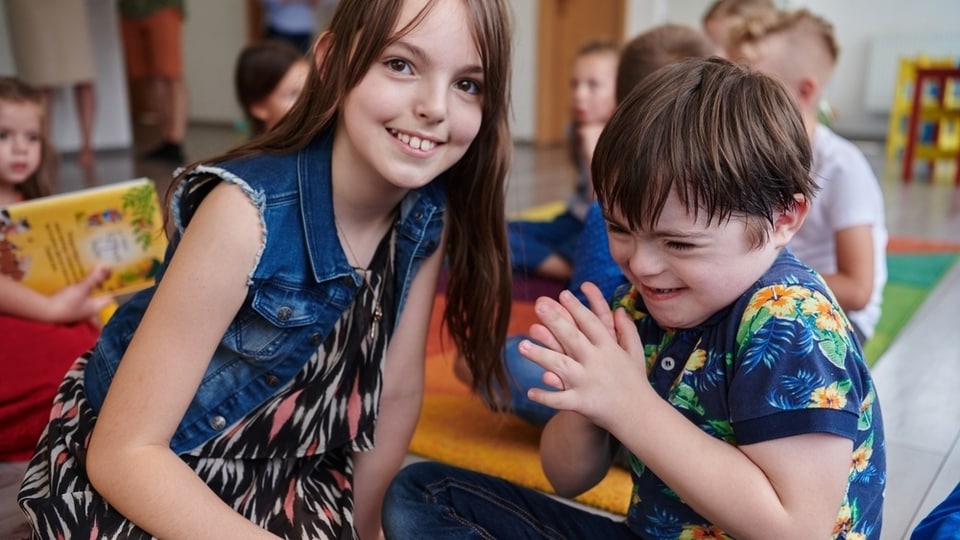
Children with Down Syndrome struggle with communication skills. Here's how parents, with proper techniques, can help them build social skills.
Recently on March 21, World Down Syndrome Day was observed. The Down Syndrome Awareness Week is from March 17 to March 23. The global awareness is centred towards advocating the rights of people with Down syndrome and spreading awareness about the challenges they face. One of their challenges is socialising.
Down syndrome is a genetic condition caused due to an extra chromosome 21, which impacts their cognitive development, learning abilities and communication skills. As a result, children with Down syndrome may struggle to socialize and understand social cues. But, with early support from parents, they can develop important social skills, build confidence, and form meaningful friendships.
In an interview with HT Lifestyle, Dr Rashmi Jeenakeri, Consultant Neonatal Pediatrician, Apollo Hospitals in Seshadripuram, shared nuanced reasons behind why Down syndrome affected children struggle with communications.
Reasons for difficulty in socialisation

Dr Jeenakeri said, “The most significant barrier to socialization is their difficulty in communication and language. These challenges make it harder for them to express themselves and engage in conversations. Additionally, children with Down syndrome often struggle to comprehend information, making it difficult for them to participate in conversations or social interactions. They may also find it challenging to recognize and respond to social cues. For instance, they may not know how to greet someone properly, leading others to perceive them as unresponsive."
Understanding social behaviour is one of the challenges for children with Down syndrome, as Dr Jeenakeri added, "Furthermore, they may struggle to distinguish between normal and abnormal social behaviours.Children with Down syndrome may have difficulty recognizing emotions in others. For example, if a mother is crying in front of them, they may struggle to comprehend her emotional state. Expressing emotions can also be a challenge, making it harder for them to connect with others socially.”
Dr Jeenakeri also pointed out that children with Down syndrome often experience anxiety, depression, and sensory sensitivities, making social interactions challenging.
How parents can help?

Parental support is required to help children with Down syndrome navigate social challenges, build confidence, and develop essential communication skills.
Dr Jeenakeri shared these tips for parents:
1. Early interventions: Early intervention is critical for any child with Down Syndrome. Key early interventions include physical therapy, which helps with motor development and improves their ability to engage in gestures like handshaking; occupational therapy which assists in developing skills for daily interactions; and speech and language therapy which supports communication development, allowing them to better express themselves and understand others.
2. Methods for enhancing social skills: Play is an essential tool in fostering social skills. It helps children with Down syndrome interact with peers and learn cooperation, sharing, and communication. Cooperative play, such as engaging in team activities like football or throw ball, teaches turn-taking, teamwork, and social norms. Role-playing allows children to practice real-life social situations, such as greeting a doctor or attending a birthday party, helping them prepare for interactions in a structured manner. This reduces anxiety and builds confidence in handling social situations.
3. Social inclusion: Social inclusion plays a vital role in the development of children with Down syndrome. This can be achieved through organizing play dates and group activities, encouraging participation in community events where others are educated about interacting with children with Down syndrome, enrolling them in support groups and recreational activities like sports events or disability-friendly programs, and enhancing communication skills by teaching both verbal and non-verbal ways to express themselves.
Lastly, Dr Jeenakeri concluded by sharing a hopeful message that children with Down syndrome can lead meaningful lives when given the right support. Many have gone on to become entrepreneurs, dance teachers, yoga instructors, musicians and more. With proper guidance and support from parents, they can achieve a fulfilling and productive adult life.
ALSO READ: Here's how doctors detect whether a baby will be born with down syndrome
Note to readers: This article is for informational purposes only and not a substitute for professional medical advice. Always seek the advice of your doctor with any questions about a medical condition.


Catch your daily dose of Fashion, Taylor Swift, Health, Festivals, Travel, Relationship, Recipe and all the other Latest Lifestyle News on Hindustan Times Website and APPs.


