
 E-Paper



Is wearing Bluetooth earphones same as placing a microwave on your head? Neurosurgeon breaks down myth of cancer risk

 Prefer HTon Google


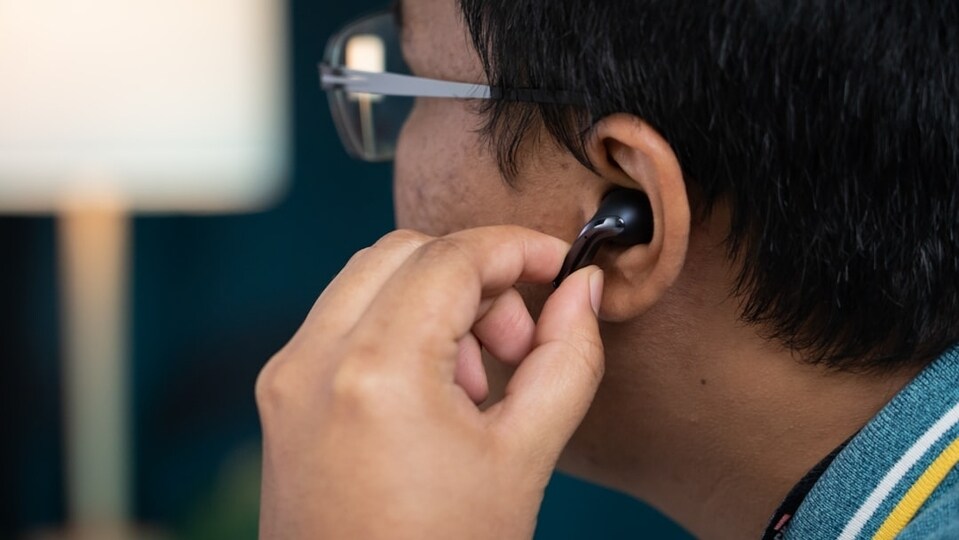
Does wearing Bluetooth earphones increase the risk of cancer due to radiation? Dr Jagannathan breaks down the claims.
Wireless earphones have become a daily essential for many, but questions around their long-term safety continue to spark concern. Claims suggesting that Bluetooth headsets emit harmful radiation - sometimes compared to placing a microwave near the head - have raised fears about a possible link to cancer. With conflicting information circulating, it’s worth examining what science actually says about wireless earphones and radiation exposure.
Dr Jay Jagannathan is a neurosurgeon at the Michigan Neurosurgery Institute, specialising in multidisciplinary neurosurgery and pain management, with over a decade of experience. In an Instagram video shared on October 13, the neurosurgeon responds to a clip of a man warning people to stop wearing AirPods, claiming that using them is equivalent to placing a microwave on your head, and breaks down why this comparison is misleading.
Do wireless earphones cause cancer?
Dr Jagannathan addresses the widely debated controversy around a possible link between wireless earphones and cancer, breaking it down through an evidence-based lens. He explains that the non-ionising radiation emitted by devices like AirPods is significantly lower than the radiation produced by mobile phones, which makes it relatively safer.
The neurosurgeon highlights, “So first of all, it's important to note that the amount of ionising radiation from radio frequency sources such as an iPod is significantly less than what you can find from the cell phone. The actual radiation exposure with AirPods are about 10 to 400 times less than what you get with a cell phone. So the logic is that if you see a link with cell phone usage, that same link would potentially apply to the AirPods as well.”
Evidence of cardiac cancer
Dr Jagannathan points to the most frequently cited research on the subject - a study conducted by the National Toxicology Program - which examined how rats responded physiologically to prolonged exposure to radiofrequency (RF) radiation and found an association with certain cardiac cancers. He adds that the findings were later reviewed by the US Food and Drug Administration, which concluded that there was no conclusive evidence to suggest the same effects occur in humans.
He explains, “Probably the most widely cited one is the NTP study, which was a study where they gave large doses of RF radiation to rats and they found that male rats had a slightly higher rate of certain types of cardiac cancers compared to female rats. Interestingly, the female rats did not see a significant difference. Now, interestingly, this study was looked at by the FDA about a year ago and it was found there's not enough data in the study to link anything between the radiation source and the link of cancer in humans. But nevertheless, they did find some increase in cardiac cancer. It's also important to note that in this study the amount of ionising radiation given was substantially less than what you would get from either a cell phone or an iPad.”
Evidence of thyroid nodules
Dr Jagannathan cites another study which suggests a link between Bluetooth headset usage and non-cancerous thyroid nodules in some patients. He elaborates, “Another emergent study on thyroid nodules, which was published in 2024, has shown that exposure to certain types of radiation particularly involving cell phones may be linked to the presence of non-cancerous thyroid nodules in certain types of patients. Again, these are non-cancerous nodules, so not enough links there to show cancer.”
The neurosurgeon concludes, “So, the logic is that AirPods emit substantially less radiation than cell phones. So, given that there's not enough data to show a link between cell phones and cancer, there shouldn't be a valid relationship between AirPod use and cancer.”
Note to readers: This article is for informational purposes only and not a substitute for professional medical advice. It is based on user-generated content from social media. HT.com has not independently verified the claims and does not endorse them.


Catch your daily dose of Fashion, Taylor Swift, Health, Festivals, Travel, Relationship, Recipe and all the other Latest Lifestyle News on Hindustan Times Website and APPs.


