
 E-Paper



Partial solar eclipse 2022: Health myths associated with eclipse that are not true

 Prefer HTon Google


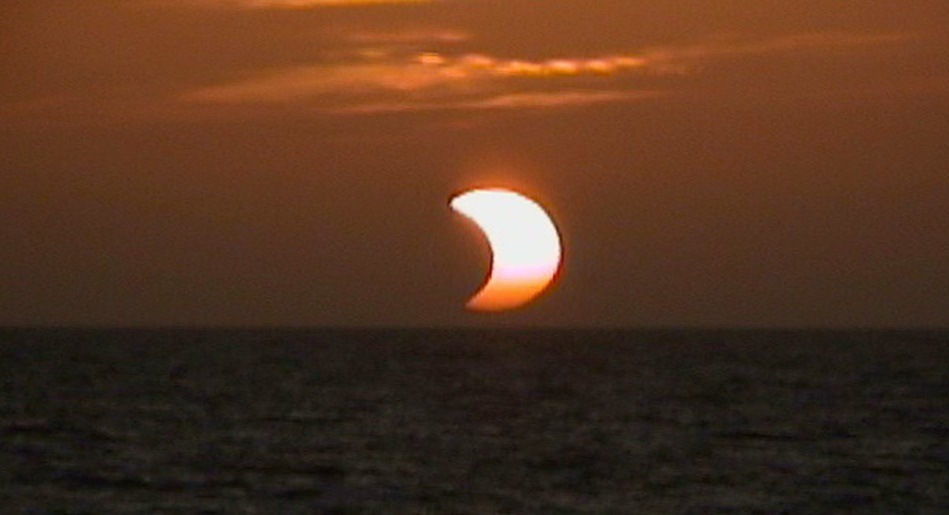
Partial solar eclipse 2022: Eclipses are awe-inspiring and drastically change the appearance of the Sun and the moon, which has also given birth to several myths around the celestial events.
Partial solar eclipse 2022: April 30 will mark the first solar eclipse of 2022, although it will be a partial one as The Sun, moon and the Earth will not be perfectly aligned during the event. Parts of southern South America, Antarctica, and the Pacific and Southern Oceans will witness the celestial event just before and during sunset, but it will not be visible in India. A solar eclipse occurs when moon comes between the Sun and Earth, casting a shadow on Earth. However a partial eclipse will be seen on Saturday which will give the Sun a crescent shape.
Eclipses are awe-inspiring and drastically change the appearance of the Sun and the moon, which has also given birth to several myths around the celestial events. There are old beliefs that a solar eclipse emits harmful radiations that can spoil food, cause blindness or cause mood swings. People also regard them inauspicious events which is not true.
Here are some of the popular myths associated with solar eclipse busted by NASA (National Aeronautics and Space Administration) scientists and doctors.
Myth 1: Solar eclipse can cause blindness
Fact: Scientists at NASA say, during a total solar eclipse when the disk of the moon fully covers the sun, the brilliant corona emits only electromagnetic radiation, though sometimes with a greenish hue. According to the scientists this radiation is million times fainter than the light from the sun itself and cannot cause blindness. They however warn that watching a glimpse of the solar surface could cause retinal damage, though the typical human instinctual response is to quickly look away before any severe damage has actually occurred.
Myth 2: Solar eclipse can cause anxiety, mood swings
Fact: According to NASA, the celestial event has terrified people for centuries. Some ancient cultures believed a dragon was devouring the sun while others thought it was a sign of a god’s anger. As per the scientists, people might react with a primitive fear with regards to the appearance of the celestial event.
"Solar eclipse may create a range of emotions for us as for many years it was a mystery for us for thousands of years and the fears and anxiety associated with it could cause some kind of alteration in our behaviours," says Dr Sonal Anand, Psychiatrist, Wockhardt Hospital, Mumbai.
Myth 3: Solar eclipse is harmful for pregnant women
Fact: Scientists at US space agency NASA say this myth may have rooted from the previous false idea that harmful radiations are emitted during a total solar eclipse. They confirm that solar eclipse is entirely harmless for pregnant women and would not harm the developing fetus.
Myth 4: It is not safe to eat or drink during solar eclipse
Fact: There is myth that solar eclipse produces harmful radiation that poisons food and one should not eat during the event. Scientists at NASA rubbish this and say that someone might have accidentally got food poisoned and related it to eclipse which is not true.


