
 E-Paper



Rosemary water vs rice water: Which natural rinse actually reduces hair fall and supports healthier regrowth?

 Prefer HTon Google


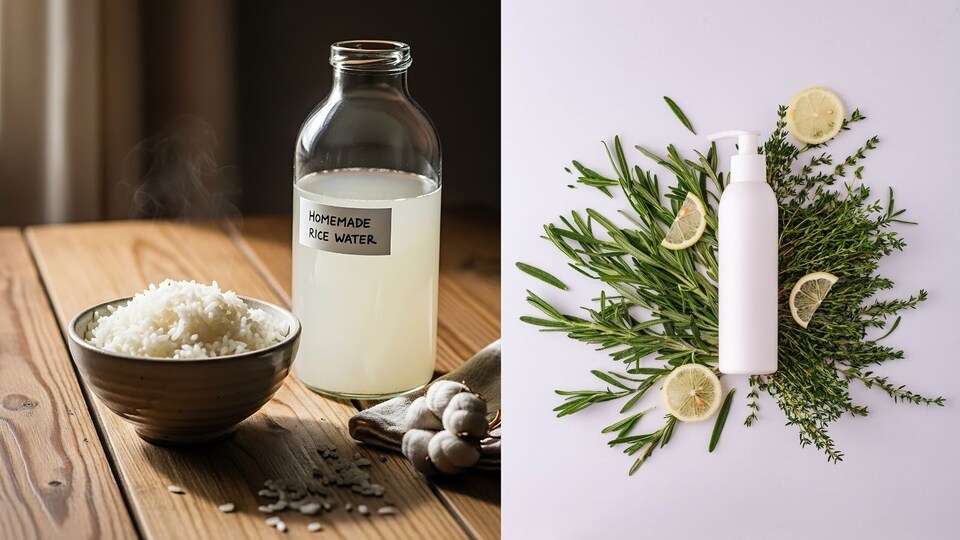
Learn how rosemary water and rice water work differently as a natural hair rinse so you can choose the one that best supports stronger, fuller hair.
If you've been scrolling through hair-care tips online, you've probably noticed a wave of DIY rinses promising smoother strands and reduced fall, without pricey treatments or complicated routines. Among all the home remedies gaining attention, two consistently appear in everyone's feed: rosemary water and rice water. Both are simple, affordable, and easy to prepare, which is why they've become favourites for anyone hoping to manage fall and support healthier growth. On one side, you have rosemary water, often highlighted for its ability to support better scalp circulation. On the other hand, rice water, a long-standing tradition in several Asian cultures, is known for coating the hair with nutrients that improve its feel and resilience. But here's the real question most people want answered: Which one truly works better when the main aim is reducing hair fall and encouraging stronger hair growth?
Dermatologist Dr Shefali Mahlawat from the NIIMS Medical College and Hospital, tells Health Shots that when deciding between rosemary water and rice water for hair fall, the appropriate option is circumstantial to the nature of the hair fall.
Let's get a clear breakdown of how each rinse works, the key compounds behind their benefits, and practical guidance on choosing the option that aligns best with your hair concerns.
Rosemary water: The minoxidil alternative
Active Component: Rosemary leaves contain carnosic acid, a bioactive compound studied in the Journal of Planta Medica for its scalp-supporting effects.
Benefits of rosemary water to reduce hair fall
1. Better scalp circulation: Carnosic acid in rosemary water helps widen tiny blood vessels in the scalp. This enables improved nutrient delivery to hair roots, supporting stronger strands and reducing daily shedding.
2. Possible DHT control: A report by Phytotherapy Research suggests rosemary extract may help slow the activity of DHT, a hormone linked to thinning in androgen-related hair fall. By limiting DHT action around the follicle, the roots remain stronger for an extended period.
Pros:
- Targets the root level, not just the hair length
- Shows promising regrowth support in early research
- Suitable for long-term maintenance
Cons:
It can cause mild irritation if used in high concentrations
- Needs consistent use for visible improvement
Actionable Tip: Use rosemary water as a leave-in scalp tonic 3–4 times a week on clean, dry hair for best results.
Rice water: The strength and shine booster
Rice water has earned its reputation as a traditional hair remedy because it delivers substantial conditioning benefits rather than directly influencing follicle activity. Its key components, inositol and amino acids, play a significant role in internal hair repair and surface smoothness, Dr Shareefa Chause, Dermatologist, tells HealthShots.
Active components:
- Inositol: A carbohydrate that stays bonded to the hair shaft even after rinsing.
- Amino Acids: Naturally occurring building blocks that support keratin integrity.
Benefits of rice water for hair fall control
1. Reduced Breakage: Inositol penetrates damaged hair, improving elasticity and reducing mechanical breakage, a major contributor to day-to-day hair fall, explains Dr Shareefa Chause
2. Shine and Smoothness: Amino acids help reinforce the outer cuticle layer, resulting in smoother hair and reduced friction-related damage.
Pros:
Strengthens weak strands, reduces breakage, improves texture, and can create the appearance of fuller hair over time.
Cons:
Its high starch and protein content may lead to stiffness or dryness (“protein overload”), especially for low-porosity hair, if used too often.
Actionable tip:
Use as a post-shampoo rinse, leave it on for 5–10 minutes, then follow with a conditioner to balance moisture.
Rosemary water vs rice water:
| FEATURE | ROSEMARY WATER | RICE WATER |
| Primary Mechanism | Improves scalp circulation; may slow DHT activity | Strengthens strands; repairs damage |
| Key Active Ingredient | Carnosoic Acid | Inositol, Amino |
| Effect on Breakage | Indirect; supports new growth | Direct; reduces breakage and shedding |
| Recommended Frequency | Daily (as a leave-in tonic) | 1–2 times weekly (rinse-out) |
| Ideal For | Thinning, sparse areas, slow regrowth | Brittle, frizzy, heat-damaged hair |
| For Hairfall | Targets scalp-related hair fall more directly | It is better for breakage-related fall |
FAQ’s: Rosemary water vs Rice water for hair fall
Which option reduces hair fall more effectively?
Rosemary water is more effective for addressing true hair loss, as it supports circulation and may help slow DHT-related thinning.
Is rice water good for reducing breakage?
Yes. Inositol and amino acids strengthen strands, helping to minimise breakage-related shedding.
Can I use both rosemary and rice water together?
Yes, but alternate them. Use rosemary as a leave-in treatment and rice water as a rinse to help prevent stiffness.
How long does it take to see results?
Most people notice a reduction in falls and an improvement in texture within 6–8 weeks of regular use.
Note to readers: This article is for informational purposes only and not a substitute for professional medical advice. Always seek the advice of your doctor with any questions about a medical condition.
Catch your daily dose of Fashion, Taylor Swift, Health, Festivals, Travel, Relationship, Recipe and all the other Latest Lifestyle News on Hindustan Times Website and APPs.


