
 E-Paper



Lok Sabha election 2019: King-maker Ajit Jogi not to contest polls, leaves all seats for BSP
Lok Sabha election 2019: Ajit Jogi, who left the Congress in 2015 to float his own party, is synonymous with Chhattisgarh politics as no election in the state is said to be complete without him. And his decision will also make it the first ever election since the state was created in 2000 without the CJC leader as an electoral contender.

 Prefer HTon Google


The Lok Sabha election in Chhattisgarh would be a bipolar contest between the Congress and the BJP this year with the former chief minister and Chhattisgarh Janata Congress (CJC) chief Ajit Jogi all set to withdraw his party from the forthcoming polls.
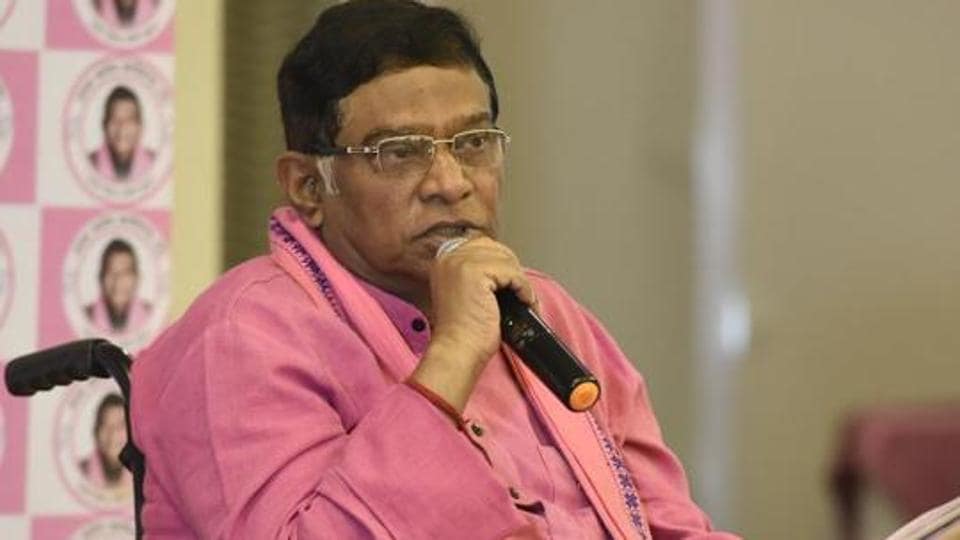
Ajit Jogi, who left the Congress in 2015 to float his own party, is synonymous with Chhattisgarh politics as no election in the state is said to be complete without him. And his decision will also make it the first ever election since the state was created in 2000 without the CJC leader as an electoral contender.
The Congress contested the 2004 Lok Sabha election under his leadership even though people voted him as the chief minister in the assembly elections of December 2003 after his three years at the helm.
In 2009, Jogi’s wife Renu Jogi contested on a Congress ticket from Bilaspur and lost by over 200,000 votes. Five years later, Jogi himself entered the national poll arena contesting from Mahasamund seat and lost by a slender margin of 1,217 votes to the BJP’s Chandu Lal Sahu.
Read more | Lok Sabha elections 2019: All about Chhattisgarh
Before the 2018 assembly election, Jogi presented himself as an alternative to the Congress and the Bharatiya Janata Party by entering into an alliance with Mayawati’s Bahujan Samaj Party.
“I thought I will be the king-maker as I estimated a hung assembly and our alliance (BSP-CJC) would win about 15 assembly seats,” Jogi said.
That did not happen as the alliance could win only seven seats and Congress got a two-thirds majority by winning 68 of the 90 assembly seats. The ruling BJP was decimated and could only win 15.
Of the five seats Ajit Jogi’s party got, the Marwai constituency was won by him and Kota seat by his wife Renu Jogi. His daughter-in-law Richa Jogi, who contested on a BSP ticket, lost.
Also read | Cricketer Gautam Gambhir pads up for political innings with BJP
Jogi said well before the assembly elections he knew there was a “strong” undercurrent against the BJP and that his party had a formidable chance. But, the Congress played the regionalism and Chhattisgarhi pride cards, saying that the BJP was a party of “outsiders”, also his main poll plank. This prevented preventing anti-incumbency vote drifting to his alliance.
“People trusted Bhupesh Bhagel more than me,” said the former Indian Administrative Service (IAS) officer, who joined politics on the request of former prime minister Rajiv Gandhi in 1986.
Political experts said Jogi helped the Congress as the grand old party became more acceptable to the influential other backward classes, who constitute about 54% of the state’s population, and had backed the BJP in the past.
Also read | Controversy over Congress candidate’s Sanatan Sanstha link
Jogi said his alliance got about 15% of the vote share, which is a “solid base” for future assembly elections but not for the Lok Sabha polls.
“I don’t have the resources to contest the Lok Sabha (polls). People are asking me to contest from the Korba Lok Sabha seat but I have not decided,” he said, adding that he wants to focus on building his party as a strong regional force in the future.
His alliance partner for the assembly polls, the BSP, has, however, announced six candidates for the Lok Sabha election without consulting him. Jogi accepted he was not in the loop and said he will speak with Mayawati in the near future. He has also not decided whether he will campaign for the BSP.
Also read | Over 20 lakh first-time voters in Maharashtra not yet registered
Chhattisgarh, which has 11 Lok Sabha seats, goes to polls in three phases. In the first phase, polling will be held in one constituency on April 11. In phase two, voting will be held in three seats on April 18 and in phase three, seven constituencies will vote on April 23.
Most political commentators in Chhattisgarh predict an end of the road for the maverick politician, who formed the shouting brigade of the Congress in the Rajya Sabha against VP Singh when allegations of irregularities in the Bofors gun deal was raging in Parliament.
Raipur-based political analyst Ashok Tomar said the 2018 assembly election has shown that Ajit Jogi’s pockets of influence are limited to his Satnami caste.
“People will never forget his three-year misrule and that is a reason for his downfall. But, in politics there is always a possibility of a comeback,” he said.
Also read | BJP announces names of 10 Lok Sabha candidates, 99 assembly nominees in Odisha


