E-Paper



Violence over PRC could pose an obstacle for BJP to retain power in Arunachal
Voters in the easternmost state had elected a Congress government to power in 2014. But in the next few years, the state has seen four different chief ministers and also a brief period of President’s rule.

 Prefer HTon Google


Politics in no other state in the northeast is as unpredictable as in Arunachal Pradesh. The past five years, since the last assembly polls, are proof of that.
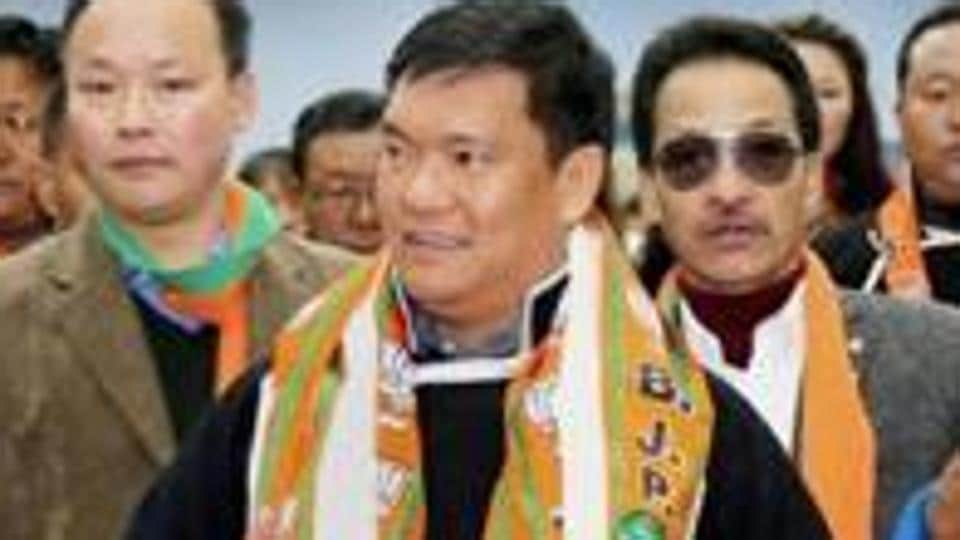
Voters in the easternmost state had elected a Congress government to power in 2014. But in the next few years, the state has seen four different chief ministers and also a brief period of President’s rule.
Pema Khandu took oath as chief minister of a Congress government in July 2016 after the Supreme Court intervened and forced his predecessor to quit.
But within two months, he switched sides and joined the People’s Party of Arunachal along with majority of MLAs. In less than four months, on the last day of 2016, Khandu and his supporters joined the BJP.
The past two years witnessed relative stability and BJP was expecting another term in office without much problem. “There is no major hurdle as of now for the BJP in the coming elections. We have a Mission 60+2 and hope to win all 60 seats in the assembly along with the two LS seats,” BJP state unit chief Tapir Gao said in January.
But the scenario changed drastically towards the end of February when protests broke out against granting of permanent citizenship certificates (PRC) to nearly 30,000 people from six communities and led to widespread violence that claimed three lives and left many injured.
As in the case of CAB, indigenous groups in Arunachal Pradesh felt that if the six communities, who have been residing in Changland and Namsai districts for several decades, are given PRC, it would adversely impact the ‘locals’.
The scale of the protests forced the BJP-led government to issue a statement stressing that the PRC would “never” be taken up again. But the resentment against it and towards BJP for initiating the move, could affect the party.
“Both national parties mishandled the issue, Congress supported granting of PRC and BJP began the process, without taking public sentiment into account. This will hurt their chances in both Lok Sabha and assembly elections and we will benefit,” said Kamen Ringu, chairman of People’s Party of Arunachal (PPA).
The PPA, which is the biggest regional outfit in the state, lost seven MLAs to National People’s Party and its last two legislators to Congress last year. The party quit the BJP-led North East Democratic Alliance (NEDA), last month.
“This time it will be a contest between parties and personalities instead of other issues. In Arunachal Pradesh voters focus more on candidates than the party they are representing,” said Ninong Ering, sitting Congress MP Arunachal East seat.