
 E-Paper



Protests against Citizenship Amendment Act continue in UP
The CAA grants citizenship to persecuted religious minorities from Pakistan, Bangladesh and Afghanistan who sought refugee before 2015. Opposition parties and several minority groups claim the law is unconstitutional as it grants citizenship on the basis of religion.

 Prefer HTon Google


Muslims in major Uttar Pradesh cities shut their shops and staged protest marches on Friday demanding the scrapping of the newly enacted Citizenship Amendment Act (CAA). The state government detained several leaders across the state and suspended internet services in Aligarh, which remains the epicenter of anti-CAA agitations in India’s biggest state.
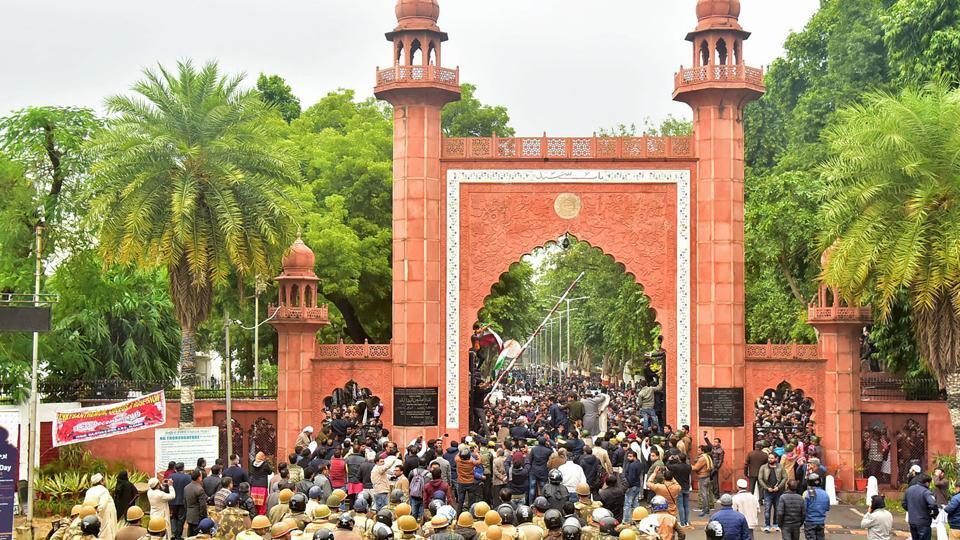
Security was tightened throughout Aligarh city where the students and teachers of Aligarh Muslim University (AMU) marched in protest. The Friday prayers, however, were performed peacefully.
“Internet services were suspended from midnight of Thursday and remained suspended through the day on Friday in the district,” stated Aligarh City SP Abhishek.
In Bareilly, shops remained closed in the old city areas and several Muslim religious and political organisations marched in protest demanding Centre repealed the act or be “ready to face the consequences”.
Despite rains, thousands of activists of the Ittehad-e-Millat Council (IMC), All India Majslis-e-Ittehadul Muslimeen (AIMIM) and Musalman-e-Bareilly held demonstrations but were prevented from taking out a march by the district administration, which also detained Mufti Rahat, the chief of Musalman-e-Bareilly.
Protests were also held in the old city area in Lucknow on the call of All India Majlis-e-Ittehadul Muslimeen.
In Kanpur, Muslims wore black bands during Friday prayers and demonstrated outside mosques before taking to the streets in no less than 15 processions.
Several memorandums, requesting the Centre to roll back the new law alleging it discriminated against the community, were submitted to the additional district magistrate in Kanpur.
The CAA grants citizenship to persecuted religious minorities from Pakistan, Bangladesh and Afghanistan who sought refugee before 2015. Opposition parties and several minority groups claim the law is unconstitutional as it grants citizenship on the basis of religion and excludes Muslims from its purview. The Centre has refuted the allegations.


