
 E-Paper



UP opens up two nationalised routes for private buses
The corporation’s employees, officers and pensioners suspect the move as a larger conspiracy to gradually finish the corporation in favour of private operators


The Uttar Pradesh (UP) government has opened two of its prime nationalised routes for running private buses for the first time.
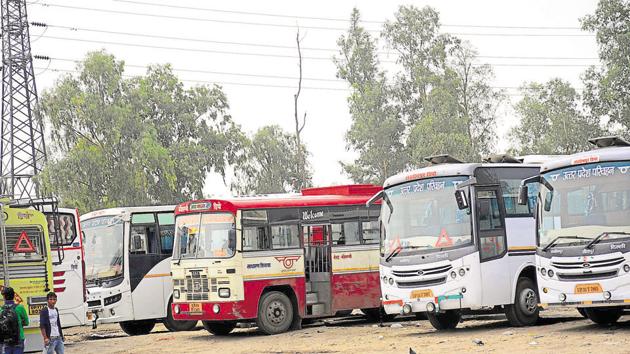
The move is being seen as the beginning of the end of the state-owned UP State Road Transport Corporation’s (UPSRTC) decades-old monopoly on nationalised routes.
The state transport authority (STA) is likely to invite applications soon and grant stage carriage permits to private players to operate their buses on two prime nationalised routes -- Lucknow-Gorakhpur (via Ayodhya-Vikramjot-Basti) and Lucknow-Agra-Noida Expressway (via Ring Road Kuberpur (Agra)-Pari Chowk).
The UP government had issued separate notifications for the two routes in September, which led to discontent among UPSRTC employees’ unions.
Also read: UPSRTC initiates intra-state operations from Ghaziabad
Rajesh Kumar Singh, principal secretary, transport, UP, said the state government had taken a decision to open the two nationalised routes for private buses in a bid to unleash healthy competition between UPSRTC authorities and private operators. The move would benefit passengers, who could avail more options, better services and lower fares, he added.
“We are not preventing UPSRTC authorities from operating on these routes. We are facilitating parallel operations of private buses for healthy competition and UPSRTC employees must accept the healthy competition,” he said.
Singh said the government would open more nationalised routes for private operators in the near future.
However, UPSRTC employees, officers and pensioners suspect that move as a part of a larger conspiracy to decimate the state-run corporation in favour of private operators.
The aggrieved state transport authority is planning to form a joint forum to launch a statewide agitation to demand rollback of the decision.
“The decision to open two nationalised routes for private operators has made all of us suspicious of the state government’s intention. We will soon chalk out a joint strategy to strike back,” said Tej Bahadur Sharma, a veteran union leader of UPSRTC employees.
An official claimed the UPSRTC and similar other state transport undertakings (STUs) were created under a Central government’s Act, which gave them exclusive rights to operate on nationalised routes.
“The state government has no legal authority to tamper with the sanctity of nationalised routes,” he said. “The total length of nationalised routes in UP is less than 7% of the total stretch for vehicular movements. Private operators have a free run on 93% of the routes,” he added.
Sources claimed the state government’s intention was to issue permits to private operators of neighbouring states such as Bihar, Jharkhand and Chhattisgarh. The move will connect bus operators directly to the national capital via UP.
“This is not a fair deal. If connectivity is the issue, then UPSRTC authorities can think of operating private buses under an inter-state agreement that is already in place,” they said.
Private buses operate on most nationalised routes in UP, including on the two prime ones opened by the state government, albeit illegally.
Transporters obtain contract carriage permits for diverse purposes such as transporting people taking part in a wedding, tourists and pilgrims.
“Though they obtain contract carriage permits, they run regular bus services illegally,” said a transport official.
“The state government will get to earn more revenue following its decision to grant carriage permits to private transporters to operate their buses on the two prime nationalised routes,” he said.
Though all erstwhile state governments had made similar efforts, stiff opposition from militant UPSRTC employees had proved to be the major deterrent, he added.


