
 E-Paper



Could you remember everything at a memory championship?

 Prefer HTon Google


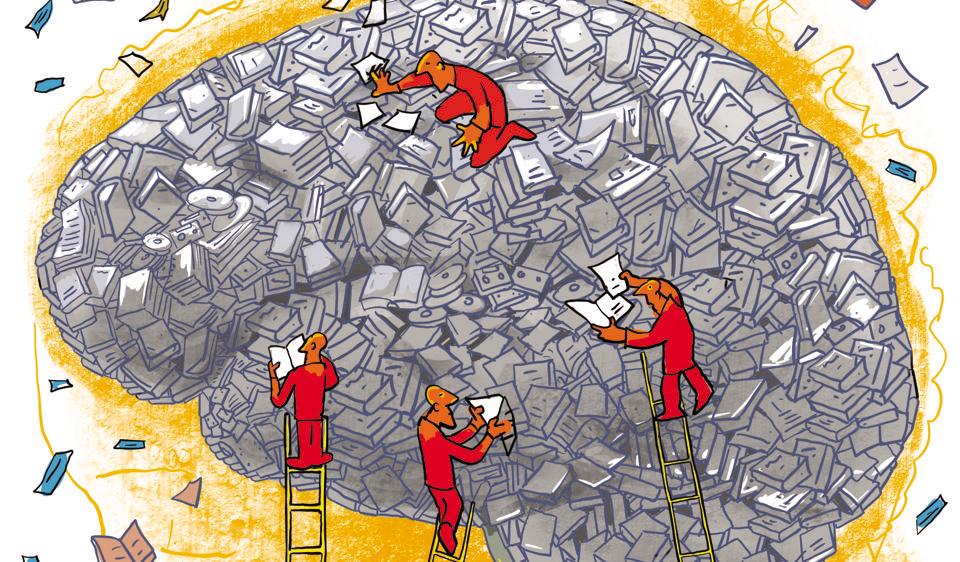
New research is changing how we understand mind and recollection. But at national and global events of total recall, it’s all about speedy storage and retrieval.
It’s boom time in memory research. Neuroscientists now know that the mind is not a filing cabinet, as commonly envisioned. The memories we make don’t get indexed and arranged by date and theme. Memories, instead, are tangible — tiny data-laden protein bridges, connecting to other bridges.
So remembering isn’t a matter of pulling up a file. Every time we recall something, we’re mentally bridge-hopping in order to recreate the moment. Which gets modified ever-so-slightly each time — like an image file is altered every time it is re-saved.
None of this matters to those competing in the 29th World Memory Championship, held online from December 18 to 20, and the Indian National Open Online Memory Championship, on December 27.
The human brain can hold a list of about seven items in the short term. And normal people attempt to retain only what they deem important – your PIN, not your OTP; mum’s birthday, not the exact date of the Second Battle of Panipat; your first kiss, not the last place you left your keys.
These mental athletes, on the other hand, will be expected to recall sequences of abstract images, numbers, binary codes, playing cards, words, dates, events and faces. To do this, they’ll use every trick they can: VIBGYOR-type mnemonics, visualisation techniques, numbers verbalised as new sounds, and the turning of abstract data into an outrageous personal story. Forget cabinets and documents. This is the mind as a flash drive.
Meet the participants
“The idea of polishing your focus to learn and remember so much on the spot is amazing,” says Class 11 student Anshul Kaushal, 16. He’s been preparing for three months to compete in his first national student championship. “There will be sentences or questions with 10 things that will need remembering. I’m hoping to break them down and use my personal associations to learn them.”
About 2,000 people will participate across four age categories at the national level. For the World Championships, participants will compete online in their own time zones, across three days.
At the championships, as in life, no two people will learn and remember in the same way. It’s how quickly they can form and decode their mental connections that will keep them in the running for the prestige of the national titles and rewards that range from memory-training tutorials to the grand prize of Rs 5 lakh.
Homemaker Ritika Gupta, 38, has practised for six months for the nationals, with coaching from her son Divyam, 16, and revision with her daughter Radhika, 12. “To run a home, just like it is when you manage anything, you must remember schedules and everyone’s preferences,” she says. “I’m trying out because stay-at-home mums tend to get left behind. I’m fascinated by how you can train your mind to remember.”
Lessons in learning
And yet, inexplicably, the mind often draws a blank when you need it most. The harder you try to remember a word or a fact you know you know, the further it seems to recede.
Cognition research finds that memory loss is a graceful degradation — we don’t lose chunks so much as have it fade gently from the corners. In mice, at least, it’s now possible to catch a new thought being formed, and chemically erase it so it’s like it was never there.
What we forget defines us too. For chemistry teacher John Louis, 60, who became India’s first Grandmaster of Memory when he ranked 19 in the World Championships in 2002, all memory-making is useless if you can’t use it in school or in life. “What is the point of memorising the order of a deck of cards if you can’t use it to get better at maths?” he says.
He’s self-taught. Louis did well in school, but realised he studied differently only when, as a teacher, he saw students’ grades improve after he taught them his shortcuts. When his wife, Poulin, suggested he try out for the Championship in 2001, he did it “just for fun” but ended up winning.
In the years since, dedicated coaching has mushroomed, there are regional tournaments and rankings. “I support the idea of championships. They’re good ways to test how you’ve done,” he says. “But most coaches have no qualifications. They don’t teach kids how to learn on their own. If your aim is academic excellence, you don’t need a contest.”
He stopped competing a decade ago to focus on educating students. He isn’t getting rusty, but his relationship with recollection has changed. “I’d find it hard to forgive people, when I’d remember their every mistake,” he says. “But with age has come patience and acceptance. After all, we are who we are because of our memories.”


