
 E-Paper



Ganesh Chaturthi 2018: Ganpati visarjan date, significance, procedure and mahurat timings


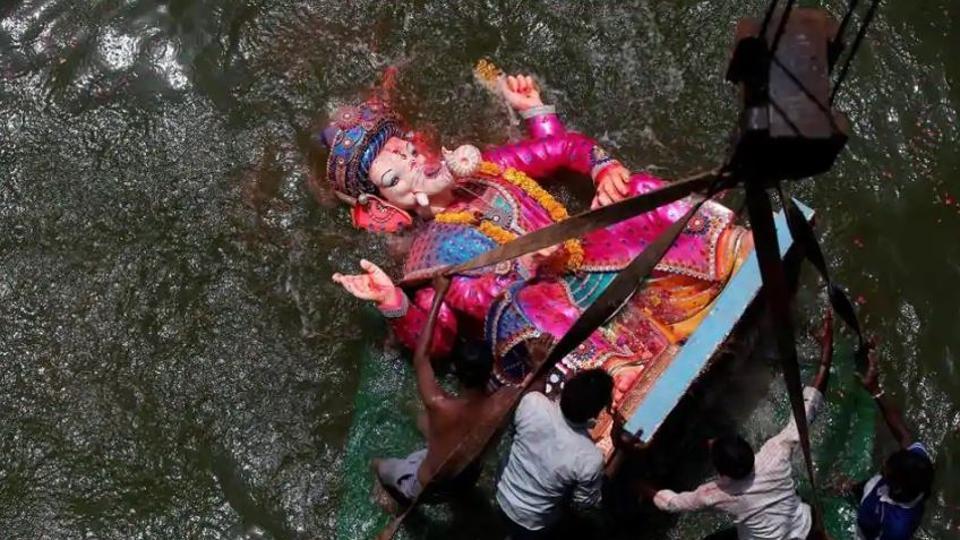
Before immersing Lord Ganpati’s, it is important to do aarti and chant some mantras. Modaks and other sweets are also offered to the deity and distributed amongst his disciples.
The 10-day long Ganesh Chaturthi celebrations ends on September 23, when devotees shall immerse Ganesha’s idol, signifying the departure of his physical form.
On Ganesh chaturthi, devotees of Lord Ganesha had brought idols home with a lot of fervor. Ganesh isthapna signifies Lord Ganesha coming to the home’s of his devotees to bless them, after leaving Mount Kailasa.
Significance of Ganpati visarjan
Lord Ganesh is supposed to bring luck, considered as the harbinger of luck, victory and success. On the 11th day, devotees immerse his idol in water, as it is believe that this is when he leaves their houses for Mount Kailasa, taking all the ill luck of his disciples with himself.

Ganpati visarjan procedure
Before immersing Lord Ganpati’s, it is important to do aarti and chant some mantras. Modaks and other sweets are also offered to the deity and distributed amongst his disciples.
The Ganesh visarjan begins with Uttaranga pooja which involves oil lamps, fragrance, food, incense and flowers.
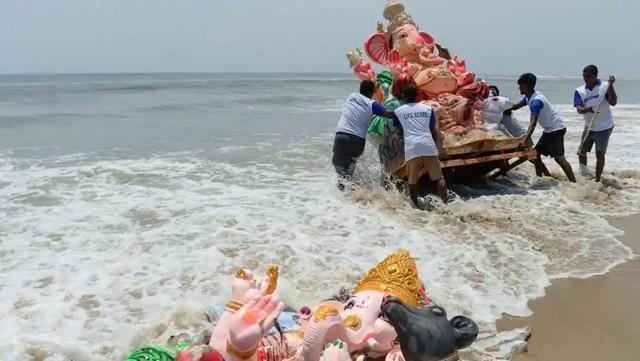
Some curd is placed on Ganesha’s palm, signifying that they want him to visit them again next year. Coconut is put on a red cloth and jiggery along with five different grains are placed inside the cloth, which is then tied around his hand. This is the food which is prepared for his journey back home.
The idol is then taken to the place of immersion while chanting ‘Ganpati Bappa Moriya’. After immersion, devotees offer final prayers for his journey.
Follow @htlifeandstyle for more


