
 E-Paper



Lunar Eclipse 2020: Here’s all you need to know about the celestial event

 Prefer HTon Google


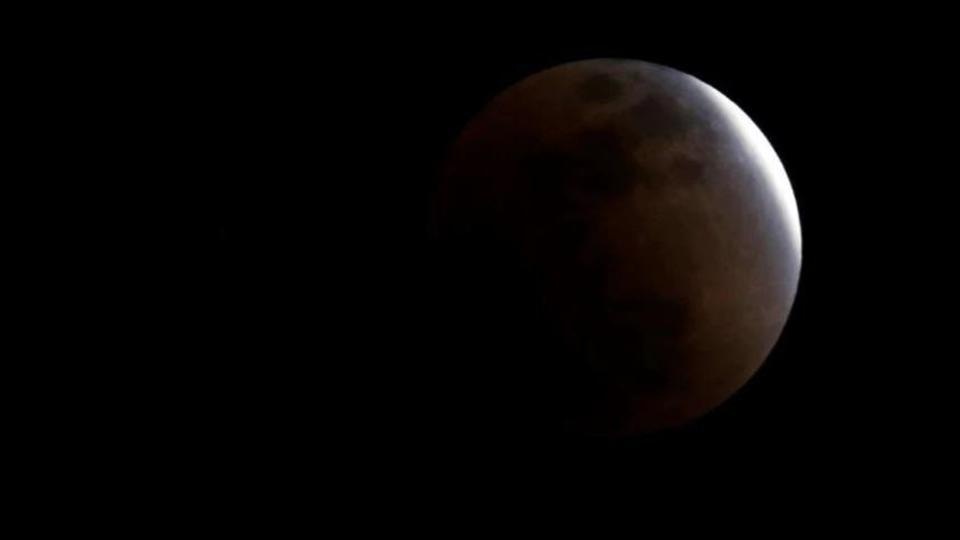
On January 10, India will see the first of four penumbral lunar eclipses of 2020.
On January 10, India will see the first of four penumbral lunar eclipses of 2020. The penumbral lunar eclipse will be also visible from Europe, Africa, Asia, and Australia. It will last 4 hours and five minutes.
Lunar eclipses occur when Earth’s shadow blocks the sun’s light. There are three types of lunar eclipses - total, partial and penumbral. A penumbral lunar eclipse occurs when the sun, Earth, and the moon are imperfectly aligned. When this happens, the Earth blocks some of the sun’s light from directly reaching the Moon’s surface and covers all or part of the Moon with the outer part of its shadow, also known as the penumbra.
Since the penumbra is much fainter than the dark core of the Earth’s shadow, it is often difficult to tell apart from a normal full moon.
The penumbral lunar eclipse of January 2020, which will take place between the nights of January 10-11, it will not be very distinguishable from a full moon and will be completely visible to almost all Indian cities. The lunar eclipse will last from 10.37 pm to 2.42 am Indian Standard Time (IST)
The moon often appears grey because of this and is called a “Wolf Moon” eclipse as well. According to Space.com, the first of the four penumbral lunar eclipses of 2020, will not be visible in the United States, central Canada and a majority of South America. The other penumbral lunar eclipses will take place on June 5, July 5 and November 30, respectively.
The next total lunar eclipse will occur on May 26, 2021 and will be visible from eastern Asia, Australia, the Pacific Ocean and the Americas.
This will be followed by a partial lunar eclipse on November 19, 2021 and will be visible from North and South America, Australia and parts of Europe and Asia.
The penumbral lunar eclipses are not the only celestial events that will occur in 2020. There will be an Annular Solar Eclipse on June 21 which will be visible throughout South/East Europe, Asia, Northern Australia, Africa, the Pacific Ocean and Indian Ocean. The year 2020 will also see a second Total Solar Eclipse on December 14, which will be visible across South Africa, South America, Pacific, Atlantic, Indian Ocean, and Antarctica.


