
 E-Paper



After a lull, fresh swarm of locust is back in Nagpur
District agriculture officers are facing a new challenge after a fresh locust swarm hit Nagpur district, intensifying containment efforts from Tuesday night onwards.


District agriculture officers are facing a new challenge after a fresh locust swarm hit Nagpur district, intensifying containment efforts from Tuesday night onwards.
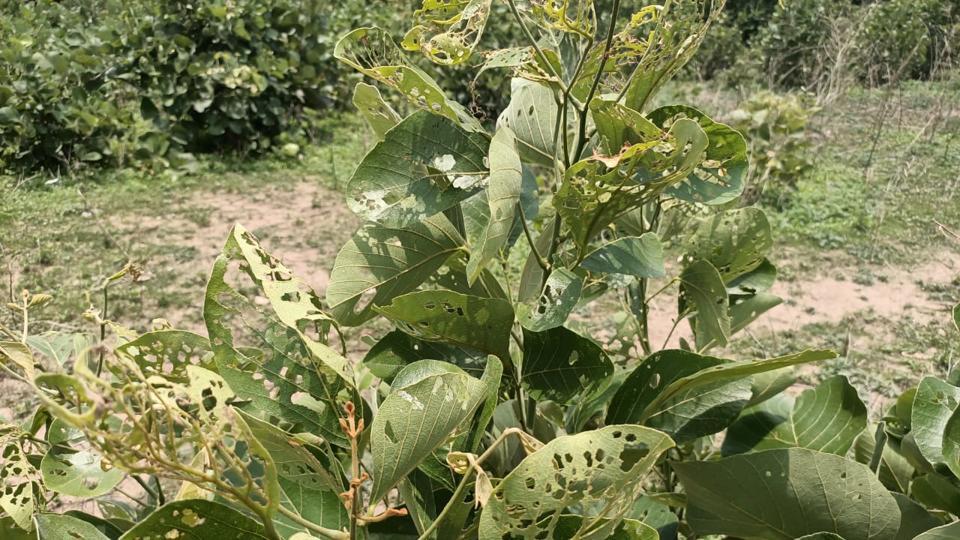
The Locust Warning Organisation (LWO), under the Union agriculture ministry, said Maharashtra had witnessed a sharp decline in locust swarms between June 3 and 8 owing to a change in wind direction due to Cyclone Nisarga. Though the short-horned grasshoppers were pushed towards Madhya Pradesh (MP), a fresh swarm was spotted moving across six of the seven ranges of Pench Tiger Reserve (PTR) between Monday and Tuesday, and thereafter across villages adjoining forest areas in Ramtek tehsil in Nagpur on Wednesday.
“The wind direction over eastern Vidarbha region had changed from northwesterly to southeasterly under the impact of Cyclone Nisarga last week. This pushed the majority of locust swarms either towards west MP or deeper into forest regions adjoining Maharashtra and MP. Combined with this, effective spraying efforts by district officials ensured minimal damage to farms,” said KL Gurjar, deputy director, LWO.
Over the past two to three days, though there has been rainfall, the wind direction is favourable for the pests to follow their original trajectory towards farmlands adjoining forests towards Nagpur, said Gurjar. “However, the size of the swarm is small and control efforts have been initiated by local officers. It should not take more than two days to contain their further movement,” he said.
Divisional joint director agriculture Ravindra Bhosale said unmanned aerial vehicles (drones) were being used to track the movement of the crop-munching pests while the fire department was spraying three different pesticide solutions — chlorpyriphos, fipronil, and deltamethrin. Pesticide solution of 1,200 ml in 500 litres of water is being used across each one hectare.
“We located the swarm in Ramtek tehsil around 11.30 pm Tuesday. After travelling several villages, the swarm had settled in Ajni village, between Ramtek and Mauda tehsil of Nagpur district,” said Bhosale. “We are being assisted by a team of entomologists from Dr. Panjabrao Deshmukh Krishi Vidyapeeth, Akola. There is no damage to food crops, but the pests have been resting on tree species such as anjan (hardwicka), neem, and other fruit trees eating on their leaves. The sound of the drone is also affecting them, making it easier for us to spray pesticides.”
PTR forest officers said while crossing over six of seven ranges, leaves of trees such as bamboo, ain (Terminalia elliptica), palash (sacred tree), as well as fruit trees, such as mango and java plum, were affected. “We identified the species as migratory locust (Locusta migratoria). They seem to prefer trees with softer leaves that have less fibre,” said Ravikiran Govekar, field director, PTR. “We have instructed our staff to detail exact records of their movement, changes in bird behaviour, and the number of affected trees.”
Gurjar added that as of now the swarm is restricted to Nagpur. During the last week of May, the swarms had split into two affecting four districts in Vidarbha — Amravati, Buldhana, Wardha and Nagpur — affecting an area of 135 hectares across fruit orchards and vegetable farms.
Stay updated with all the Breaking News and Latest News from Mumbai. Click here for comprehensive coverage of top Cities including Bengaluru, Delhi, Hyderabad, and more across India along with Stay informed on the latest happenings in World News.


