
 E-Paper



Erratic rains, urbanisation make summers hotter in Delhi, Mumbai and 23 cities
Erratic monsoon rain and rapid urbanisation are making the Indian summer hotter and more humid, especially in Mumbai, Delhi and another 23 cities that have a combined population of 116 million people.


Erratic monsoon rain and rapid urbanisation are making the Indian summer hotter and more humid, especially in Mumbai, Delhi and another 23 cities that have a combined population of 116 million people.
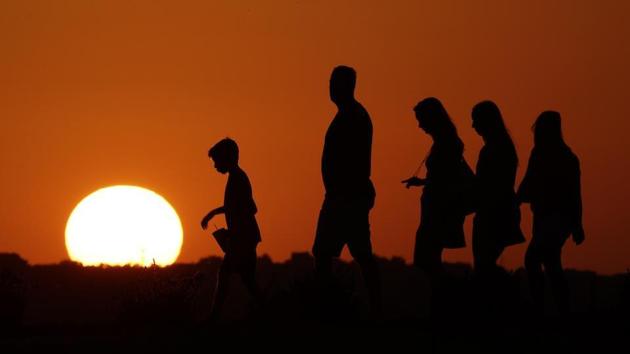
The findings are from an analysis of temperature and humidity levels recorded at 283 weather stations between 1951 and 2010. The study conducted by the Pune-based Indian Meteorological Department (IMD) and Indian Institute of Tropical Meteorology found an increase in heat index that measures human discomfort at particular temperatures. The index has risen by 0.56 degree Celsius on an average every decade during summer, and 0.32 degree Celsius a decade in monsoon.
Read | Tamil Nadu, Andhra, Karnataka droughts: The looming water crisis in South India
Human activities such as urbanisation and release of heat-trapping greenhouse gases from industries, vehicles, biomass burning, are creating islands with ambient temperatures that are often higher than surrounding areas. “During monsoon, temperatures are rising due to a break in rain, short but heavy spells of rainfall, and more dry days. As the atmosphere warms, its ability to hold moisture increases, and this translates into increased stress on the human body,” said AK Jaswal, lead investigator, IMD.
“Pollutants in the air during summer absorb water vapour, thereby contributing to the rise in humidity along with high temperature.” Among the cities studied, 22 recorded a significant increase in summer heat index with 14 cities seeing an increase between 0.51 degree Celsius and 0.95 degree Celsius a decade.
For Mumbai, the average heat index in 60 years is 41.2 degrees Celsius, putting it in the “very hot” category between 41 and 54 degrees Celsius that triggers ailments such as cramps, exhaustion and heat stroke from prolonged exposure or physical activity. The average for Kolkata, Chennai and Vishakapatnam is 47.7, 49.5 and 50.4 degrees Celsius. In 10 cities, monsoon has become hotter, with the heat index increasing between 0.53 degree Celsius and 0.77 degree Celsius every 10 years. The average recorded in Delhi, Kolkata, Chennai and Amritsar was 47.6, 47.4, 49.9, and 49.8 degrees Celsius. The study, researchers said, can be used by policy makers to plan disaster relief.


