
 E-Paper



‘State government policies on environment, water to blame for Maharashtra floods’: Experts
Over the last couple of weeks, from Badlapur in Mumbai Metropolitan Region (MMR) to Kolhapur and Sangli in western Maharashtra, the state has witnessed the ravages of floods.


The state cabinet on Tuesday decided to set up an expert committee to study the impact of climate change in Maharashtra on the back of the devastating floods in western Maharashtra. The Bharatiya Janata Party-led government has blamed the “unprecedented rains” for the disaster but experts pointed out that beyond climate change the state’s policies and decisions are equally responsible for aggravating the floods.
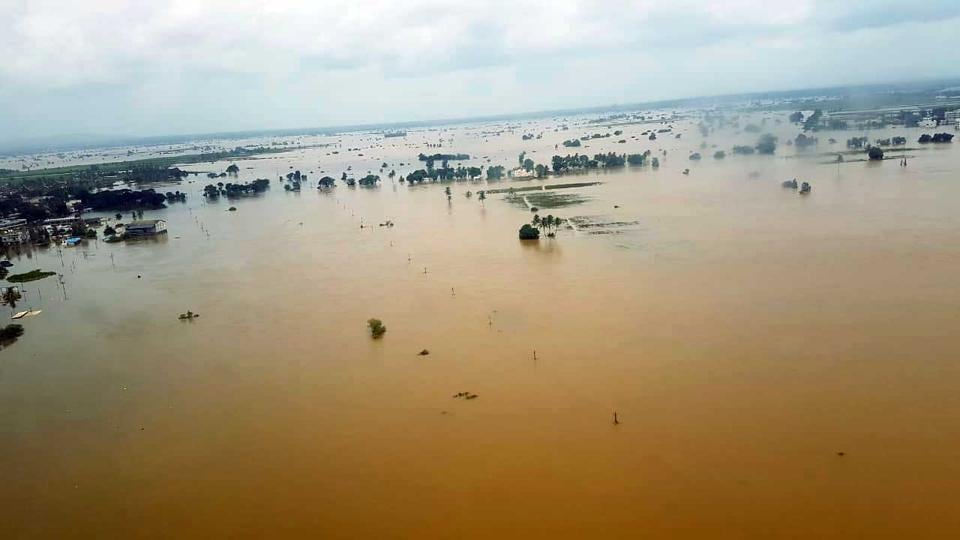
Over the last couple of weeks, from Badlapur in Mumbai Metropolitan Region (MMR) to Kolhapur and Sangli in western Maharashtra, the state has witnessed the ravages of floods. “Granting haphazard construction permissions in low-lying areas and wetlands, not demarcating flood plains and rampant deforestation has contributed to the recent floods,” said Stalin D, environmentalist with NGO Vanashakti. “In Kolhapur and Sangli, massive deforestation has led to reducing of carrying capacity of both dams and rivers. Further, construction along river banks has left no space for floods,’’ he said.
Vanashakti has filed a petition in the Bombay high court demanding that the government finalise flood plains and make these areas no-go for any kind of development.
In July this year, fearing the court’s ire, the water resources department finalised interim flood lines but only for Pune region. Stalin said the government had consistently gone against basic environment tenets and policies, which was now costing the state heavily.
For instance, the Devendra Fadnavis-led government in 2015 had unilaterally scrapped the river regulatory zone policy, which regulated construction of industry along river banks including classifying certain areas from 500 metres to 3km from the river banks as no-development zones. The policy had classified river banks into four categories and kept different parameters for construction of industries depending on their polluting level.
Many reasons had been given for scrapping the policy, including that it was bad in law and detrimental to industrial development.
“This policy was scrapped on flimsy grounds and we have seen its impact today,’’ said Stalin.
Experts also pointed out that poor water governance and lack of an integrated river basin management had added to the floods in western Maharashtra where waters from dams were released at the same time as heavy rains.
Initially, there was no co-ordination even between the various projects which released excess waters around same time.
“In 2007 itself, the ND Vadnere committee report had recommended a slew of reforms to enable flood prediction, management including communication during disasters, vulnerability maps, technical know-how, software, marking of three flood lines, etc. These recommendations were accepted in 2011 but not one has yet been implemented. Our dam management system is limited to storing water and we have zero capacity for flood moderation,” said Pradeep Purandare, hydrology expert. He added that while setting up an expert panel on climate change was a good move, the past showed that government rarely implemented reforms suggested by various committees.

Stay updated with all the Breaking News and Latest News from Mumbai. Click here for comprehensive coverage of top Cities including Bengaluru, Delhi, Hyderabad, and more across India along with Stay informed on the latest happenings in World News.


