
 E-Paper



Rains late, drought worsens in Marathwada
The Indian Meteorological Department (IMD) has forecast rain for most places in Maharashtra in the next 48 hours.

 Prefer HTon Google


Mumbai
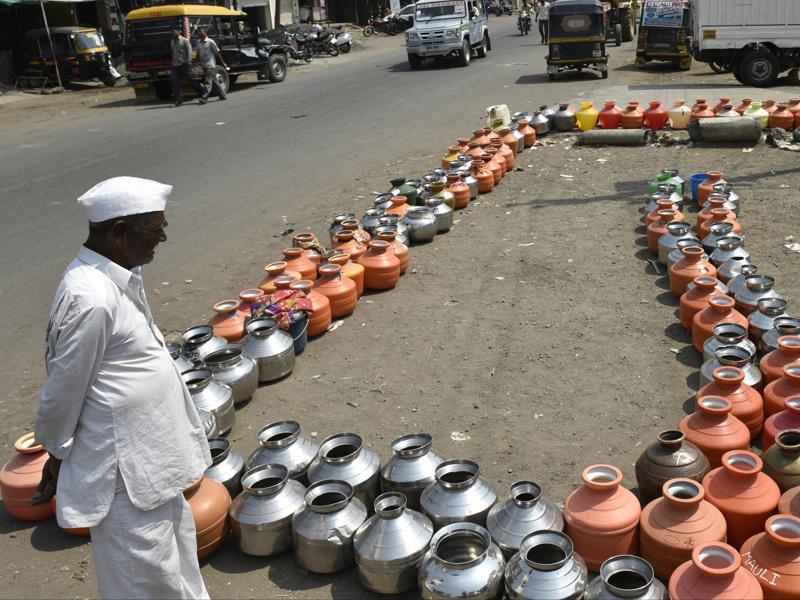
The Indian Meteorological Department (IMD) has forecast rain for most places in Maharashtra in the next 48 hours. However, with the monsoon already delayed by more than a week, the drought in Marathwada is getting worse and the district administration is struggling to cope with the water crisis. With no immediate alternatives, they have to depend on water supplied through tankers where sources have gone completely dry, resulting in the number of tankers rising to more than 4,000 in the region, said Umakant Dangant, divisional commissioner of Aurangabad.
“We are using ground water wherever available and the dead storage of all the dams to supply water,” he said.
Officials from the state relief and rehabilitation department said that other than increasing the number of tankers, they didn’t have alternatives to tackle the crisis.
“The work done under our flagship scheme — ‘Jalyukt Shivar’ — will provide results only after the monsoon. Until then, we have to depend on tankers,” said a senior official who did not wish to be named.
Latur gets 25 lakh litres of water daily through water trains. It has explored two more water resources for its daily water supply — the Dongargaon barrage and the Lower Terna Maakhni dam.
“These three resources suffice our daily water needs,” said Pandurang Pol, collector, Latur district. Latur gets around 15 lakh litres of water from the Dongargaon barrage and 45 lakh litres from the Lower Terna Makhni dam every day.
The district has imposed water cut up to 60% on industries since May 10.
The water stock of the state is low with only 9%, against the 20% water stocked this time last year. Marathwada currently is left with just 1% of water stock, Pune 9%, Nashik 9%, Amravati 10%, Nagpur 17% and the Konkan region 29% in dams and reservoirs.
The latest figures on tankers that have been deployed to manage the situation show that their total number has now jumped to 6,140 this week. Of them, 4,015 have been deployed in Marathwada alone, with Beed district having the maximum number: 962. Aurangabad has 937. Officials fear if rain is delayed further, then the situation may go out of hand.
The state agriculture department has asked farmers of the region not to start sowing operations as the monsoon has been delayed. They have been advised to turn to specific crop patterns, keeping in mind the drought, said RB Ghadge, joint secretary agriculture department.
.


