
 E-Paper



A year after Dadri lynching, festivals mean sorrow for Ikhlaq’s family
Twelve months back, the quiet village of Bisada in Dadri tehsil of Greater Noida, nearly 50km from Delhi, hit the headlines of virtually every newspaper and TV channel.

 Prefer HTon Google


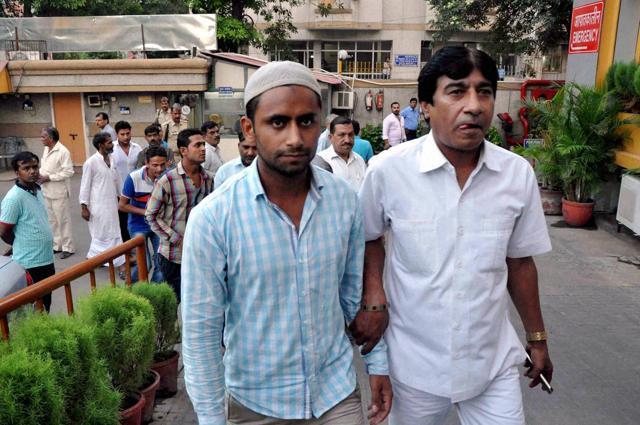
Mohammad Danish can’t sleep. It has been a year since a mob lynched his father, Mohammad Ikhlaq, on suspicions of cow slaughter but the young man is struggling to find a normal life in Delhi’s leafy Subroto Park.

The 22-year-old survived the attack with a fractured skull and underwent three surgeries soon after but says he is more scared of the nightmares.
“Sometimes the nightmares wake me up in the middle of the night. The incident, the angry faces, the distress calls of my father often come in my dreams and tear into my heart,” says Danish, Ikhlaq’s younger son. “I was helpless, I was not able to protect him.”
Ikhlaq’s family fled their village – Bisada in Uttar Pradesh -- soon after the incident and took shelter with his elder son, Sartaj, who works in the air force and lived in a cantonment in Subroto Park.
Ikhlaq’s mob lynching triggered a nationwide movement on intolerance and inspired hundreds of writers, academics and filmmakers to return their government awards in protest.
But for the family, little has changed. The incident seems to have hit Ikhlaq’s wife Ikraman the hardest. She rarely meets anyone now and doesn’t want to talk about the lynching. She says she has no friends in Subroto Park.
“I fear everyone’s questioning eyes. I am tired of telling people what happened and why and that we are innocent,” she says.
Ikhlaq’s killers have not been convicted and earlier this year, police complaints were lodged against members of the family for alleged cow slaughter after the flesh reportedly recovered from his fridge was found to be beef. But Ikraman is determined to not be cowed down.
“Now as he (Ikhlaq) has left this world, he has been made an accused of cow slaughter. This is disheartening. I have full faith in the judiciary. I know charges against him and all of my family will be dropped and his murderers will be hanged,” she says.
His family did not celebrate Bakr Eid this year. They say they will never ‘celebrate’ it again as Ikhlaq was murdered nearly a week after the festival.
“No festival gives us the joy. Bakr Eid reminds us the horrific past. We did not sacrifice any animal this year. We don’t think we will be able to celebrate this festival ever again,” says Ikraman.
Ikhlaq’s mother Asghari, 78, says she feels like a misfit in the metropolis and misses life back in her ancestral home.
“We never felt outcast in the village before the incident. Sometimes I feel like going back but I am scared of facing the families of those who killed my son. I don’t want to see them ever. They ruined the lives of many people,” she says.
“Ikhlaq was not only a good son, he was a good father, a good husband and a good brother also.”
Life for Sartaj -- a corporal with the Indian Air Force -- has also changed. He now carries a loaded licensed revolver and roams with an armed security personnel. In his spare time, he talks to lawyers and friends to strengthen the case against his father’s killers. Sartaj, however, refused to be interviewed citing professional restrictions.
His younger brother, Danish, is now planning to resume his routine of waking up at 5am for a run – preparation for the stringent physical examination to join the armed forces.
“In our village, it is a tradition to join the armed forces. Now I know I would not be able to join such a job. However, I am willing to do something good in my life to make my family proud and earn some money,” Danish told HT.
Read more: Dadri lynching: Hearing on framing of charges deferred to October 28


