
 E-Paper



China’s move to dam Tibet rivers worries Assam, Arunachal
Arunachal Pradesh and Assam’s worries have multiplied ever since China announced that it would build a dam across Xiabuqu, a tributary of the mighty Tsangpo river that flows southwards into Arunachal as the Siang and then joins the Brahmaputra.


Officials in the country’s northeast region, particularly Arunachal Pradesh and Assam, have more furrows on their forehead than ever before.
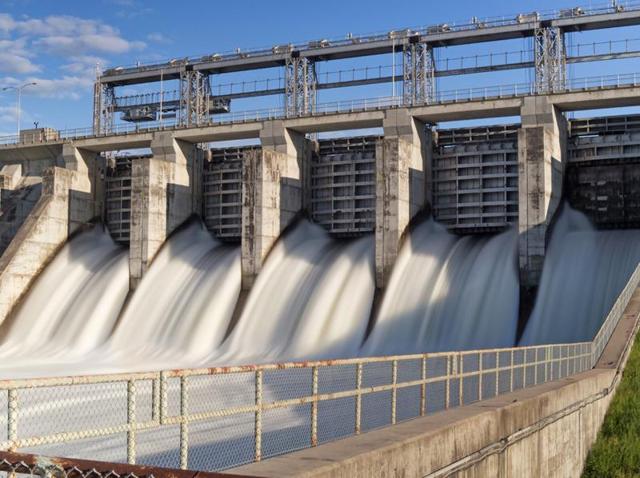
Their worries have multiplied ever since China announced that it would build a dam across Xiabuqu, a tributary of the mighty Tsangpo river that flows southwards into Arunachal as the Siang and then joins the Brahmaputra.
The consequences of the proposed dam are yet to be determined, but speculations abound over China’s plans to harness water from rivers that pass its territory before entering India. Such a move would deliver a veritable blow to millions dependant on the rivers for sustenance on this side of the border.
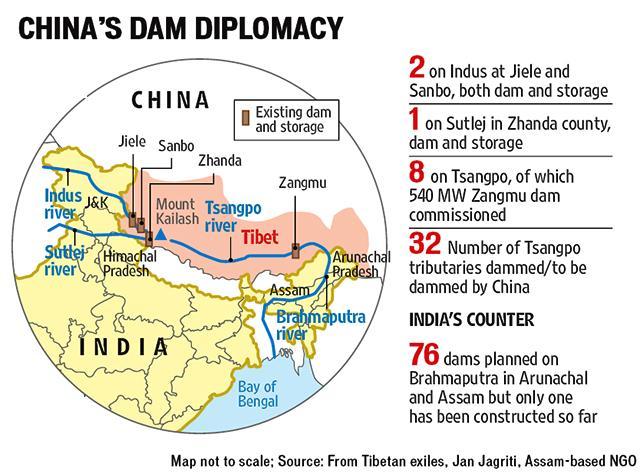
Between the Indus in the west and Tsangpo/Siang in the east, there are six major rivers flowing down from Tibet to India. These rivers are crucial for India’s agricultural and industrial needs. China has planned 32 dams on the rivers and tributaries, raising concerns among people in lower riparian states.
Moreover, in the absence of a water-sharing agreement, China has the power to turn the rivers into “taps of uncertainty” at any given point. “The international norm of first right to use favours Beijing,” a water resources ministry official said.
However, Assam chief minister Sarbanana Sonowal expressed confidence in the Modi government’s ability to stem the problem. “We are sure the Centre will find a way out to ensure the Brahmaputra does not dry up,” he said.
Arunachal Pradesh spokesperson Pasang D Sona, for his part, said the “natural right of a nation must be respected, whether there’s a treaty or not”.
The impact of China damming the rivers became evident in June 2000, when the water level of the Siang suddenly rose by 30 metres – killing 26 people. Himachal Pradesh experienced a deadlier flash flood on August 1 that year, when the water level of Sutlej rose abruptly by 50 feet. Though China attributed the phenomenon to a glacial lake outburst, reports suggested that ‘natural’ removal of debris caused by dam construction was the culprit. The northeast region was also hit when the Siang dried up in 2012.
Ideologue Brahma Chellaney said China wants to specifically target the Brahmaputra because its average annual trans-boundary flow into India – 142.37 cubic km – is almost equal to all the other rivers of the kind put together. The chance of water being used as a political weapon cannot be discounted, he added.
Officials looking out for a loophole believe the best way forward is to develop dams in Assam and Arunachal Pradesh – therefore exercising first-user rights and preventing China from “stealing the rivers”. The United Nations advisory on river water disputes says a downstream riparian state can ensure first-user right on international rivers by building dams.
Consequently, as many as 76 dams – including a 10,000 MW hydropower project on the Siang – have been planned. “This will provide a strategic answer to China’s bumper-to-bumper dams on the Tsangpo,” an official said.
Activists, however, say this move will affect the Himalayan ecology. “India is using the bogey of Chinese dams to build more dams, most of which are impractical and dangerous to the Himalayan ecosystem,” said Himanshu Thakkar of the South Asia Network on Dams, River & People.
However, the Chinese ministry of foreign affairs maintained that India’s concerns were unfounded. “For long, China and India have had excellent cooperation on cross-border water issues... The water storage needed for the project has been less than 0.02% of the yearly run off of the Yarlung Zangpo- Brahmaputra region, posing no threat to the downstream area,” it said.
(With inputs from Utpal Parashar in Guwahati)


