
 E-Paper



After Mulayam, SP must reboot Lohiaite politics
If Akhilesh wants to pay true homage to his father, he will have to shun negative and exclusionary politics, opt for an organisational revamp, demonstrate leadership and resort to mass-based inclusive politics

 Prefer HTon Google


Netaji, as Samajwadi Party (SP) workers called Mulayam Singh Yadav, died on Monday. Yet his persona looms large over the SP, the samajwadi (socialist) movement, and national and state politics. This is not surprising: Mulayam was the chief minister (CM) of Uttar Pradesh (UP) thrice, a Member of Parliament (MP) seven times, a member of the UP legislative assembly 10 times, and the defence minister of India between (1996-98). Each time he became an MLA, it was with a different party. It started with RM Lohia’s Samyukta Socialist Party (1967), Bharatiya Kranti Dal (1974), Bharatiya Lok Dal (1977), Lok Dal (1985), Janata Dal (1989), Samajwadi Janata Party (1991), and finally the SP in 1993.
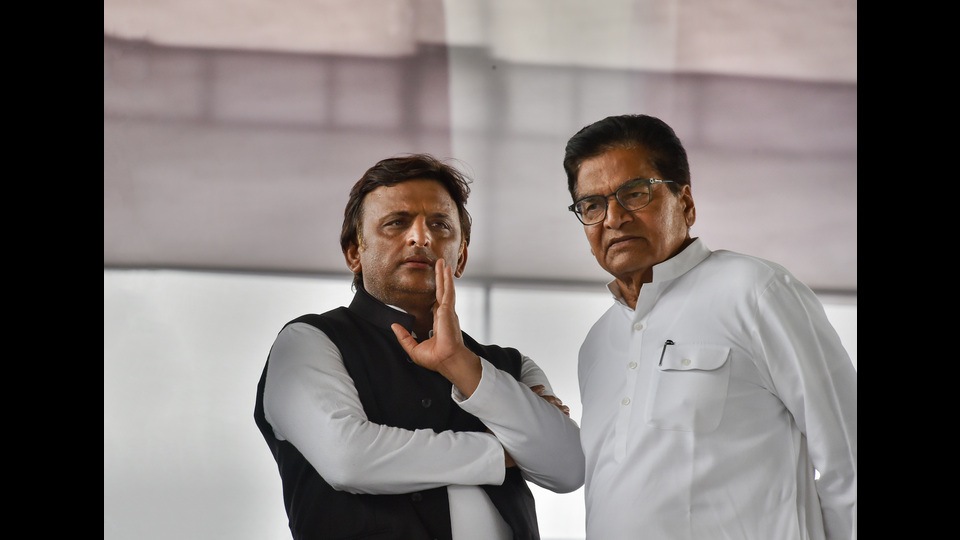
While Mulayam’s death is a loss to Indian politics, it is a much bigger loss to Akhilesh Yadav, his son and the SP president. Since the SP’s split in 2016, the Yadavs appear divided. The party’s organisational pillar, and Akhilesh’s uncle Shivpal, left the SP. Akhilesh did not make any effort to bring him back. This divided the SP and confused party workers, especially in the Yadav heartland of central UP. Many moved to the Bharatiya Janata Party, Aparna Yadav being just one example.
Akhilesh’s rift with Azam Khan and the entry of the All India Majlis-e-Ittehadul Muslimeen are challenges for Akhilesh to retain the support of the Muslims, who once felt connected to Mulayam. The recent bypoll losses in Azamgarh and Rampur underline these twin challenges. Unfortunately, Akhilesh has limited ability to connect to people, lacks ideological clarity, and is not a grassroots politician — contrary to Mulayam, who was known as a dharti-putra (son of the soil) who knew people in every corner of the state.
Mulayam’s departure poses before Akhilesh the problem of revamping the party. He must carry on Mulayam’s legacy and do what his father could not. Mulayam was the leader of other backward classes (OBCs) and kisans (farmers), but could not homogenise them. He couldn’t unite the farmers of east UP and west UP. He could not integrate the weaker backward groups with Yadavs or bring OBCs together with Dalits, which his mentor Lohia wanted to nurture as one united class. Contrary to Lohia’s dream, Mulayam and Akhilesh got stuck in the exclusionary politics of caste that eventually fell short in the face of rising aspirations. Consequently, Akhilesh pursued the politics of uncertainty and experimentation — pivoting to ideologically incoherent parties such as the Congress (2017), the Bahujan Samaj Party (2019), and finally to an agglomeration of smaller parties in the UP elections (2022) — failing each time.
So, what should the roadmap be for Akhilesh and the SP without Mulayam? First, he will have to understand Lohia who stood for class-politics, not caste politics. He wanted to bring all poor and marginalised communities, such as Dalits, backward groups, Muslims, Christians and women on a common platform and argued for the creation of a new democratic class. Instead, the SP appears today mired in specific community appeasement while its base rapidly diminishes because other groups are wary of getting excluded from its structure that caters to only certain dominant castes such as the Yadavs. Akhilesh will have to perceptibly change that. Second, he must take the party beyond Lohia for ideological guidance and link it with the entire socialist tradition of modern India that includes Subhash Chandra Bose, Mahatma Gandhi, Jawaharlal Nehru and Jayaprakash Narayan, among others. This will provide the party with a broader ideological base. Third, he must redefine socialism as nav-samaajwad so that the young can relate to socialist values and don’t see it as antithetical to their personal and community aspirations. Mulayam’s departure has generated sympathy for the SP. If Akhilesh wants to pay true homage to his father, he will have to shun negative and exclusionary politics, opt for an organisational revamp, demonstrate leadership and resort to mass-based inclusive politics.
AK Verma is director, Centre for the Study of Society and Politics, KanpurThe views expressed are personal


