
 E-Paper



As resident doctors protest, an appeal to the State to protect India’s healers
Should matters of critical health care staffing amid a pandemic, in a context characterised by perennially understaffed and overstretched hospitals, be subject to such treatment?

 Prefer HTon Google


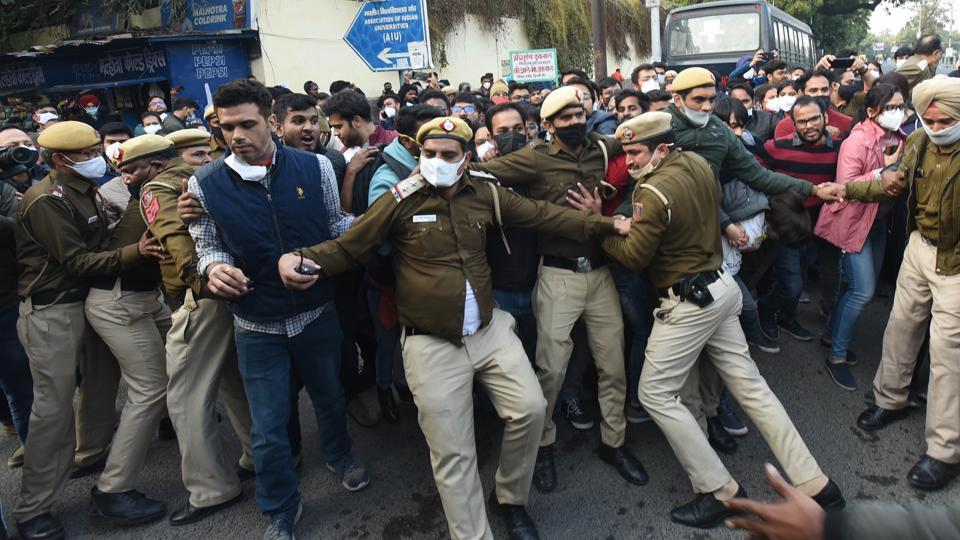
On December 28, resident doctors in the national Capital resorted to a protest, clamouring to expedite the procedure of NEET-PG counselling to rope in health care staff amid a pandemic. But they were reportedly greeted with stiff resistance and lathis. Resident doctors, who are postgraduate (PG) trainees in medicine, form the backbone of the functioning of tertiary care hospitals in India, and 2021 saw no postgraduate admissions take place.
NEET-PG is an entrance examination conducted by the National Board of Examinations (NBE) to enrol students into PG courses across the country, except for central institutes. For 2021, the date declared on September 16, 2020, was January 10, 2021. Owing to the pandemic, the exam didn’t occur then, and new dates were issued and cancelled until September 11, when it finally happened and the results were announced on September 28.
On the NBE portal, dates for counselling were put up. But in the background, another series of events was playing out. A petition was filed against the Economically Weaker Sections (EWS) quota in the Supreme Court (SC) on July 29. The SC stayed all admission processes starting October 25, asking for more clarity on the EWS quota from the government. The petition was taken up only on September 17, and the court asked for a reply from the government on October 21. On November 23, the case was to be taken for hearing, but a judge went on leave and the hearing got deferred. On November 25, a new date was given for January 6, 2022, because of court holidays till January 1.
This back and forth — notwithstanding the pandemic — explains why resident doctors planned a march from Maulana Azad Medical College to the SC.
Should matters of critical health care staffing amid a pandemic, in a context characterised by perennially understaffed and overstretched hospitals, be subject to such treatment? Issues of pressing interest have earlier been taken up in fast-track courts, or the process expedited. So why not now? The irony is that the police clampdown on resident doctors was preceded by an announcement of “precautionary doses” for health care workers, symbolising that the State cares for “Covid warriors” who stand at the vanguard of India’s Covid-19 response.
However, there is a distinction between ordinary protests and resident doctors. The former is driven by sectarian interests and is often backed by political patronage. Yet, they rarely attract a harsh clampdown. The latter, as seen in the protests, is driven by a common social cause — of patients’ welfare. A burnt-out doctor, who stands compromised not only in terms of quality of life but also the quality of care they provide, chooses not to walk away mainly because of the noble social obligations conferred upon them. It is unbecoming of the State to take this for granted.
In 2020, the government promulgated an ordinance amending the Epidemic Diseases Act, 1897, and instituting stronger penal provisions for violence on health workers. Many states have their medicare acts to the same effect. However, no provisions exist for violence that emanates from State machinery — the police. The ramifications then, on the imperilled doctor-patient relationship in India, that too at this crucial juncture, are enormous. It could see the consequence of provoking increased episodes of health care worker violence.
What is likely to follow is almost predictable. After a series of meetings and impassioned addresses by political leaders, the parties would soon arrive at a truce and the incident will be forgotten. However, the long-term consequences are likely to linger. This is why an urgent investigation must follow, and a strong precedent be set to deter such abominations. It would also be wise to speed up clearance of NEET-PG counselling so that the much-needed medical staff could quickly replenish our apex hospitals. While the citizenry and their healers deserve much better, this rings even truer in the middle of a health crisis.
Dr Sushant Srivastava is a post-MS Orthopedics registrar at Pandit Madan Mohan Malviya Shatabdi Municipal General Hospital, Mumbai. Dr Soham D Bhaduri is a physician and health policy expert
The views expressed are personal


