
 E-Paper



Connecting people with their tradition
The Ram Mandir being constructed with public donations will signal the resurgence of Bharat’s sanatan sanskriti, now firmly poised to guide the world.

 Prefer HTon Google


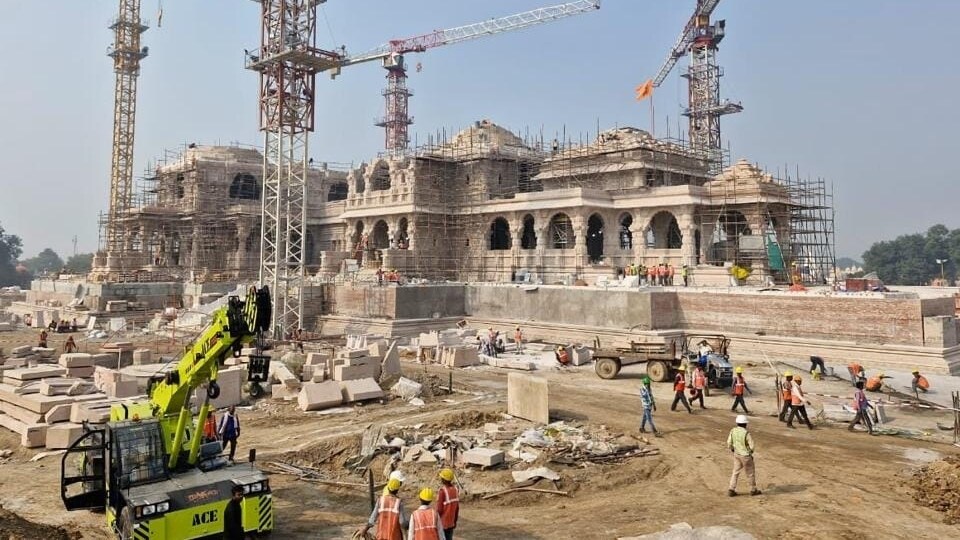
The Tamil collection of poetry, Akananooru, composed 2,000 years ago cites a triumphant Rama conversing under a banyan tree at Dhanushkodi. This mention in the Sangam age literature quintessentially illustrates how Lord Rama personifies Bharat’s civilisational connect. This month, a 550-year-long epochal wait will finally culminate to herald the civilisational renaissance of Bharat, when Prime Minister (PM) Narendra Modi takes part in the pran pratistha ceremony at Ayodhya’s Ram Mandir. Since time immemorial, Hindu temples have symbolised the continuity and cultural unity of Bharatvarsha. A standing testimony to the plural nature of our sanatana dharma is Tiruchirappalli’s Srirangam temple. Even today a separate Thulukka Nachiyar (Thugluk Princess) shrine exists in the temple premises as a tribute to the Sultan’s child, who had given up her life at its sanctum sanctorum for Lord Vishnu.
Beginning with the Islamic invasions of the early 8th century until the Mughal rule, key Hindu religious landmarks were systematically targeted. While some may whitewash religious motives as political or motivated by loot, the blunt reality was a mercenary mindset teeming with intolerant iconoclasm. Mahmud Ghazni raided India 17 times in the 11th century, ravaging the Mathura temple and breaking Somnath temple’s jyotirlinga. Malik Kafur, the slave general of Alauddin Khilji, burned down the southern temples of Belur, Chidambaram and Rameshwaram. Destroying the Bhadrakali temple in Warangal, he plundered the tutelary deity’s Kohinoor diamond. Muhammad Bin Tughlaq’s army pillaged the Puri Jagannath temple, Sikandar Shah pilloried the Anantnag Sun temple and the Saptakoteshwar temple was destroyed by Bahmani invaders. Ayodhya’s Ram Mandir was demolished by Babur’s army while Aurangzeb ransacked Kashi Vishwanath, and Krishna Janmabhumi and hewed the Vrindavan Gobind Dev temple into half. These onslaughts were aimed at annihilating the very foundations of our Sanatan Sanskriti.
With the British turning a Nelson’s eye to temple restoration, institutional reluctance and restriction prevailed post-Independence. PM Jawaharlal Nehru in 1951 told KM Munshi, his cabinet colleague spearheading the Somnath Temple reconstruction efforts, that “I do not like your trying to restore Somnath. It is Hindu revivalism.” Nehru wrote to President Rajendra Prasad that he did not like the idea of him being associated with the opening of the Somnath temple, which Prasad ignored. Ironically, Nehru had averred that dams were the temples of modern India.
Like Chhatrapati Shivaji, Devi Ahilyabai Holkar rebuilt and maintained many temples with her personal fortune. It was during a visit to the smaller temple built by her near the desecrated Somnath mandir that Sardar Patel resolved to reconstruct it. Now PM Modi has been at the forefront of our cultural and dharmic revival. His vision of a modern Viksit Bharat is inextricably intertwined with reconnecting our people to their parampara.
The Pilgrimage Rejuvenation And Spiritual Augmentation Drive scheme was launched in 2014 to improve infrastructure and integrate holy destinations. Phase 1 of the Kashi Vishwanath Corridor connects the iconic temple and the ghats along the Ganga, ensuring easy movement of devotees. The temple premises having been expanded manifold, now honour Ahilyabai Holkar and Adi Shankaracharya with their statues. In 2022, the ₹800-crore Mahakal Lok Corridor, the longest in the country, was unveiled. The 900-km-long Char Dham highway development project was initiated, connecting Badrinath, Kedarnath, Gangotri and Yamunotri. The Kamakhya temple corridor in Guwahati is being revived while the Saptakoteshwar temple in Goa has been reopened this year. PM Modi unfurled the dhwaja atop Gujarat’s Kalika temple after five centuries. After the abrogation of Article 370, cultural restoration is underway in Jammu and Kashmir at 123 identified places.
Underlining that our civilisation is not just limited to India, PM Modi’s government has endeavoured to reclaim our heritage abroad by restoring the Thiruketheeswaram Temple in Talaimannar, Sri Lanka and Cambodia’s Angkor Wat complex. While the Indian government has committed to building a Ramayana circuit in Nepal, PM Modi will be inaugurating the first-ever temple in the Emirati capital of Abu Dhabi, next month.
Be it installing the sacred Sengol in the new temple of our democracy or showcasing the Konark temple before world leaders during G20, PM Modi is playing a pioneering role in strengthening our dharmic edifice. He has pertinently observed that the geographical arrangement of the four dhams, 12 jyotirlingas, and the concept of our Shaktipeeths connecting different corners of our country is an expression of Ek Bharat, Shreshtha Bharat spirit. The resplendent Ram Mandir being constructed with public donations from all communities will signal the resurgence of Bharat’s sanatan sanskriti, now firmly poised to guide the world.
CR Kesavan, a former member of Prasar Bharati Board, is with the BJP. The views expressed are personal


