
 E-Paper



Costs of a semi-war, and keeping hope
Nobody knows how far up the escalatory ladder we will climb, but with each successive rung, we exchange a bit of thrill for some fear

 Prefer HTon Google


I have barely slept in the last 48 hours. There is a semi-war going on —escalating every passing day. I am not really scared or anxious, at least not yet. I am told any stray missile will have to penetrate 7-8 layers of air defence shields to reach me, which seems less risky than driving on Gurgaon streets alongside muscular vehicles with caste stickers. Why am I not scared yet? Maybe, it is either the air defence shields or my usual middle-class irrational optimism. Kuch nahi hoga (Nothing untoward will happen).
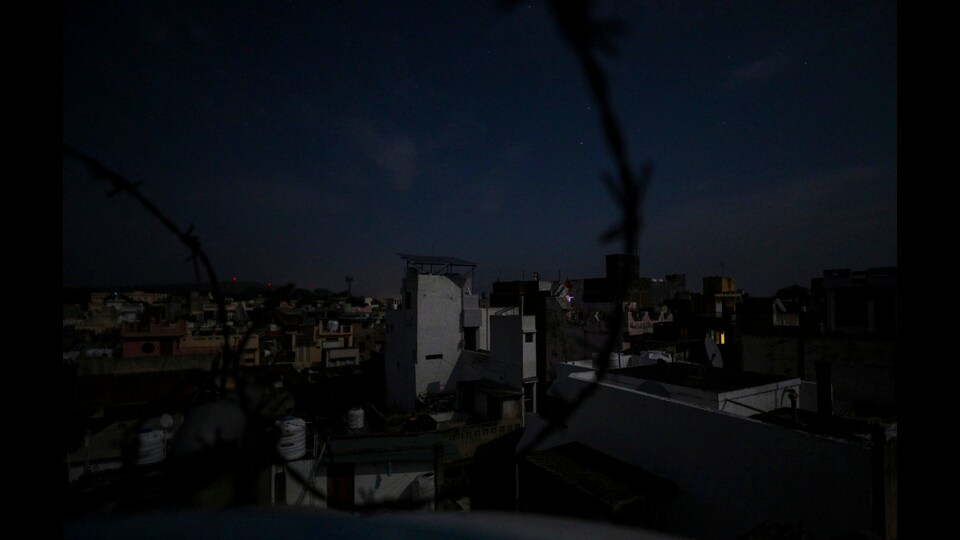
Following a war from far, but not far enough, is a new experience for me. During the Kargil war in 1999, the internet and I were both young — not many memory bookmarks, nothing to scroll. But war in current times is a unique cocktail of humour and tragedy. This is the first time we have missiles and memes together, taking turns to reach us from across the border.
Following such a war evokes a spectrum of feelings — fear at one end and thrill at the other. Which side of the spectrum you are, depends on how close you and your family are to the border. My brother called me on Thursday night from Chandigarh while Punjab was facing a swarm of drones. I picked his call up feverishly, he said a bomb had been dropped in his society. I was speechless; then he laughed and said he was joking. He said there was a blackout, but he couldn’t hear any shelling or blasts, and hence he could afford to joke. He lies on the thrill side of the spectrum. But I also know a girl who works in Gurgaon, whose parents live in Jammu. She broke into tears the moment her first call didn’t go through to her parents.
Then, there are those who are close to the war, yet find thrill in it. There was a video of an engineering college in Jalandhar, where the students were watching the air defence system intercept missiles and drones, forming a spectacular display of fireworks. The scrawny hostellers erupted with joy, expressing their excitement in their unparliamentary hostel-tongue, clicking selfies with deadly drones being intercepted by missiles, and cracking jokes among each other. There is tragedy, and there is humour. Both go together these days.
And then you learn about missiles, jets, drones, air defence systems, etc, and track how advanced they have become since the last time you followed a war. You learn how war is actually a sales exhibition of defence equipment, and how the defence manufacturers closely watch wars dispassionately to see how their gadgets perform. It is a sales carnival where your equipment wins if it kills — a unique death sport, watched from the galleries by presidents, oligarchs, dictators, drug dealers and others who will place orders the moment they see a jet killing another jet, a drone coldly killing more humans. The share prices go up/down pegged to the life and death of a nation or an ideology. In a world where kids are born to eventually grow up and increase shareholder value, this, sadly, makes sense.
There is another potent weapon of warfare, which is as deadly as any other: fake news. Europeans, the inventor of all fancy words, called it propaganda. It originates from Latin, where the idea was to propagate the teachings of the Catholic church to the non-Catholics. But it got its negative connotation in the 20th century around the World War, when an American political scientist, Harry Roswall, defined it as “the expression of opinions or actions carried out deliberately by individuals or groups with a view to influencing the opinions or actions of other individuals or groups for predetermined ends and through psychological manipulations”
Another political scientist, Donald J Trump, made it simpler and just called it fake news. This reminds me of the news on TV. War reporting is eerily similar to election results reporting. Imagine a news panel where a 60-year-old expert is dissecting the finer points of an issue, bringing in his decades of experience, with everybody listening intently. Suddenly, an air siren goes off. You learn almost instantaneously that its the BREAKING NEWS siren. Everybody bows in reverence to the power of breaking news. We eventually find out the massive breaking news is basically the home minister going for a meeting at the Prime Minister’s Office. The expert has lost his train of thought, the anchor elaborates on why the minister’s visit is monumental, despite the minister just doing his daily work. All of it, just to sell more products during the commercial break.
I have sympathy, however, for the on-field reporter. Imagine reporting from the Line of Control, with missiles flying over your head, putting yourself in harm’s way for a salary that is a pittance. I know they love their job, but it is a gig where they get 15 seconds of airtime before they are cut off and the anchor moves on to a so-called expert sitting in an air-conditioned room. The only hope is that the on-field reporter would stick around, and start a YouTube channel in the future.
The war is still on. Nobody knows how far up the escalatory ladder we will go, but with each successive rung, we exchange a bit of thrill for some fear. A few days from now the tone of this article could be very different. But, we are true believers of the Lindy effect — the longer something has existed and been successful, the more likely it is to continue existing and be successful — or to put it crudely in my native tongue: Kuch nahi hoga.
Here’s to hope.
Abhishek Asthana is a tech and media entrepreneur and tweets as @gabbbarsingh. The views expressed are personal


