
 E-Paper



Hutong Cat | Stocktaking at the Communist party's secretive beach retreat
The secretive CPC conclave at Beidaihe is one such event in the CPC political calendar, details of which are a mystery, making it the perfect backdrop for conjecture and speculation

 Prefer HTon Google


President Xi Jinping and Premier Li Keqiang reemerged in the middle of this month after not being seen taking part in public activities for more than two weeks.
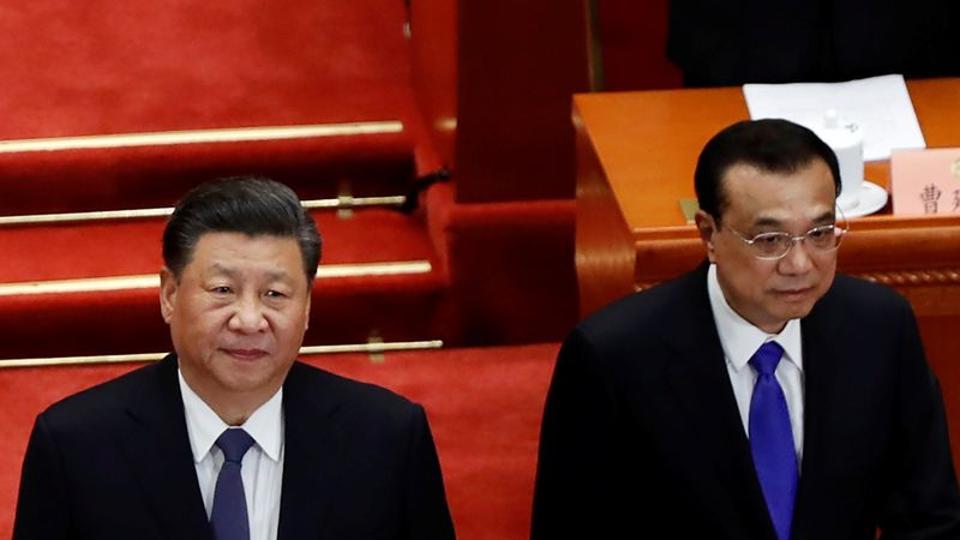
Chinese official media, of course, ensured Xi wasn’t missed in the interim: We now know in great detail about Xi’s thoughts on the importance of sports for the people, his letter to “grassroot heroes”, and various other stories “shared” by him on the “good Samaritans of China”.
Photos of Xi’s last public event – which are always, always released prominently by leading official media and faithfully carried by their acolytes – were of his attending the July 31 reception at the Great Hall of the People to mark the 95th founding anniversary of the People’s Liberation Army (PLA).
Their reappearance – Xi’s in the northeast Liaoning province and Li in the tech and business hub, Shenzhen – after a gap of several days likely meant that the annual secretive Communist Party of China (CPC) conclave at the seaside resort town of Beidaihe, some 280 km from Beijing, was over.
Typically, no dates are given for the meeting though it is usually held between July-end and the middle of August, and attended by current and former CPC leaders.
Given the deliberate cloak of secrecy wrapped around it, China’s elite politics is notoriously difficult to decipher.
The Beidaihe meeting is one such event in the CPC political calendar, details of which remain a mystery.
Even the names of those who attend it are a closely guarded secret.
(Making it the perfect, picturesque, backdrop for conjecture and speculation about what would have been discussed among the CPC's top leaders.)
The fairly long meeting in Beidaihe is often said to be a time for the CPC leadership and special invitees – which could include top Chinese academics and experts – to not only unwind but also, critically, to negotiate tricky personnel changes within the CPC and discuss party and government policies.
This year’s conclave assumed added significance as it was held in the run-up to the twice-in-a-decade CPC Congress, to be held later this year, where Xi is expected to continue as China’s leader for an unprecedented third term; generational changes are expected within the rest of the top leadership and younger leaders are expected to be named. Expected.
It was interesting to note the two leaders’ choice of places to reappear after their break in public appearances.
Xi went to the northeastern province of Liaoning on his latest “inspection tour”, visiting the cities of Jinzhou and Shenyang, the capital – political campaigning, one could say, with Chinese characteristics ahead of the CPC Congress.
During his visit to Jinzhou, Xi visited the Liaoshen Campaign Memorial museum, which commemorates a key victory that the CPC under Mao Zedong won against Chiang Kai-shek’s Kuomintang in 1948.
The war reversal that Kuomintang suffered in Liaoshen contributed to the latter’s eventual defeat and retreat to Taiwan in 1949.
“Xi visited the Liaoshen Campaign Memorial and a forest park in Jinzhou, looking back into the history of the liberation of northeast China and the Liaoshen Campaign, one of the major campaigns during the War of Liberation more than seven decades ago,” the official news agency, Xinhua reported on Xi’s museum visit.
Premier Li, on his part, reappeared in the southern business and technology hub of Shenzhen, to preside over a symposium on China’s economic situation.
Addressing officials from six major economic powerhouses – Guangdong, Jiangsu, Zhejiang, Shandong, Henan and Sichuan – Li urged them to “meet their due responsibilities on consolidating economic recovery”.
“Noting that China's economy is in a critical stage of stabilisation, Li urged the adoption of a sense of urgency in the country's endeavours to consolidate recovery momentum,” Li was quoted as telling the officials by official news agency, Xinhua.
The six provinces account for 45% of China's GDP and 40% of the country's employment, Li said.
Xi’ and Li’s reemergence after the break in Liaoning, especially at the Kuomintang-related museum, and in Guangdong (where the metropolis of Shenzhen is located) are probable indicators of the pressing issues for the CPC in the year of the 20th party Congress.
Xi’s visit to the Liaoshen Campaign Memorial museum could be related to the narrative on “Taiwan reunification” that Beijing has built since the recent trip of House Speaker Nancy Pelosi to the self-governed island.
The unprecedented military drill around the island – which took place when Xi and the CPC leadership were likely in Beidaihe in the first half of August – added to the narrative, largely for domestic consumption, that the process of merger, or “reunification”, had begun.
Interestingly, there was not a single statement from the top leadership during or after Pelosi’s Taiwan visit or during the intensive military drill, which thundered all around the island for more than a week.
The collective response of the CPC to Pelosi’s Taiwan visit, instead, came out as the government’s white paper on the island, the first during Xi’s decade-long rule.
China claims Taiwan as its own territory, to be merged with force if necessary; Taiwan rejects that claim.
But Xi’s museum visit was only part of his Liaoning tour.
When visiting the Siasun Robot and Automation company in the provincial capital of Shenyang, Xi said: “At a time when economic globalisation is battling headwinds and protectionism is rising, we should continue opening up to the world and strive for economic development.”
That brings us back to possibly the primary issue facing the CPC at present, and possibly a top topic of discussion at the Beidaihe meeting – economy, the source of the CPC’s legitimacy.
In terms of the economy, a combination of Covid-19-related lockdowns, the continuous rumble in the real estate market, and now, a sweeping heat wave and a power crunch have dented its recovery.
The surging youth unemployment rate is adding to economic woes.
“The official jobless rate for urban youths aged 16 to 24 rose 0.6 percentage points to 19.9% in July, the highest figure since China’s National Bureau of Statistics started publishing youth employment data in 2018,” the news website, Sixth Tone, reported.
The report added that it was the fourth consecutive month that China had logged a new youth unemployment record, “highlighting the challenges officials face as they try to stimulate a flagging economy”.
Usual disclaimers on the country’s elite politics apply here but with around two months remaining for the 20th CPC Congress where Xi is likely to be anointed with a new, grand title, China and the world are set to hear more from him and the leadership on the economy.
Sutirtho Patranobis, HT’s experienced China hand, writes a weekly column from Beijing, exclusively for HT Premium readers. He was previously posted in Colombo, Sri Lanka, where he covered the final phase of the civil war and its aftermath, and was based in Delhi for several years before that
The views expressed are personal


