“Walkability is a European concept. People in India do not walk. You people from NGOs visit European cities, see people walking there, come back and try to copy that culture here.” The remark came from a young officer, in a meeting to review a major urban-roads project — one meant to serve not just cars, but the millions who walk, wait, cross, sell, cycle, and board buses on Indian streets every day.
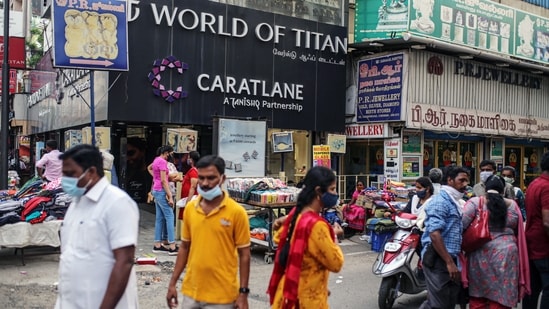
The senior officer chairing the meeting had stepped out to take a call. In that small administrative interval, philosophy entered the room. A discussion about cost per kilometre became a civilisational inquiry: Do Indians walk?
One must wonder at the confidence of such a remark. In a country where schoolchildren walk to school, domestic workers walk to gated colonies, construction workers walk along highways, vendors push carts through traffic, devotees walk to temples, voters walk to polling booths — and politicians periodically rediscover the republic through padyatras — walking had been declared a European habit.
This would have been funny — if it hadn’t come from a policymaker.
India has never been short of walkers. Ram is said to have walked from Ayodhya to Lanka. Buddha walked the Gangetic plains until his teachings took root across the subcontinent. Adi Shankara walked from Kalady in Kerala to Kedarnath in the Himalayas and from Dwaraka in the west to Puri in the east. These were not incidental journeys. Walking was how ideas moved, how faith was tested, and how civilisation was stitched together across a vast and difficult geography.
{{/usCountry}}India has never been short of walkers. Ram is said to have walked from Ayodhya to Lanka. Buddha walked the Gangetic plains until his teachings took root across the subcontinent. Adi Shankara walked from Kalady in Kerala to Kedarnath in the Himalayas and from Dwaraka in the west to Puri in the east. These were not incidental journeys. Walking was how ideas moved, how faith was tested, and how civilisation was stitched together across a vast and difficult geography.
{{/usCountry}}The roads reflected this. The ancient Uttara Path and Dakshina Path — arterial routes of the Mauryan empire, among the oldest planned roads in the world — were built to carry people, most of them on foot. Traders, pilgrims, soldiers, ascetics, and messengers walked these routes across kingdoms and seasons. Their alignments survive today in the Grand Trunk Road and NH-44, though the feet that once defined them have long since been pushed to the margins.
This tradition did not end with antiquity. Gandhi walked 385 kilometres from Sabarmati to Dandi in 1930 and added a new grammar to India’s freedom struggle. Vinoba Bhave walked 70,000 kilometres over 14 years, mobilising nearly 42 lakh acres of land for redistribution to the poor. In modern India, the padyatra remains a politician’s most reliable claim to the common touch. This tradition never broke. Only the footpath did.
Census 2011 work-travel figures show that roughly 31% of urban workers walk to work, with the share even higher among women. This is not a lifestyle choice inspired by European ideas; it is how millions of Indians reach work every day because other options are unaffordable, unsafe, unreliable, or simply unavailable.
In European cities, people walk because the city makes walking safe and pleasant. In India, people walk because the city leaves them no real alternative — and then punishes them for walking.
The punishment is visible everywhere: Footpaths that begin with a ceremonial launch and end in a drain, kerbs high enough to leave an elderly woman stranded on the road, electric poles planted squarely in the middle of walking space, junctions designed as though pedestrians are a temporary nuisance, bus stops without safe access, drains without covers, streets where a child or a wheelchair-user must display Olympic reflexes just to cross.
Road designs are meticulous about carriageway width, asphalt thickness, turning radius, and vehicle speed — not to mention that undying favourite of the politician-bureaucrat ecosystem, the flyover. But the moment a pedestrian enters the drawing, engineering becomes philosophical. Is a footpath necessary? Will people use it? Won’t hawkers take it over anyway? The most basic element of a street becomes a matter of opinion.
The consequences are not theoretical. A 2023 report from the ministry of road transport and highways recorded 172,890 road-crash deaths, of which pedestrians accounted for 20.4% — over 35,000 people, or roughly 100 every single day. They were not urban-design enthusiasts attempting Copenhagen cosplay. They were workers, children, elderly commuters, vendors — people whose only mistake was that the road did not recognise them as legitimate users.
This is the central absurdity. The pedestrian is the most common road user and the least protected. A flyover gets justified in the name of congestion, though it just moves the problem further down the road. A signal-free corridor gets sold as progress. A widened carriageway gets inaugurated as development. But a continuous, shaded, accessible footpath is treated as a decorative extra — something to add if funds remain, and remove when cars complain.
The question was never whether Indians walk. It is whether the Indian State sees those who do.
Perhaps the officer’s remark was a product of the mobility options available to officials. Government cars, drivers, reserved parking, and security gates can do strange things to one’s understanding of streets. From inside an air-conditioned vehicle, walking looks like a cultural preference. From the footpath — where it exists — the view is rather different.
Designing for pedestrians is not anti-car; it is pro-city. Every public transport trip begins and ends on foot. Every market needs walking access. Every school zone needs safe crossings. Every city serious about reducing congestion must make short trips walkable.
Walkability is not a European import. It is India’s oldest, cheapest, and most widely used transport system. What is imported — enthusiastically and at great infrastructure cost — is the idea that roads exist primarily for fast-moving vehicles, and everyone else must adjust.
So the next time someone says Indians do not walk, the appropriate response is simple: Please step out of the car, preferably onto a footpath — if one can be found.
Sajith Sukumaran is director, State Programs, Janaagraha. The views expressed are personal