
 E-Paper



India-Thailand leadership can reinvigorate Bimstec
Bimstec’s inaction is largely self-inflicted. In practical terms, Bimstec is only as active as India makes it

 Prefer HTon Google


Prime Minister (PM) Narendra Modi is set to attend the twice-postponed Bay of Bengal Initiative for Multi-Sectoral Technical and Economic Cooperation (Bimstec) Summit in Thailand beginning Friday in the shadow of the devastating earthquake in the region.
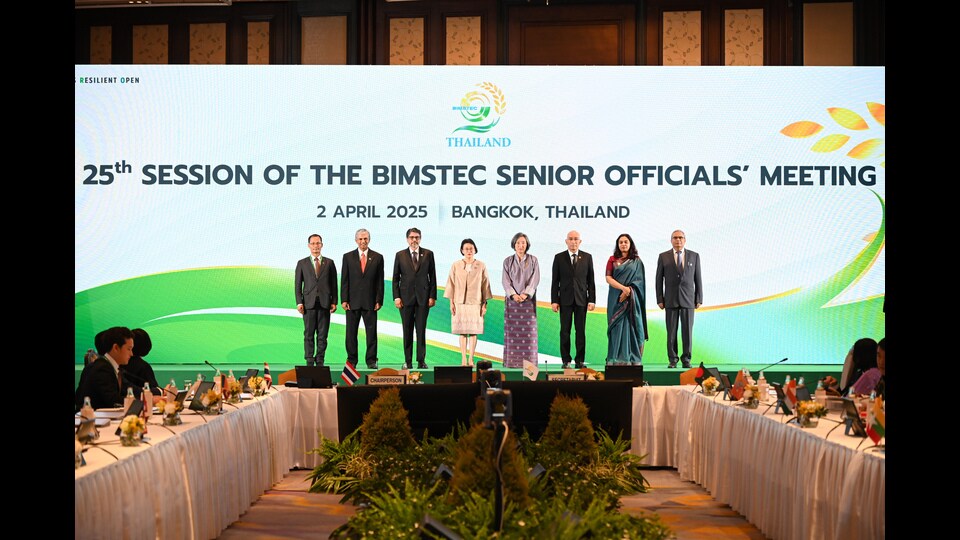
Bimstec, established in 1997, has significant strategic and economic potential, but it faces several challenges that hinder its effectiveness. Foremost of them is the absence of a strong institutional framework. Unlike say the Association of Southeast Asian Nations (Asean), the Bimstec secretariat has limited resources and authority, leading to slow decision-making. No single country has consistently taken the lead in driving Bimstec’s agenda: The diverse membership — Bangladesh, India, Myanmar, Sri Lanka, Thailand, Nepal, and Bhutan — often struggles with setting priorities. Besides, India-China tensions indirectly impact Bimstec: China is not a member but influences Myanmar, Nepal, and Bangladesh. Political instability in Myanmar and regional rivalries have further stalled cooperation.
Key agreements, such as the Bimstec Free Trade Agreement (FTA), remain stalled. Bureaucratic inertia and lack of enforcement mechanisms further delay economic integration. Despite discussions on transport and energy projects, weak infrastructure links remain a barrier. Maritime and road connectivity projects, like the Kaladan Multi-Modal Transit Transport Project and Trilateral Highway, have been delayed. High tariffs and non-tariff barriers further restrict intra-regional trade. Even though maritime security, terrorism, and the climate crisis affect the region, cooperation remains limited. Similarly, cybersecurity and disaster management efforts need more coordination.
In recent years, India has invested more in Bimstec than the South Asian Association for Regional Cooperation (Saarc). To start with, Bimstec is linked to India’s Act East Policy (AEP). When PM Modi was sworn in for his second term in 2019, heads of Bimstec members, not Saarc leaders, were invited to the ceremony. In 2016, he invited Bimstec nations to the Bric Outreach Summit in Goa. More recently, India deputed a senior official as Bimstec secretary general (2024), aiming to invigorate the organisation. All this aligns with India’s Security and Growth for All in the Region (Sagar) vision, the revised Vision Mutual and Holistic Advancement for Security and Growth Across Regions (Mahasagar) and the Indo-Pacific Oceans Initiative (IPOI).
Ideally, Bimstec should benefit from its diverse composition: Five of its members belong to Saarc, while Myanmar and Thailand are part of Asean, the Mekong-Ganga Cooperation (MGC), and the Indian Ocean Rim Association (IORA). Given its Bay of Bengal focus, Bimstec complements India’s efforts to engage with the Indonesia-Malaysia-Thailand Growth Triangle around the Andaman Sea.
Since its inception, Bimstec has recognised that geopolitics and geo-economics must intertwine for successful regional cooperation. The region shares a common history, civilisation, and challenges such as the climate crisis, food security, and trade barriers. However, differences in development levels are apparent. India, Sri Lanka, and Thailand are developing countries, whereas Bangladesh, Bhutan, Nepal, and Myanmar are classified as Least Developed Countries (LDCs); Bangladesh is on the verge of transitioning to developing country status.
Several agreements, including the Bimstec Grid Interconnection, the Convention on Mutual Legal Assistance in Criminal Matters, and an MoU on Diplomatic Academy Cooperation, have been established. Trade liberalisation, if accompanied by harmonised customs regulations, could significantly enhance regional economic growth. India’s northeast, a key focus of the AEP, stands to benefit through greater connectivity, trade, and investment.
A key initiative under Bimstec is the multi-modal connectivity and economic corridor linking South-East Asia, India, West Asia, and Europe, which aligns with the India-Asean 12-point plan. To achieve this, the Bimstec Development Fund must be institutionalised and well-funded, while civil society networks and think tanks need activation. On July 17, 2023, Thailand hosted the inaugural Bimstec Foreign Ministers’ Retreat in Bangkok. The seven members reaffirmed their commitment to making Bimstec more resilient and relevant. Myanmar participated despite Asean reservations, indicating that Bimstec operates independently of Asean’s framework. Discussions focused on crisis response mechanisms, food security, public health, energy, financial security, trade, and economic cooperation and proposals were mooted on digital payment systems, cyber security cooperation, and transnational crime prevention. The Eminent Persons Group (EPG), which convened in January 2024, was tasked with charting Bimstec’s future roadmap. However, domestic political upheavals in Bangladesh and Thailand delayed the summit to September 2024 and further to March 2025.
Subregional organisations require strong leadership. Indo-Pak tensions hindered the functioning of Saarc, but Bimstec’s inaction is largely self-inflicted. In practical terms, Bimstec is only as active as India makes it. With India’s growing global confidence — demonstrated by its leadership in the G20, the India-United States (US) strategic engagement, and the Global South — Bimstec should become a key pillar of New Delhi’s Neighbourhood First policy and Vision Mahasagar.
However, Bimstec should take care not to duplicate other regional initiatives but focus on a few high-impact projects to strengthen civilisational, trade, and economic ties. It could even offer a development alternative. India’s Lines of Credit (LoC) to Bangladesh alone stand at $8 billion — 25% of its global LoCs. India has also extended significant support to Myanmar, Nepal, Bhutan, and Sri Lanka. The next step is to link these initiatives regionally. For this, India and Thailand should take joint leadership in reinvigorating the bloc. Both nations have vested interests in engaging Myanmar and strengthening regional cooperation. Prior to the earthquake, the Myanmar military leader Gen Min Aung Hlaing was invited to the Summit.
Cooperation with partners like Japan, Germany, Australia, and France can boost development efforts. Connectivity projects must focus not just on physical infrastructure but also on regulatory harmonisation. It should also prioritise lighthouse projects that demonstrate tangible benefits to member States. Also, the bloc should draw in Singapore and Indonesia. As neighbours to the Bay of Bengal they will bring heft to the organisation.
Gurjit Singh is a former ambassador to Germany, Indonesia, Ethiopia Asean and the African Union. The views expressed are personal


