
 E-Paper



Jumpstarting electric vehicle manufacturing in India
The window of opportunity to localise EV component manufacturing won’t be open forever, and two-wheelers are a good place to start.

 Prefer HTon Google


The Union government has already taken several steps to boost electric vehicle (EV) manufacturing this year. In January, it announced the receipt of bids from 10 companies to avail of Performance Linked Incentives (PLI) to manufacture Advanced Chemistry Cell (ACC) batteries locally. These next-generation batteries will be made in ‘gigafactories’, a term coined by Tesla founder Elon Musk, which signifies end-to-end battery manufacturing and large-scale production. Second, the government revised its guidelines for charging infrastructure, which includes a revenue-sharing model for use of public land. And finally, it capped off these announcements with a promise to implement a battery swapping policy, interoperability standards, and special mobility zones via the Union Budget. These advances may help transform the EV ecosystem in India, but only if private sector ambitions keep pace.
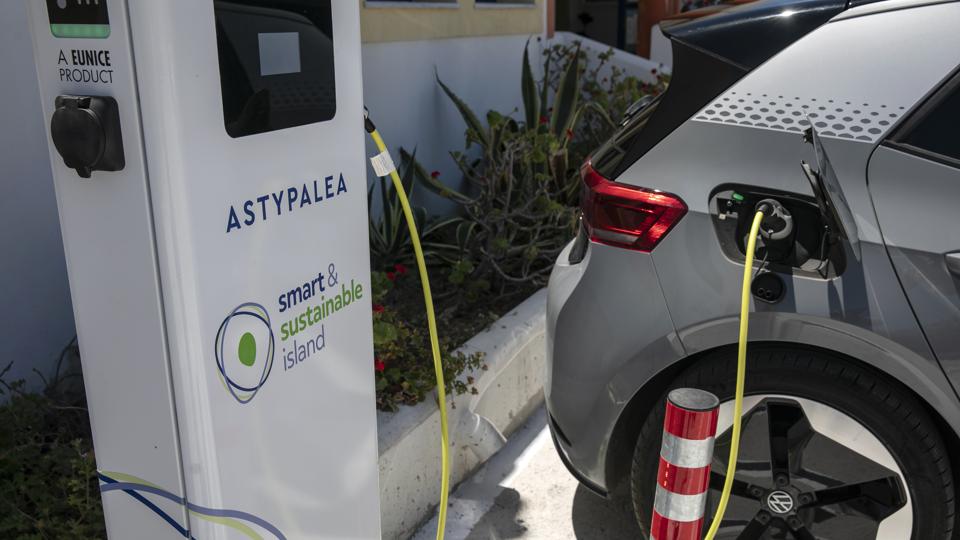
EVs currently account for less than 3% of all vehicles sold in India. This is despite EV registrations crossing 50,000 units for the first time in December 2021, the highest ever monthly sale recorded. Although 80% of the volume of EVs sold is occupied by low-cost and low-speed three-wheelers, overall EV sales have picked up pace due to the rise of next-gen two-wheeler companies like Ola Electric and Ather Energy. And while the slew of recent government measures to encourage greater EV manufacturing is a significant positive, as are various existing consumer-centric incentives to enable wider EV adoption, the EV ecosystem can only grow in value - economic and environmental - if the traditional automobile majors step up to the plate and harness their economies of scale and service.
The last two years of supply chain disruptions due to the Covid-19 pandemic and the US-China trade war have precipitated fundamental changes in global manufacturing strategies. This is particularly true of high-tech industries that continue to face logistical headwinds, including shortages of critical components like silicon chips and batteries. Consequently, tech companies like Apple have invested heavily in making their own chips, and EV businesses like Tesla have insourced large parts of their battery tech. Closer home, Mahindra Auto had to stop production for around seven days in September last year, owing to shortages of chips, like those that power new multimedia features in its vehicles.
The natural corollary of supply chain disruptions, accompanied by a race to shorten supply chains across the technology landscape, is that critical components are becoming prohibitively expensive. In the case of EVs, Indian manufacturers are also struggling to source lithium-ion batteries, which are largely imported from China, South Korea and Taiwan. Prices for battery-grade lithium carbonate, a key input, went up 400% year-on-year in November 2021.
Automobile industry majors must act fast to ensure the future competitiveness of the Indian EV ecosystem, which relies heavily on imports. Local EV manufacturers have little control over rising input costs, and India as it is has insufficient domestic sources of many required raw materials. This is unlike in the case of traditional automobiles, where India managed to localise automobile manufacturing because of early movers like Maruti Suzuki and the consequent build-up of a large components’ ecosystem. But this was in the pre-World Trade Organisation (WTO) era when import duties were higher on average and there was a natural barrier to trade in components. In fact, automotive leaders across vehicle segments manage to capture more than 90% of the value of sales locally. This is the diametric opposite of what India has observed to be the case with smartphones, where no local player has managed to create a domestic high-value supply chain in the post-WTO era, despite government incentives.
Like EVs, smartphones require critical high-value component manufacturing. However, despite the large domestic demand, most Indian smartphone manufacturers resorted to import and assembly of components from China. They were reluctant to upgrade and invest in local manufacturing, and favoured pursuing a simpler trade arbitrage opportunity. Eventually, their Chinese trade partners resorted to establishing their own manufacturing in India. Cut to 2022, and Chinese brands account for a near 75% share of the Indian smartphone market, whereas local companies with limited ambition to deepen manufacturing, have been nearly wiped out. A silver lining is that global brands like Apple and Samsung have moved in, largely as a diversification strategy. But, its lights out for erstwhile local industry majors like Micromax, once India’s biggest smartphone brand.
Just as they had done at the time of the rise of the passenger car revolution in the 1980s, Indian automobile majors would do well to shore up supply chains and upgrade capacities within and between different manufacturing clusters. The window of opportunity to localise EV component manufacturing won’t be open forever, and two-wheelers are a good place to start. This segment already accounts for nearly half of all new passenger EV registrations. India is already the largest two-wheeler manufacturer in the world, and the bids to set up battery gigafactories indicate a healthy appetite for new-age technologies that can help shorten supply chains. It’s time the big boys wake up and jump-start their EV ambitions, quite literally.
Vivan Sharan is a partner at Koan Advisory Group, New Delhi
The views expressed are personal


