
 E-Paper



Just Like That | Notes on two good men and their pursuit of culture & education
Of Mahatma Gandhi, who, through his actions and appearance, spoke of the centrality of Indian culture and heritage during the freedom struggle; and Symbiosis University founder, SB Mujumdar, whose mission is education for all.


Mahatma Gandhi and the courage to be oneself
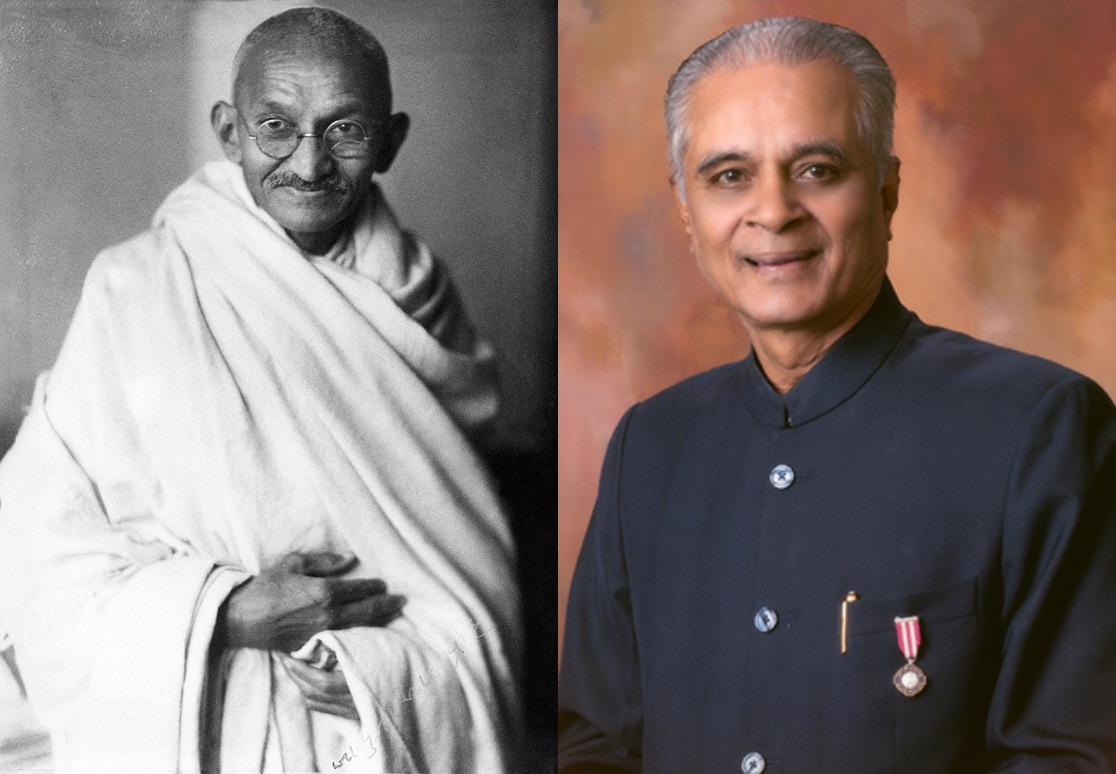
Gandhiji’s birth anniversary on October 2 led me to ruminate about how he understood that the fight against colonialism is incomplete without the assertion of one’s culture and identity. That is why he chose to be visibly Indian while opposing the British.
In the freedom struggle, Gandhiji could have worn a suit and tie, but he chose the dhoti, and made khadi the symbol of empowerment. He could have lived in a colonial-style bungalow, but he chose to build an ashram in the Indian way. He wrote his first book, Hind Swaraj, in Gujarati, although he could have done so in English. He admired and respected the Bible, but was well-versed in the scriptures and philosophy of his own faith, and the other religions of his country. He understood the utility of English — and indeed spoke and wrote it impeccably — but was never in doubt about the centrality of India’s own languages.
What is remarkable is how the Mahatma had the courage to be himself without affectation and hate. Charles Smith, who was Mountbatten’s valet and butler in India, recalls what happened when Gandhiji came one afternoon for tea at the Viceroy’s palace. The tables in the garden were laden with scones and sandwiches, but Gandhiji smiled benignly at his hosts and chose “to eat a bowl of curds he had brought with him. He even persuaded Mountbatten to sample a mouthful! His Lordship bravely swallowed it, but gracefully declined the offer of more.”
On another occasion, Gandhi responded to the urgent summons of Mountbatten in his own inimitable way. “Judge of my astonished delight”, Mountbatten recorded, “on my finding him enter my study with his finger to his lips to indicate that it was his day of silence. So I did all the talking. He scribbled a few friendly notes on the backs of used envelopes.” There was also the occasion — once again at the Viceroy’s palace — when during a lunch break, Gandhiji spread out a chattai on the ground and sat down to eat. A horrified British official kept this note: “I remember Gandhi squatting on the floor and after a while a girl coming in with some filthy yellow stuff which he started eating without as much as a by your leave.”
Such idiosyncrasies, if that is how some would wish to see them, were not only about the superiority of goat’s curd over scones, or the virtues of silence, or the merits of sitting on the floor while eating. They were symbolic of a revolution of spirit, a proclamation of intent, that even under British subjugation, he would meet with the rulers as himself. His persona was, therefore, at once rid of both deference and mimicry.
In the still ongoing struggle by India, and Indians to reappropriate their own culture and heritage, Gandhiji’s ability to be culturally rooted in his own soil, without xenophobia or jingoism, holds a very important lesson.
Dr SB Mujumdar
This week, I was in Pune to deliver lectures at the Symbiosis International University (SIU) on its motto, Vasudhaiva Kutumbakam (the world is one family). As a distinguished professor at SIU, I take a course on this foundational and revolutionary principle of Indian civilisation, articulated thousands of years ago by our sages and seers. It was a privilege for me to meet once again Padma Bhushan Dr SB Mujumdar, the founder of this leading university.
Mujumdar ji is a remarkable person. His career began as a professor of Botany at the Fergusson College in Pune. But he had a vision of setting up his own educational institution. He was particularly moved by the hardships often faced by foreign students — especially those from Africa and Asia — who had come to study in India. He resolved, therefore, to provide such students with a home away from home where they would be both respected and welcomed.
This vision — that education is the best means to further international understanding — led him to found the SIU in 1971. It was a bold step, and the hardships were many. But he had the grit and the perseverance to give shape to his goal. Today, SIU is one of the leading universities in the country, with 46 institutions, over 32,000 students from all the states of India and 85 countries, and some of the best faculties nationally. Now that he is 86, Mujumdar ji has seen, in his lifetime, his vision come true.
Vidya Yeravdekar, his daughter, is now fully devoted to taking SIU to even greater heights. She is an old friend, as is her husband, Rajiv, and it was a great pleasure catching up with them too.
Pavan K Varma is author, diplomat, and former Member of Parliament (Rajya Sabha).
Just Like That is a weekly column where Varma shares nuggets from the world of history, culture, literature, and personal reminiscences with HT Premium readers
The views expressed are personal


