
 E-Paper



Monkeypox is a chance to fix inequities in the global health system
A good starting point could be to conceive of a much more robust, overarching mechanism for equitable distribution of global vaccines. Unless global health inequities are addressed, national health security will continue to be illusory, regardless of any amount of economic and political clout

 Prefer HTon Google


By the end of 2021, high-income countries (HIC) had vaccinated around 80% of their population for Covid-19. In contrast, the number in many low-income countries (LIC) stagnated in single digits. In September 2021, the World Health Organization (WHO) announced an ambitious target of achieving 70% global immunisation coverage by the middle of 2022 under the COVAX initiative. But problems in the rollout and supply chain nixed that goal.
While HICs made several pledges to donate vaccines to COVAX, the initiative repeatedly faltered in its ambitions, owing to quantitative and qualitative inadequacies in such donations. Médecins Sans Frontiers estimates that around a million deaths could have been pre-empted by mid-2022 if doses were optimally redistributed.
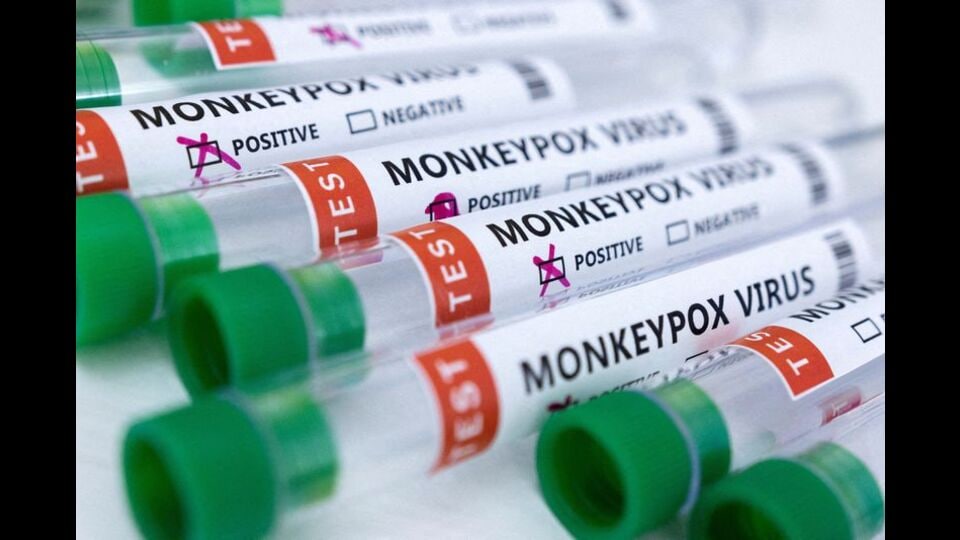
The monkeypox outbreak looks to be going the same way. It is triggering a knee-jerk response despite the learnings of Covid-19. The foremost vaccine candidate is the Modified Vaccinia Ankara (MVA), a milder smallpox vaccine, found to be effective against monkeypox by the United States’ National Institutes of Health in the aftermath of the 2003 outbreak. The manufacturer of MVA, Denmark-based Bavarian Nordic, faces a planned closure of its production unit until the end of 2022. Around 16 million vaccine doses are reportedly available worldwide, largely not in a ready-to-use form, but are already committed to the United States (US), Canada, and a few European countries. The US has reserved 88% of doses, owing to its investments in the vaccine’s development following the 2003 outbreak.
Against this backdrop, the US and Canada have embarked on vaccination programmes for their at-risk populations, which would entail deploying millions of limited doses in settings where such action is hard to argue for. Couple that with the still incomplete evidence of the vaccine’s full efficacy in human populations, and it shows that Covid-19 has only further stoked global conservatism in epidemic response. This is further exemplified by the case of Japan reportedly seeing its LC16 smallpox vaccine (another vaccine candidate) stockpiles as a national asset.
The knowledge that infectious diseases know no frontiers has repeatedly failed to assail the fortresses of politics, buried under economic, nationalist, and populist considerations. And Covid-19 has paradoxically fortified these fortresses. In turn, such narrow interests have culminated in trillions of dollars in losses worldwide, which haven’t spared HICs either.
While much is yet to be discovered, monkeypox generally presents as a self-limiting condition that only occasionally turns critical. While bearing epidemic potential, it appears to be far less transmissible and thus spreads slower than Covid-19. It is vaccine preventable, and unlike Covid-19, doesn’t present the need to develop vaccines from scratch, with the smallpox vaccine being 85% effective against it. Further, the DNA virus causing monkeypox is likely to be less susceptible to treacherous mutations that require reorganisation of entire vaccination and control strategies.
These traits imply that there is enough room for HICs to rethink the paradigm of outbreak response, keeping in view global equity and without taking hasty and reflexive decisions with only national interests in mind. Moreover, given the absence of a dire situation this time – at least at the moment – strong political leadership and optimal public health communication can take on nationalist and populist pressures, which have repeatedly repressed crucial global health equity concerns. This can set a desirable precedent for global health cooperation in the interest of HICs and LICs. Covid-19 was characterised by an iniquitous global scramble for vaccines based on market mechanisms, in which LICs had little scope to succeed. A good starting point could be to conceive of a much more robust, overarching mechanism for equitable distribution of global vaccines. Unless global health inequities are addressed, national health security will continue to be illusory, regardless of any amount of economic and political clout.
Soham D Bhaduri is a physician, health policy expert, and chief editor of The Indian Practitioner. The views expressed are personal


