
 E-Paper



Punishment for praying is against India’s ethos
Muslims are as Indian as the rest of their compatriots. They have made as many and as deep sacrifices as people of other faiths for their country.

 Prefer HTon Google


It is agonising to see a section of compatriots turn exceedingly intolerant of the beliefs, culture, tradition, and religion of the minorities — in particular, the Muslims. So much so that they cannot bear to see Muslims performing their obligatory prayers in public sight.
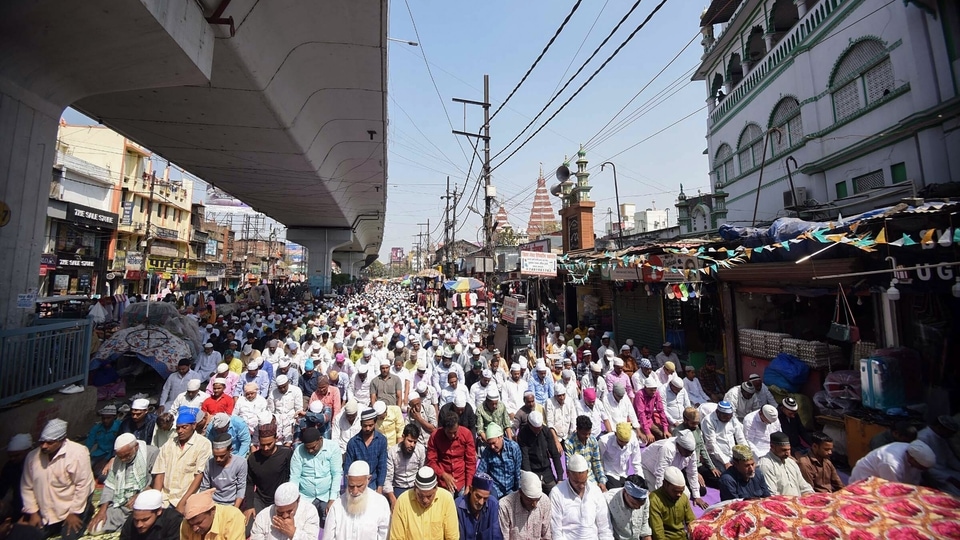
Filing first information reports (FIRs) against Muslims and getting them arrested for praying in parks, shopping malls, railways, and bus stations, even though praying in public is not a criminal offence unless, of course, it disturbs communal harmony or causes public inconvenience.
The situation is changing for the worse. Some have taken it upon themselves to thrash and abuse Muslims for praying in public — as a uniformed officer did recently in the national capital. As if this was not enough to shake the collective conscience, a group of rowdies barged into the hostel of an old and reputed public university to physically stop a group of international students from praying as a congregation.
Disciplinary action has been initiated against the accused police officer in the Delhi incident, and some of the suspects have been apprehended and arrested for trespassing and resorting to violence against hostel inmates at Gujarat University. These steps signal that India, like most civilised countries of the world, is governed by the rule of law, and no one is permitted to take the law into their own hands.
For its part, the university has initiated a few administrative actions. The international students are being shifted to an exclusive hostel, which it thinks would be safer and more secure. It has notified a comprehensive code of conduct for the residents. It, inter alia, prohibits the use of public space for any private, religious or outside activity, and may require inmates to give written undertakings.
Going by media reports, the university believes that the mob attack cannot be solely attributed to the offering of namaz by the international students in their hostel; it is the insensitivity of the students to the local culture, particularly food preferences, that is at the core of the conflict.
India aims to attract at least 200,000 international students from across the world. In 2022, it had less than 47,000. Most are from Asia (71%) and Africa (23%). A sizeable proportion in these countries, and thereby, in the expat student population in India, are Muslims. Incidences like these may deter prospective expatriate students.
Much more than losing a couple of thousand international students is at stake, though. The recurrence of such incidents reinforces a perception of growing intolerance and hatred against Muslims. They create the perception that Muslims are being made to cede the rights and privileges that the Constitution guarantees.
Most Muslims offer their prayers individually or in small groups in their homes if they have one or at some private place in their neighbourhood. It is only during Friday noon prayers, the early night Tarawih prayers during the month of Ramzan, and the prayers of Eid and Bakrid that the congregation extends beyond the precincts of the mosque.
Indians have generally been deferential to all religious beliefs, including Islam. They rarely take offence to prayers. Muslims in prayers are seldom stopped, much less attacked. What we are seeing today is a new trend and must be nipped in the bud.
Muslims, on their part, must be mindful that their prayers do not inconvenience the public at large. In most mosques where I have offered Friday prayers, I found imams urging people to squeeze as much as possible inside the mosque, lest they obstruct traffic.
Muslims may consider organising prayer congregations in two or more rounds such that those who could not find a place inside the mosque in the first round could be accommodated in the next. Many mosques do so. Let many more follow suit.
Muslims are as Indian as the rest of their compatriots. They have made as many and as deep sacrifices as people of other faiths for their country. They are equal citizens, and the country’s Constitution guarantees them the right to practise their religion and to promote and preserve their language, culture, and tradition. Namaz or salat is one of the five foundational pillars of Islam. Muslims are obligated to pray five times a day; the Friday noon prayers can be offered only in congregation.
Ramzan is the most holy month for Muslims, and they must do as many good deeds as they can during this month, including offering additional prayers. It is their religious duty and every civilised society must enable them to pray in peace and discharge their obligations toward their God.
Secularism may not be the flavour of the season, but must we also ignore Goswami Tulsi Das, who, in Ramcharitmanas, counsels parhit saris dharm nahin bhai, par peera sam nahin adhmai (Taking care of others is the best of all religions while causing harm is the worst of all sins).
Vasudhaiva kutumbakam (the world is one family), a phrase taken from the Maha Upanishad has been evoked by all prime ministers, from the first to the present, though in somewhat varying sense and purpose. It is only one part of the second verse of the shloka. The other part informs that the world is one family only to the magnanimous (Udaar charitanaam, tu vasudhaiva kutumbakam).
Furqan Qamar, a former advisor to the erstwhile Planning Commission, is professor, Jamia Millia Islamia, Delhi. The views expressed are personal


