
 E-Paper



Remember the multiple lessons of the Kargil War
Never trust the sweet-talking Pakistani military personnel, their politician, or their Deep State. Pakistan has always aimed at breaking the will of Indians to fight the Pakistan armed forces, Inter-Services Intelligence, clerics and terrorists. Pakistan always failed - India always won

 Prefer HTon Google


Indian military actions in 1999 were replete with heroic acts in conformity with Indian history, culture, and ethos. We as a nation adore our gallant and selfless heroes. No names are mentioned in this article because we do not want to miss anyone. The recognised and the unrecognised faces, both played a vital role as sons and daughters of Mother India, during the Kargil conflict, irrespective of place of residence, caste, creed, religion, gender, age or any other so-called factor, which is often used to create turbulence in the country to gain self-importance by power-hungry entities.
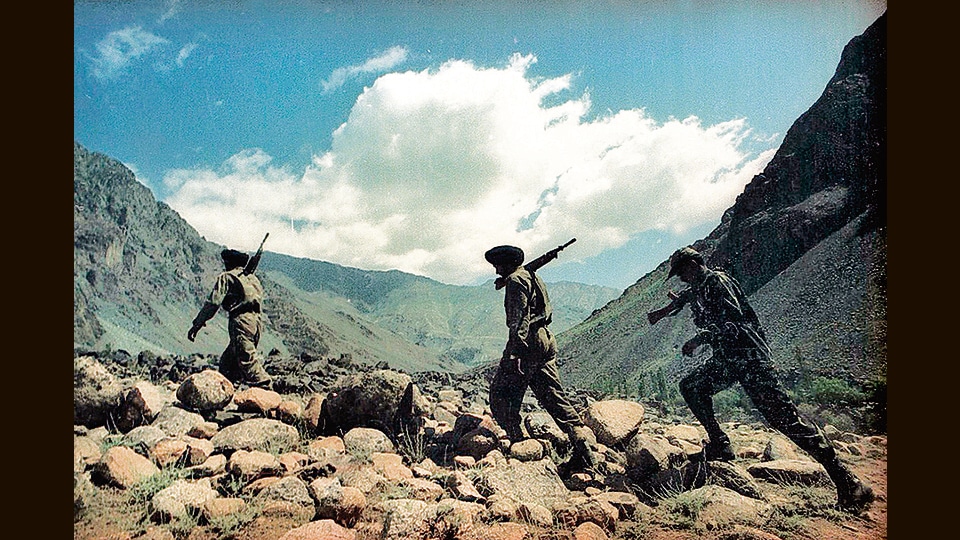
The Indian Army units and all other national security stakeholders proved their worth and made the nation proud. Officers, JCOs, and jawans displayed outstanding team spirit, so characteristic of the Armed Forces. Individually each one demonstrated character, calibre, and commitment. Young majors and captains valiantly charged uphill in the face of near-certain death, leading their platoons, companies, and small teams braving all odds of treacherous terrain, biting cold, stinging icy winds, and the well-entrenched Pakistanis. The young and not-so-young commanding officers were in the real war, many of them for the first time, and many had braved such odds many times; no more wargames and theoretical discussions. Instead, analyses, assessments, decisions, and compliances were real, on the spot, and had no scope of errors.
The Indians battled the duplicitous Pakistani army. Bullets, splinters, and the high-altitude area took a toll on the brave army personnel. Every arm and service put the shoulder to the wheel per the expected charter. Determination and dedication were now acts and not adjectives. Selfless actions were beyond the capabilities of the weak-hearted ones. The Indian youth in uniform were at their best against all odds - protecting the nation; unlike many who excel only in protesting and destroying public and private property, such youth have no place in uniform.
The pilots were equally at risk and performed to the best of their capability under severe constraints. This war needed real warriors, and that’s what the Indian Military provided the nation with. Young boys and girls join the military, and the demanding schedule moulds them into determined military persons and conflict situations get them to prove that they are the real warriors in the hour of crisis.
Many people innocently ask: What does the military do during peacetime? The military goes about training silently and effectively; when the need arises, it fights ferociously and then returns to its routine activities graciously. India is proud of her military, even if the majority does not know much about military matters. Many of the family members do not know the detailed job profile or the risks involved with their near and dear ones in the military. However, they all know that the Indian military will always save the nation. Kargil was one such hopeless situation that occurred and was restored in 1999.
In May 1999, the Indian Prime Minister had been cheated by the Pakistani establishment; the Pakistani Prime Minister claimed that he had been cheated by his army chief - nothing new in Pakistan and subsequently, as always the Pakistani establishment cheated its people by claiming victory in the Kargil conflict. Pakistani historians can easily pass off as fairy tale writers.
The Indian military winter-vacated areas in Kargil, Batalik and Drass Sector had been deceitfully occupied by troops of Pakistan’s Northern Light Infantry (NLI). An established code of conduct for many years on trust had been broken by General Pervez Musharraf, he wanted to avenge the Pak humiliation of 1984 Siachen.
A Mohajir, Musharraf wanted to display his loyalty to the nation beyond the Punjabi generals. He had tried enough tricks to regain Siachen Glacier but had consistently failed, he belonged to the elite SSG; quite a humiliation for him and the SSG. To cut the highway to Leh from Srinagar was the deceitful master stroke planned by Musharraf. Inducting NLI troops under the garb of irregulars was quite the same story script as of 1947-48 and even 1965. Pakistan’s ‘Deep State’ is never tired of repeating its dirty tricks despite repeated failures.
Pakistan deceived India in 1947-48, 1965, 1971 and in 1999 along the borders and multiple times using terrorism in Jammu and Kashmir and rest of the country targeting Indian religious places, markets, democratic and commercial institutions. Pakistan has always aimed at breaking the will of Indians to fight the Pakistan armed forces, Inter-Services Intelligence, clerics and terrorists. Pakistan always failed - India always won. As a nation, while we always win the conflicts, we need to consolidate like victors in our conduct; we have to do much better by looking after the families of the martyrs as a civil society and as organs of the State, the respect and honour should not be event specific or only during hours of crisis.
Multiple lessons for life for Indians; never trust the sweet-talking Pakistani military personnel, their politician, or their Deep State - it is different playing cricket or sharing the Bollywood cocktail circuit from the combat on the icy heights of Kargil and Siachen. The young Indian military officers proved their mettle they are made of and they led the brave Indian troops who repose full faith and confidence in the military officers especially when the crisis demands maximum sacrifice, they never ask unnecessary questions; Indian military training standards are one of the toughest ones and they make real warriors out of the boys and girls.
The entire nation rallied behind the Indian military; those who laid down their lives for the nation were given heroes welcome when their mortal remains reached their families - a great sense of patriotism was generated with the family deciding to send the brother- sister; son-daughter or wife to join the military to serve the nation and avenge the death of their loved ones.
For the next couple of years after the Kargil conflict, there was a tremendous response of youth to join the military as officers and subordinates in huge numbers, with the good calibre and great passion. The families - rural and urban supported the commitment of the youth. Unfortunately, many got injured and disabled for life - our society has to look after these great warriors.
The Indian military fought with what it had, won what it had temporarily lost and learnt what it had forgotten - never trust your enemy; forgiving the enemy and forgetting treachery can happen only in films and TV serials. There was a segment of good nationalist filmmakers who produced good films like LOC and Lakshya inspired by real-life military heroes. The media brought the Kargil conflict into the drawing rooms which promoted the national cause. Adventurism created some media careers at the cost of Indian interests, while the more significant media segment displayed great maturity and gratitude to the silent heroes.
India as a nation salutes all its heroes of 1999; those who are not with us and those who are with us; those who fought in the vicinity of Kargil and those who silently contributed along the LOC beyond Kargil and exerted tremendous pressure on Pakistani military elsewhere; they remained the silent and graceful contributors, especially the young Commanding Officers (who fought the war as Lieutenant colonels because the Army was struggling with promotions and vacancies due to the enhanced retirement ages change management) and their teams of energetic nationalist lieutenant colonels, majors and captains leading their platoons, companies, battalions and equivalent entities in other arms and services. Names of heroes are well known and respected - I dedicate this piece to a large number of silent, faceless, nameless, and dedicated heroes of the 1999 Kargil conflict. Kargil is believed by many as the only place of conflict - in fact the major battles were fought at many locations. Therefore, let us prepare for the current and future challenges by working on the lessons learnt with utmost zeal, enthusiasm, valour, patriotism, and fullest dedication.
VG Khandare is a retired lieutenant general and an adviser to the ministry of defence
The views expressed are personal


