Scientifically Speaking | How snakes lost their legs (and how to get them back)
The evolution of snakes involved monumental changes to the standard lizard body plan. And it wasn’t exactly a clear path to “leglessness” either. Some snake families probably lost and regained legs over millions of years.
One of the remarkable aspects of biology is just how much of our genes are shared with other animals. A flavour of the same gene that helps build a fly also makes a person. The same genetic switch that causes snakes to not have legs is changed in some people to give them extra toes and fingers.
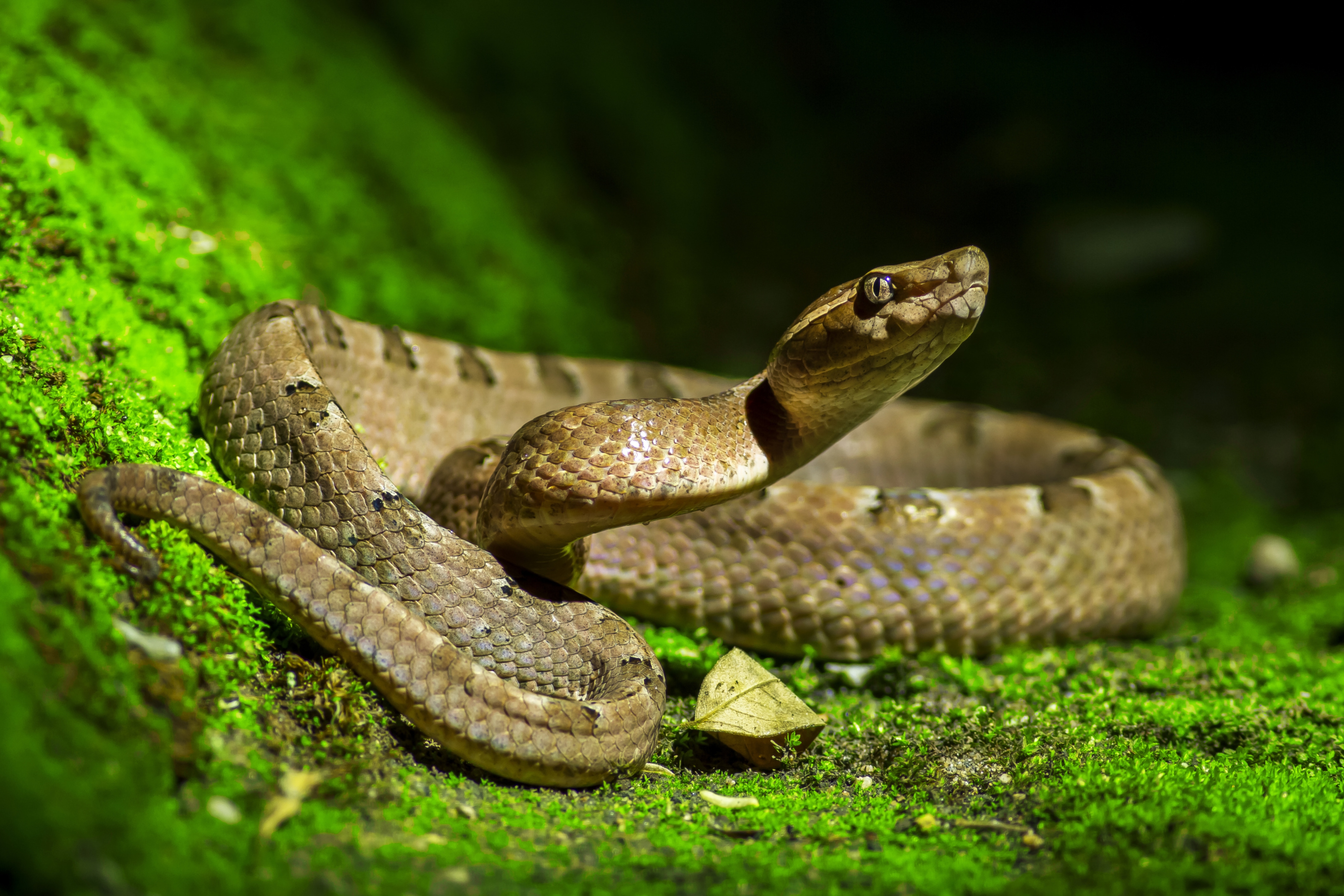
Researchers have found that the effect of the snake enhancer reduced over time, causing ancestors of modern snakes to have progressively shorter and shorter legs. (Shutterstock)
I'll get to all that, but before we can talk about legged snakes and people with extra fingers, we need to take a detour to look at fruit flies.
Fruit flies are found in genetics labs all around the world because they are easy to work with and have many of the same genes that are involved in the development of more complex animals like humans. In the 1980s, biologists Christiane Nüsslein-Volhard and Eric Wieschaus found many of the genes responsible for the development of flies. Amazingly, these genes also have similar and vital roles in other animals including humans. For their discovery, they shared the 1995 Nobel Prize in Physiology or Medicine.
One mutation in a fruit fly gene that causes the fly embryo to look stumpy was named hedgehog. Soon, multiple versions of the gene were found and named Desert Hedgehog and Indian Hedgehog. At the time, the third gene was discovered, Sega’s game Sonic the Hedgehog was popular. Robert Riddle, the discoverer, whimsically named it Sonic Hedgehog.
Since its discovery in flies, Sonic Hedgehog has been found in a wide array of animals. In humans, the gene is known as SHH. It gives rise to an incredibly powerful protein that diffuses out of cells and synchronises the development of vertebra, lungs, brain, limbs, and organs.
Don’t be taken in by the facetious name: Sonic Hedgehog can make a fish look like a fish, and a human look like a human. It is the conductor that waves a wand at the right time and creates the music of organs in animals.
For animals that fly, swim, or walk there’s a genetic circuit that determines our limb patterns. Although the functions of a leg, fin, or wing are different, quite astoundingly the same circuit has been preserved for hundreds of millions of years across different species. If Sonic Hedgehog is activated in the right way at the right time, then we get a fully formed animal that looks like it’s supposed to.
On the other hand, the complete loss of Sonic Hedgehog can cause a major defect in which two eyes merge to become one. This “cyclops” condition has been found in offspring of sheep that ingest a weed containing a chemical called cyclopamine. Fortunately, this fatal condition is rare in newborn humans.
In more recent years, we’ve learned that Sonic Hedgehog works in tandem with another DNA sequence which is its enhancer. The enhancer turns on Sonic Hedgehog when it is supposed to be turned on, and it causes birds to have wings, fish to have fins, and humans to have fingers. Like a puppeteer moving the strings of a puppet, the enhancer controls Sonic Hedgehog.
What is really surprising is that the enhancer is found at a long distance (close to a million letters away in DNA) from Sonic Hedgehog, the gene it controls. This is like finding a light in your bedroom is turned on by a dial in a house in a different city.
The enhancer is like a rheostat that can increase or decrease the amount of Sonic Hedgehog. A single letter change in its DNA sequence can result in an extra toe or finger in a person. This condition, known as polydactyly, has also been seen in mice, cats, and guinea pigs. A much greater change in the enhancer can result in loss of limbs. In fact, it is the enhancer that causes the shape of snakes.
One of the defining characteristics of snakes is, of course, that they have no legs. Some snakes like cobras and vipers are completely limbless. Others like pythons and boas have, hidden away, remnants of legs like pelvic girdles and parts of the femur.
Around 150 million years ago, the ancestors of snakes did have functioning legs. Researchers have even found snake fossils that are 90 million years old with working hind limbs.
Snakes lost their legs due to mutations in the enhancer of Sonic Hedgehog. But we know that snakes didn’t lose their legs all at once. Researchers have found that the effect of the snake enhancer reduced over time, causing ancestors of modern snakes to have progressively shorter and shorter legs.
The evolution of snakes involved monumental changes to the standard lizard body plan. And it wasn’t exactly a clear path to “leglessness” either. Some snake families probably lost and regained legs over millions of years.
Can we make other animals more snake-like in shape? Mice are standard lab animals for genetic experiments. If we genetically modify mice with enhancer sequences from humans or fish, they keep their limbs. If we insert enhancer sequences from pythons (which have rudimentary limbs), there’s some limb development. But if we take the enhancer sequence of a completely limbless snake like a cobra and put it into mice, it creates stunted mice.
Put a snake’s genetic unit in a mouse, and the mouse starts to look a little bit more like a snake.
What about the other way around? Can we insert enhancer sequences (from mice or humans) into snakes and give them legs? The idea of limbed snakes might be alarming to you know, but as I mentioned, snake ancestors did have legs which they lost over millions of years.
Once the enhancer that gives rise to legs was finally lost in snakes, it probably caused a domino effect in the loss of other genes needed for legs to be formed. So, turning legs back on in snakes will be harder than creating a limbless animal.
But since evolution has created them in the past, legged snakes are in the realm of possibility.
Anirban Mahapatra is a scientist by training and the author of a book on COVID-19. He’s working on a second popular-science book

 E-Paper