Scientifically Speaking | Releasing a virus to kill off millions of fish
Officials in Australia released a report last month with a plan to use cyprinid herpes virus 3 as a means of biological control of rapidly increasing populations of European carp. So, what is cyprinid herpes virus 3?
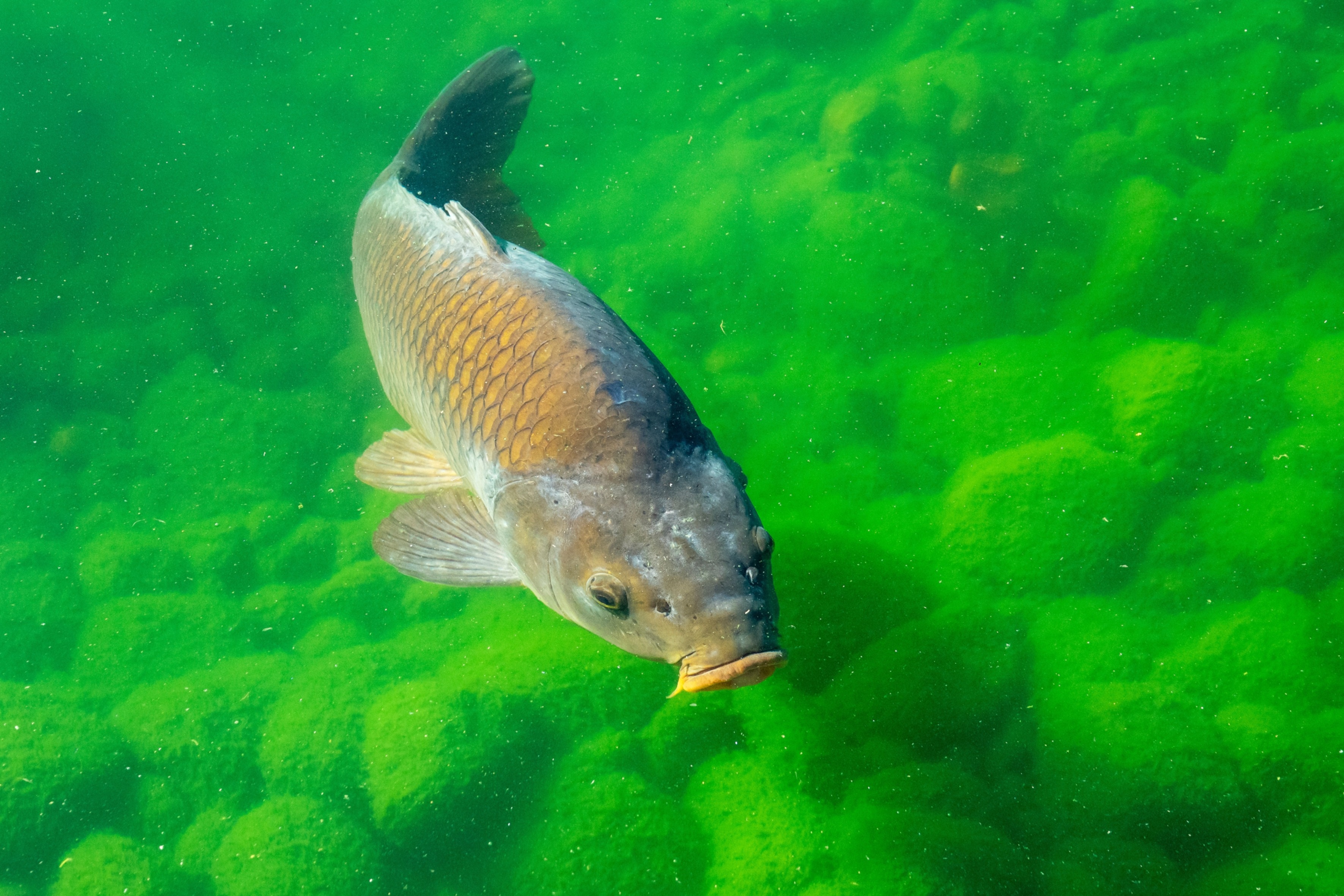
Australia has a problem that it wants to solve by releasing a virus into the wild. Last month, officials in that country released a report with a plan to use cyprinid herpes virus 3 — a virus that causes disease and death in fish belonging to the carp family — as a means of biological control of rapidly increasing populations of European carp. European carp is thought to have originated in Asia. However, it is now an invasive species found in many parts of the world. On the Australian Museum website, Mark McGrouther writes that introductions throughout the world have made the European carp “the world’s most widely distributed freshwater fish.”
European carp was first introduced in Australia by Europeans over a hundred years ago. Since its introduction, carp populations have decimated local ecosystems. (Shutterstock)
European carp was first introduced in Australia by Europeans over a hundred years ago. Since its introduction, carp populations have decimated local ecosystems in Australia, with estimates that carp make up over 80% of the fish biomass in the Murray-Darling Basin System.
The fish are bottom feeders and increase the turbidity of water. Increasing competition from carp has also led to a precipitous decline in populations of local Australian fish species. Fish movements also erode riverbanks. For these reasons, Australia considers carp a pest species.
Before considering releasing a virus, Australia has considered many other approaches to controlling carp populations. Carp are not considered a prize fish for anglers, and they breed quickly in large numbers, so efforts to control them through recreational fishing have been unsuccessful.
It is natural to wonder why European carp can’t be caught and marketed as food. Carp is eaten in many parts of Asia and even in some parts of Europe. Other species of carp such as rohu, katla, and mrigel are consumed almost daily in Eastern India. While much of the world suffers from a paucity of affordable, high-quality protein, wouldn’t Australia’s approach seem like a waste of an edible fish?
It might, but the fact is that European carp is not eaten in Australia. The fish does not fillet well. It has fatty layers which are considered undesirable. And its flavour has been described as “muddy” because of its feeding habits. It also suffers from a problem of perception as a trash fish in parts of the world where it has been introduced.
What if it was called something other than carp? Rebranding Patagonian toothfish as Chilean sea bass resulted in a whopping increase in its popularity in North America. But such a rebranding effort for European carp to “Copi” has not resulted in a similar result. European carp might be one of the most popular edible fish in parts of Asia, but in Australia, it will probably find most of its use as fertilizer and bait.
There’s also the problem of scale. A conservative estimate is that there are over 200 million carp in Australia. And hence, the idea to release cyprinid herpes virus 3 to try to reduce carp population.
Here's what we know about cyprinid herpes virus 3. It belongs to the broader family of viruses that cause herpes in humans, but this particular virus does not transmit to people. This virus spreads rapidly in carp populations, especially during breeding time. It is highly lethal and is projected to reduce carp populations by anywhere from 40% to 80% (according to the new report). The virus presumably poses no health threats to fish native to Australia.
A final decision has not been made on whether to release the virus. If biological control of carp is successful and the virus spreads among fish populations, there’s the question of how to remove the enormous biomass of dead fish that would clog up and start to decompose in waterways.
The report also does not definitively say that native fish are safe from infection. Indeed, without further studies on the host range of the virus that will be difficult to assess.
But even if no other fish are infected, releasing a biological agent requires close observation. Viruses are not under selection pressure to mutate as long as they have susceptible hosts (in this case, carp) that they can infect. But once, carp populations dwindle or surviving carp show resistance to the virus, the host range of the virus might change.
Anirban Mahapatra is a scientist by training and the author of a book on COVID-19

 E-Paper