Scientifically Speaking | Welcoming a golden era of RNA vaccines
If someone had told me, when I was working in a lab, that I would one day be injecting RNA into my body in the middle of a raging pandemic, I would certainly have been surprised. But as I got a dose of an RNA vaccine, I thought of the advances prior to the pandemic that made these vaccines possible
If someone had told me, when I was working in a lab, that I would one day be injecting RNA into my body in the middle of a raging pandemic, I would certainly have been surprised. But as I received a dose of an RNA vaccine, I thought of the advances prior to the pandemic that made these vaccines possible.
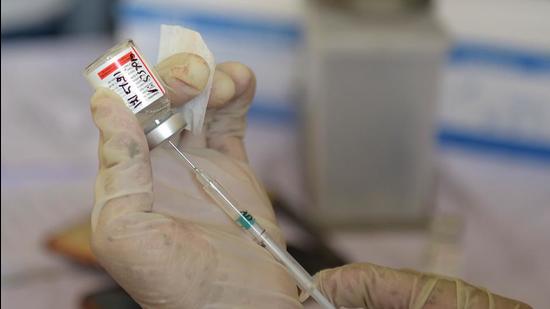
Representational Image. (HT file)
RNA is not an alien macromolecule. Our bodies naturally contain RNA. Inside our body, RNA performs various functions. Messenger RNA (mRNA) is made corresponding to segments of DNA in the genome. It carries instructions to make proteins, which do the bulk of jobs in the body.
Viruses such as SARS-CoV-2 bring their own RNA and use it to make copies of their genomes, but they hijack our cellular machinery to make their own proteins.
An mRNA vaccine works by providing instructions for human cells to make a viral protein like the coronavirus spike. Then the body raises an immune response against the virus prior to encountering it.
RNA vaccines fuel the need for speed. Once you have a target genetic sequence, you can put together a vaccine candidate in a matter of days. Conventional vaccines typically take more time and are harder to make.
But while mRNA vaccines for Covid-19 were created and received emergency approval in under a year, the enabling technology took decades. The pandemic provided the impetus to accelerate the process of developing and rolling them out on a large scale.
Every single discovery in science has a through-line to earlier discoveries. Major advances in the past three decades led to the mRNA vaccines in use today. In turn, these vaccines will lead to next-generation vaccines for other diseases. In my opinion, there are four turning points that made these vaccines possible.
For mRNA vaccines, we can thank a landmark paper published in Science in 1990 which showed that RNA injected into the muscle tissue of mice resulted in corresponding protein being made. This discovery converted cells into factories for making protein targets, paving the way for the RNA vaccines that we have today. However, the amount of protein made was initially low and the RNA used was unstable. RNA vaccines would have to wait a few more years for their moment.
A second milestone was the rapid and cheap sequencing of genomes. The first bacterial genomes were sequenced in the 1990s. The draft sequence of the human genome came a few years later. The genome of SARS-CoV-2 was available in early January 2020, a few days after the causative virus had been identified. We now have millions of SARS-CoV-2 sequences that we can use to track the emergence of variants. Next generation sequencing has sped up the time it takes to get genome-sequenced. This is important because once you have a target sequence, you can rationally design an mRNA vaccine candidate very quickly to a virus or its variants.
The third milestone was the ability to get RNA inside cells and keep it from degrading. RNA is inherently fragile, but scientists were able to change some of the chemicals it is made of so it is less unstable. Encasing RNA in a kind of fat molecule known as a lipid nanoparticle helped to improve stability and increased access to the inside of cells. Additional chemical tweaks made artificial RNA more effective for the human protein-making machinery.
The fourth milestone was the ability to create a version of the SARS-CoV-2 spike that is more susceptible, but accessible only before infection. The coronavirus spike comes in two shapes — one that looks like a squash flower that antibodies neutralise, and another that is like a spear that antibodies are less effective against. From the known shape of the spike protein, scientists made RNA that instructed cells to make viral spike locked in the squash-flower shape. Changing some of the building blocks locked the spike into a more vulnerable shape. This trick was used not just in mRNA vaccines, but also in some of the other effective vaccines.
The incredible success of RNA vaccines is paving the way for the next generation which will require less stringent low temperature requirements and actual RNA component. We can expect RNA technology to be used more widely for other vaccines. RNA vaccine manufacturing is rapid, scalable, and cost-effective. RNA is non-infectious and doesn’t get integrated into the genome. There is no vector so immunity develops against the target.
Once you can make one RNA vaccine, you can use the same infrastructure to make a different RNA vaccine against a different target. This simplicity is not available for all other vaccine types.
Apart for Covid-19, mRNA vaccines are also being created for rabies, Zika, respiratory syncytial virus, cytomegalovirus infection, parainfluenza, HIV, and Ebola. RNA vaccines are not only being developed to prevent disease but in the case of cancerto treat it. We are entering a golden era of RNA vaccines.
Anirban Mahapatra, a microbiologist by training, is the author of COVID-19: Separating Fact From Fiction

 E-Paper