E-Paper



Social Justice Matters | India must have a caste census
For seven decades, India has made policies that are either caste-blind or aimed at helping marginalised castes, but without any hard data on the numbers of castes other than Dalits. This lack of data on the relative strengths of castes has now fuelled the demand for a caste census

 Prefer HTon Google


Data is considered a global gold standard in policymaking. Over decades, experts and researchers have proven beyond doubt that gathering more data about a particular social, governmental or economic problem helps in more focused interventions because of better understanding about the causes of the ill, and the potential victims or beneficiaries.
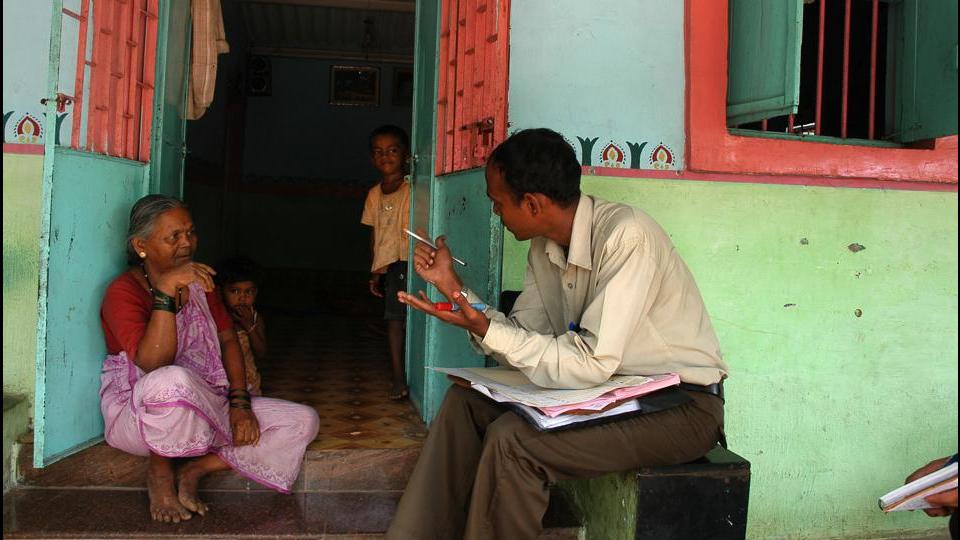
The only exception, it appears, is caste. For seven decades, India has made policies that are either caste-blind or aimed at helping marginalised castes, but without any hard data on the numbers of castes other than Dalits.
This lack of data on the relative strengths of castes has now fuelled the demand for a caste census – the first since Independence – that has the potential to not just realign social realities and blunt the still-ubiquitous power of upper-castes but potentially redraw political dynamics.
The demand for a caste census is the third major issue redefining what we think of caste and government policy in India today – the others being the Supreme Court case on reservation in promotion and the debate on quotas for the Economically Weaker Sections (EWS), discussed previously here and here.
In 1950, the Indian Constitution set forth a bold mechanism to uplift the scheduled caste (SCs) and scheduled tribes (STs), whose literacy languished in single digits and social condition was mired in the evils of untouchability and administrative neglect. The Constitution mandated reservations for these marginalised groups in education and government jobs.
All subsequent census counted these two communities separately, as it did religious minorities. This was a reversal of British policy of counting each caste separately, though some scholars have later raised questions about the accuracy of these counts given that it is relatively complex for an enumerator to verify someone’s caste in a country like India.
The lack of data on the relative strengths of castes – except the SCs – had two distinct consequences.
One, it forced government policy to be based either on projections from the 1931 census or other official sample surveys without a physical hand count like the census. When the Mandal Commission recommended reservations for Other Backward Classes (OBC) in its report, it relied on similar estimates to peg the strength of the OBCs at 52%. There was no official data on just how much of India is lower-caste, and it stymied not just policial and social mobilising but also academic research.
Two, the practice of counting only SCs visiblised the most marginalised and put the burden of caste on them. Caste in India started to mean only SCs, and later OBCs, whereas caste is kept alive by the so-called upper caste and dominant groups. It also helped these upper-caste communities claim the caste-less bracket of “general category” and cemented their caste-begotten gains in the name of merit and equality. It helped reverse the merit debate – now upper-caste communities with a historic head-start and assistance from discriminatory practices could claim equality in their fight to end reservations for the most vulnerable groups.
A direct consequence of this phenomenon has been increasingly visible over the last decade as dominant groups have attempted to claw back their social dominance by demanding reservations. But as Jats, Patels and Marathas hit the streets for quotas, did we know what percentage of the population they make up, or what their social and economic indices are? No.
A caste census can change this. Of course, such a practice can be fraught with problems initially – will enumerators have to be retrained? Which castes will they come from? How will they verify caste data? Will there be a check? How to ensure people don’t return wrong data out of fear or aspiration? – but like other firsts, the general election comes to mind, it shouldn’t stop a good step.
Moreover, the government has repeatedly said the 2011 socio-economic and caste census was riddled with errors. A good place to start would be to list these errors, and start from there.
The implications of a full caste census are manifold. It will give us more accurate data on the strengths of communities and help in policymaking. We know anecdotally that upper-castes continue to dominate education and employment, but will it be borne out by data? It will show exactly where reservation has succeeded and where it has been allowed to fail. It will spotlight exactly which communities are able to take the advantage of the general category. It may even show us that caste exists across faiths, if the enumerators allow Dalit Christians and Muslims to record their caste and acknowledge it.
There is, to be sure, a political consideration animating the fight. Parties that gained strength during the 1990 Mandal movement and counted dominant OBC groups among their support base think the churn of a caste census can help them regain constituents wooed away by the Bharatiya Janata Party’s broader appeal over the last seven years. Whether this will happen is unclear; after all non-dominant OBCs moved to the BJP due to a complex web of ground-level social and economic factors.
But political dynamics aside, a caste census can radically alter our understanding of Indian social realities. Some fear it can further cleave society on caste but as numerous atrocities show every year, such rifts already exist. Equally, a turning down of the demand will also tell us something instructive about which groups control policymaking and take decisions.
dhrubo.jyoti@htlive.com
The views expressed are personal
India is unequal, and inequality cuts across the axis of caste, class, region, gender and more. Dhrubo Jyoti brings his keen observational skills, immersion in social movements and reportage to show a mirror to society, in his column for HT Premium