
 E-Paper



Strategic flexibility is the lodestar for India’s US policy
New Delhi went into the bargaining game with an eye on mutual benefits and expanding the pie rather than dividing a fixed pie — and it has worked

 Prefer HTon Google


Prime Minister Narendra Modi’s highly anticipated meeting with United States (US) President Donald Trump to set the course for bilateral relations between India and the US under the new American administration offered a demonstration of the value of strategic flexibility. With Trump rattling all foreign counterparts through characteristically hardline demands and complaints, the way Modi handled Trump’s transactional nature while advancing the long-term strategic elements of the India-US friendship was surely a diplomatic feat.
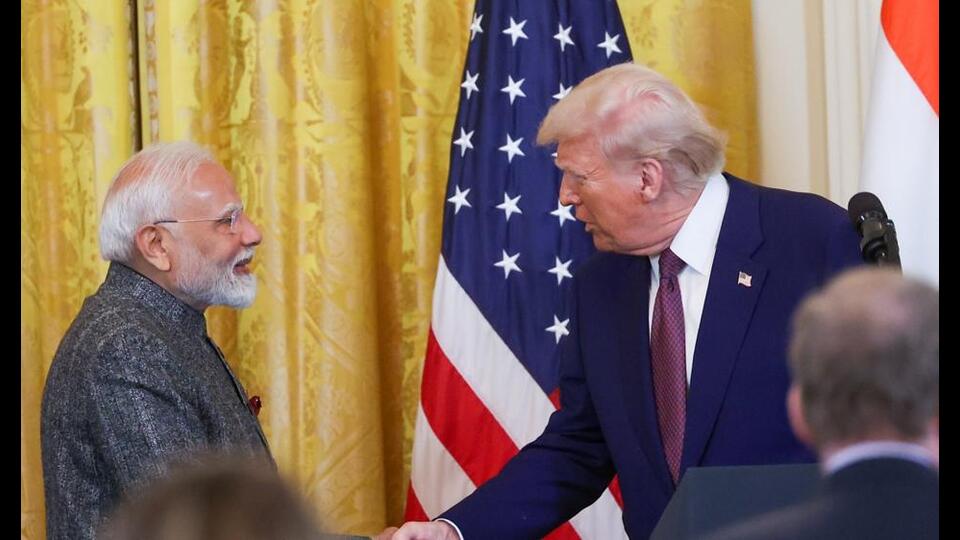
India is too independent and ambitious a power to follow a path of appeasement of the US. But being mindful of the overall gains of the US-India’s comprehensive global strategic partnership and aware that India’s quest to become a leading power in the world cannot be accomplished without close economic, technological, military, and geopolitical coordination with the US, Delhi has adopted a smart diplomacy toolkit. Conceding here and there on headline issues, such as illegal immigration, while deepening the alignment with the US to build India’s sinews and keep China under check is the formula guiding India’s plan to manage and influence Trump early in his second term.
Trump explicitly himself stated that India is no pushover after meeting Modi, whom he labelled “a much tougher negotiator than me” and added that “there is not even a contest”. For a politician like Trump, who loves to brag that he always wins with every foreign counterpart, to even admit indirectly that he did not get everything he sought from Modi shows that New Delhi went into the bargaining game with an eye on mutual benefits and expanding the pie rather than dividing a fixed pie.
One of Trump’s targets was to pressure India to buy massive big-ticket US-origin defence equipment. His announcement that “we’ll be increasing military sales to India by many billions of dollars” and “ultimately provide India with the F-35 stealth fighters” sounded like a breakthrough for the US, but it was not a bad deal from India’s perspective.
Since diversification of foreign arms providers is a preferred goal for New Delhi, acquiring more US-made weapons systems, as per specific needs identified by India’s armed forces for sharper counterbalancing of China, is in Indian interests. From 2019 to 2023, only 13% of India’s global arms imports came from the US, which is behind France and Russia in the list of largest foreign defence suppliers to India.
Despite the longstanding goal of indigenisation to meet India’s defence needs, domestic bureaucratic and technological hurdles and the complexities of transferring technology from abroad mean that, in the near term, some off-the-shelf international purchases are inevitable for India to defend itself and project power internationally. Mollifying Trump with relevant purchases while simultaneously deepening and speeding up co-production and technology transfer initiatives is the optimal strategy for Modi.
The F-35 acquisition roadmap was music to Trump’s ears, but more consequential for India was Modi’s declaration that “we are actively moving in the direction of joint development, joint production and transfer of technology”, and the launch of initiatives such as the Autonomous Systems Industry Alliance (ASIA) for underwater domain awareness (UDA).
With a shared goal of checking China’s rapidly expanding naval power and encroachment, it is not a question of which side gains more in a specific defence agreement between India and the US, but rather whether India’s comprehensive military capabilities are being boosted or not.
On trade, which is Trump’s pet peeve with every country he engages with, Modi entered the summit meeting after making pre-emptive moves to avert maximal American tariffs. New Delhi had already announced reductions in import taxes in sectors like textiles, automobiles, and industrial inputs, softening Trump’s notoriously hawkish economic nationalism. The US president had the satisfaction of saying after the summit that “some wonderful trade deals” with India were in the offing and that India was “going to be purchasing a lot of our oil and gas”.
Yet, India did not throw in the towel on trade. This was obvious as Trump imposed reciprocal tariffs on all partners of the US, including India, just before meeting with Modi. Trump also kept insisting with Modi right beside him that “whatever India charges, we charge them.” Modi, on his part, was firm that he wanted “a mutually beneficial trade agreement”, i.e., not a one-sided slam-dunk for the US.
As a result of the savvy Trump-Modi give-and-take, American exports to India will multiply, and the US’s trade war with India will not be as damaging. The objective reality of India’s relatively smaller trade surplus with the US ($45 billion in 2024), compared to China’s humungous surplus of $295 billion with the US in the same year, is worth reiterating here.
The analogy of China is crucial to keep Trump from over-attacking on trade because India is also a victim of Chinese predatory exports and has been vexed by the yawning trade deficit of its own vis-à-vis China ($85 billion in 2024).
Differentiating India from China through clearer strategic communication and reinforcing the message that India is not in favour of the radical push by China and Russia to launch an alternative global currency that leads to ‘de-dollarisation’, is also a powerful talking point with the Trump administration. Trump himself has no mindscape for liberal values-based juxtapositions, but the Washington elites and corporate America must be continuously sensitised to appreciate democratic India’s competition and counterbalancing vis-à-vis authoritarian China.
India will not easily get the advantage of American “strategic generosity” under a bean counter like Trump. Therefore, strategic flexibility should be the new mantra to preserve the mutually beneficial and most consequential friendship with the US, which is in India’s supreme national interest.
Sreeram Chaulia is the author of Friends: India’s Closest Strategic Partners.The views expressed are personal


