
 E-Paper



The great significance of being APJ Abdul Kalam
Besides his relentless work to see India as a developed nation and his vision for India 2020, it is the sheer sense of possibility that he brought to millions of Indians. He made us confident that if we had the will, we could make it happen

 Prefer HTon Google


I worked with APJ Abdul Kalam from 1993 to 2015 (except between 2000 to 2002). These were the years of his greatest triumphs, capping a career that already saw his successes in the space programme and the foundation he laid for the missile programme. This was also a career trajectory that rose sharply only to dip. In 1997, he was awarded the Bharat Ratna, a rare honour given only to a handful of people since Independence. Not so long after, however, as principal scientific adviser to the Government of India, he found his career in a cul-de-sac. Tired of seeing his proposals getting lost in Delhi’s bureaucratic maze, sometimes stymied by politicians themselves — in the normal course, the proposals required the coordination and approval of various ministries — and unwilling to work at anything less than full enthusiasm, he gave up the Cabinet-rank post to take up an offer to teach at Anna University in Chennai. His classes drew an eager audience of students and were often packed, but for someone who had been in the inner ring of power in Delhi for so long, it could not have been the same thing.
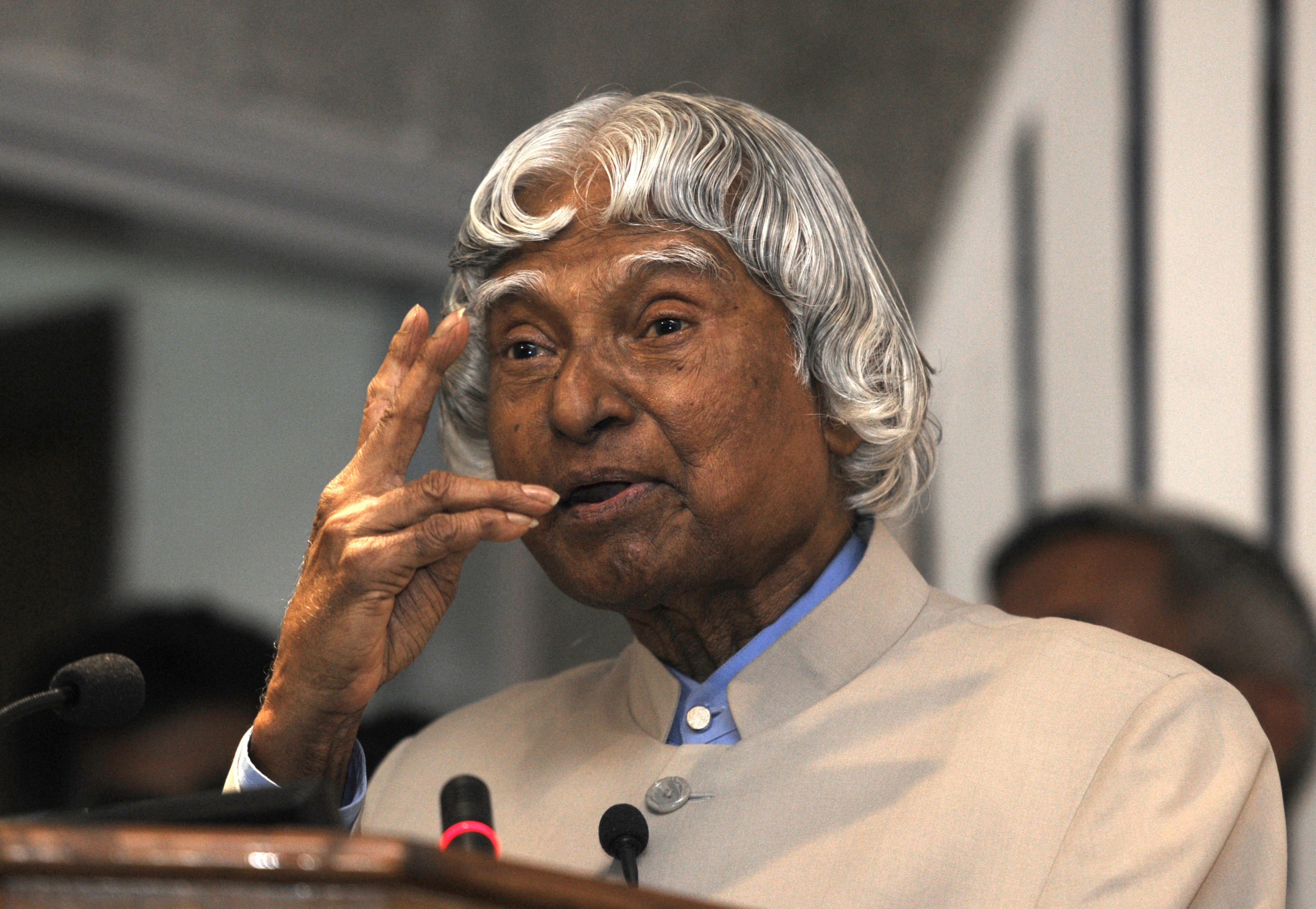
Yet, he settled into the position wholeheartedly, happy with his small accommodation in the university guest house, and the interaction with young minds whom he could inspire for great missions. But fortune again had a twist in store. He was lifted out of the campus to become the next President of India. There were many who doubted his suitability for the position. Earlier incumbents were all politicians or academics, how would he, a scientist, fit into the job? For someone who was never in politics, he set about the presidency in his own distinctive way, transforming Rashtrapati Bhavan into a vibrant office with technology to address the nation and universities directly from the Rashtrapati Bhavan studio. He turned Rashtrapati Bhavan from a magnificent, somewhat distant, symbol of State power into an accessible place that ordinary people could visit all year round, not only in the brief period in spring when the Mughal Gardens was opened up to the public.
Not only that, Kalam himself, down to earth, interested, conveyed a friendliness that made ordinary people feel at ease, and they reached out to him for any problem through email or a simple letter. There were often letters written from the edge of despair, and his office would do the careful scrutiny and help, with some success, at times.
Once a letter came from a public-minded person who wrote to the President asking him to help three old ladies living in a dilapidated house in a village in Athavanadu in Kerala. Kalam immediately called me and wanted to know where Athavanadu was. I didn’t know, neither did Kalam’s secretary PM Nair, who was also from Kerala. I called my father, who told me it was in Malappuram district. Kalam called the district collector, who relocated the sisters to a safer place and provided all necessary help.
He was obsessed with improving outcomes and helping legislators accomplish more. Unlike any other President before him, he would sit down to interact with Members of Parliament (MPs) over breakfast with accompanying presentations on developmental goals for their respective constituencies. Many MPs disliked his teacher-like classes and some admired his visionary ideas. Even after demitting office, he did presentations for virtually every state legislature, setting out developmental goals that took into account a state’s manpower, resources and distinctive strengths.
Many of his qualities are fresh in the minds of those who knew him. What does need iteration for a younger generation is his innate simplicity, dedication and willingness to listen to others. He was a man in a hurry, but one who wanted to learn as much as he could along the way, and always willing to stop and listen to an idea. He never dwelt on the past, never discussed or showed regret for what might have been. Never before was a former President as energetic or occupied. He travelled the length and breadth of the country. He was in great demand on the lecture circuit.
There are many things about him to look back on. But if there is one point one would hark back to, besides his relentless work to see India as a developed nation and his vision for India 2020, it is the sheer sense of possibility that he brought to millions of Indians. He made us confident that if we had the will, we could make it happen.
RK Prasad was APJ Kalam’s private secretary from 1993 to 2015. His book, Kalam: The Untold Story, has just been released
The views expressed are personal


