
 E-Paper



Tracing the long arc of tennis broadcasts
Football and cricket, unlike tennis, are not individual games. Thus, to understand and appreciate what one player does, you need to know where the others are.

 Prefer HTon Google


I’m not a sportsman and, frankly, other than squash, I’ve never played any game. I find cricket tedious and needlessly long drawn-out. Football is better but only because it’s shorter. Except out of politeness, I wouldn’t watch either. But tennis — ah tennis! —that’s another matter altogether.
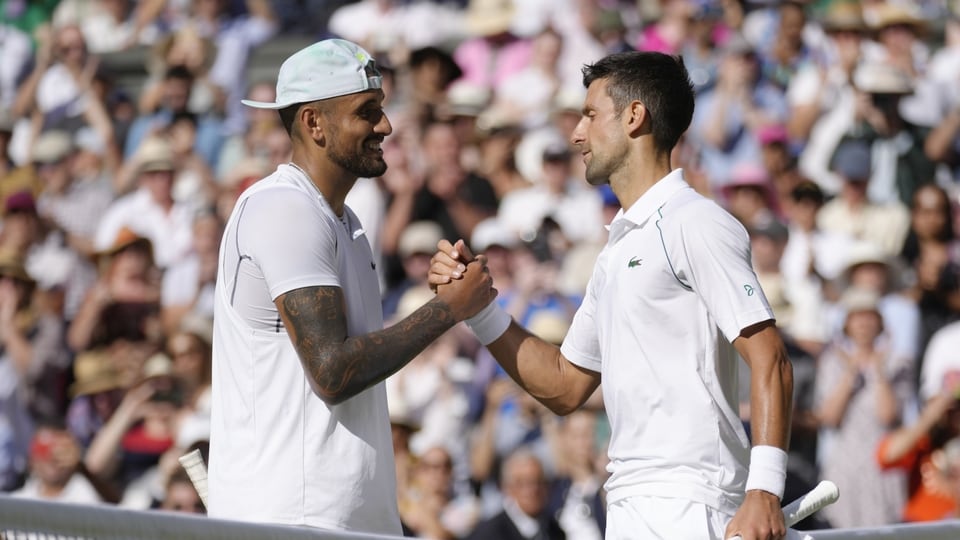
As I watched Novak Djokovic at the French Open finals last Sunday, I realised tennis is a game made for television. That’s definitely not true of football and cricket. Perhaps this is why I rarely miss a Grand Slam final but wouldn’t bother about either world cup.
In television terms, the reason is simple. Cameras are best filming a single individual. As he fills the frame, every action or gesture is visible. His frustration or triumph is clearly revealed. That’s also true of inner qualities such as resolve or the sapping of strength. The camera seeks them out.
Additionally, in tennis, the objective is to hit the ball from court to court. The camera can easily follow its trajectory and, with each shot of a rally, draw the viewer irresistibly into the momentum of the game.
Now, unlike tennis, football and cricket are not individual games. They’re team games. Therefore, to understand and appreciate what any one player does, you need to know where the others are. Only then can you visualise the strategy in the mind of the man with the ball. Focusing on one player would miss the wider game. You, therefore, need wide shots that show where everyone is placed. But wide shots are distancing. Players become small. The action feels far away.
This is why football and cricket are best watched in stadiums. The human eye can take in everything at one go. The television camera cannot. And multiple cameras don’t really compensate for what a single camera does poorly.
The opposite is true of tennis. For example, if you’re watching Wimbledon from the Royal Box, the far court is at too great a distance to be satisfactorily visible. If you’re watching from the sides, your neck will keep swivelling from left to right and back again. At the end of a long rally, that can be quite irksome. But on television both courts are equally close and your neck isn’t troubled because you’re looking straight at the screen.
Perhaps this explains why over the decades I’ve become obsessed with certain tennis players. When they’re playing, I’m at the edge of my seat, desperate they should win and truly upset if they don’t. Their triumphs and failures feel personal.
It began with Björn Borg and Martina Navratilova in the 1970s. Roger Federer took their place in the noughties. Novak Djokovic is the player today.
I’ll never forget Borg’s fifth Wimbledon triumph in 1980. John McEnroe denied him seven championship points in the fourth set, forcing him to play another. The commentators were convinced this would have shattered Borg’s spirit. To be so close and yet fail is hard to forget and move on. They were wrong.
With dogged determination Borg won 8-6 in the fifth before collapsing to his knees. That was the only emotion he ever showed. He did it every time he won. The other hint of his personality was the fact he wouldn’t shave during the duration of a tournament.
I watched his 1979 Wimbledon final courtesy Pakistan television, picked up by my grandmother’s black and white TV in Simla. At the end of the fifth set, with three championship points in hand against Roscoe Tanner, one of the fiercest servers of the time, PTV switched to the news. I had to wait an agonising half hour before finding out Borg had won. Wretched PTV didn’t think it fit to include this in the bulletin.
Four weeks from now, will Wimbledon have me transfixed to the screen yet again? Djokovic, no doubt, wants a 24th but does it matter as much to me? I hated McEnroe for beating Borg in 1981. Will my response be the same if Djokovic loses at SW18?
Karan Thapar is the author of Devil’s Advocate: The Untold Story The views expressed are personal


