
 E-Paper



Treat heatwaves as a health emergency
India must adopt an aggressive, integrated approach that embeds climate resilience in public health programmes

 Prefer HTon Google


We are only halfway into April but north and central India are already witnessing intense heatwaves. By February-end, Goa and Maharashtra faced heatwaves, making it the hottest month in 125 years. With temperature rising, heatwaves are no longer one-off disasters; they are now recurring climate emergencies with corresponding immediate and long-term consequences for India’s health and economy. Since 1992, more than 26,000 deaths have been recorded due to extreme heat, a figure that continues to rise each year. In 2024 alone, government data attributed 360 deaths to heatwaves, though actual fatalities could be much higher. Between 2014 and 2023, the number of extreme heat days has surged, with infants and the elderly experiencing a 47% and 58% increase, respectively, in annual exposure compared to the 1990s. Despite its staggering health burden, heatwaves remain insufficiently addressed in India’s healthcare planning.
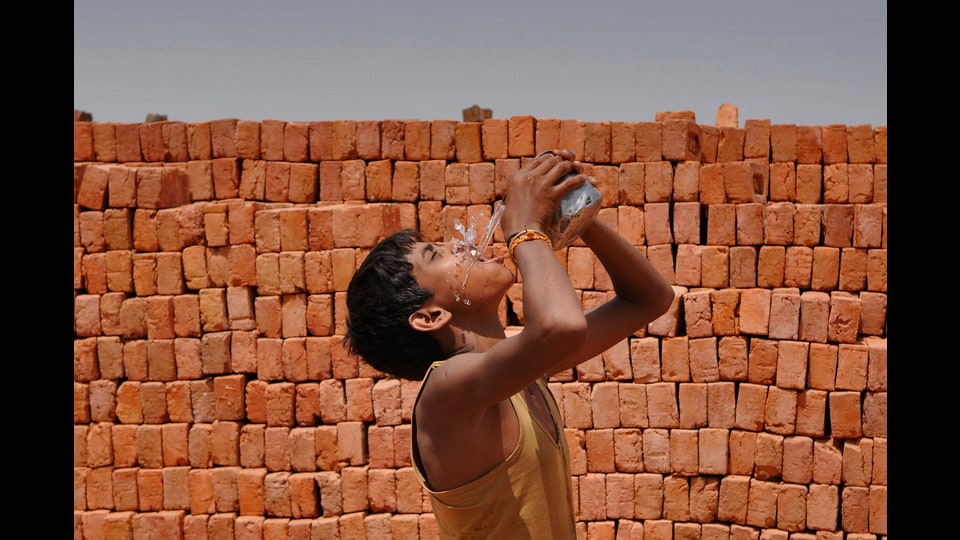
The health consequences of heatwaves are widespread, affecting both urban and rural populations, with the most vulnerable — outdoor workers, the rural poor, pregnant women, and the elderly — bearing the brunt of this crisis. Direct impacts include heatstroke and dehydration, which can lead to cardiovascular and respiratory distress. Prolonged exposure to extreme heat exacerbates vector-borne diseases and is increasingly linked to mental health conditions such as anxiety and hypertension. A 2022 study in Ranchi underscored how rising temperatures worsen mental health disorders, further straining an already overstretched healthcare system. Yet, India’s policy response continues to operate in silos, failing to integrate climate risks into its broader health infrastructure.
It is, therefore, urgent for India to adopt an aggressive, integrated approach that embeds climate resilience into public health programmes. Currently, policies treat climate change and health in isolation, leading to fragmented strategies that fail to capture their complex interconnections.
The introduction of heat action plans (HAPs) across approximately 23 states and Union Territories was a step in the right direction, but their fragmented implementation limits their effectiveness. First introduced in 2010 after Ahmedabad suffered over 1,300 excess deaths due to extreme heat, HAPs were designed to reduce risks through early warning systems and community outreach. While these plans include short-term measures such as adjusting work hours, issuing hospital alerts, and ensuring access to drinking water, they often overlook long-term resilience strategies such as urban greening, heat-resistant infrastructure, and passive cooling techniques in building design. The National Action Plan on Heat-Related Illness, introduced in 2021, has yet to be updated with a clear roadmap for mainstreaming climate-health integration into India’s broader public health system.
A crucial first step for devising an effective policy response is the development of hyperlocal, reliable, and real-time data systems that capture the direct and indirect links between extreme weather events like heatwaves and their corresponding impacts on public health. Discrepancies in reported heatwave fatalities point to a lack of an effective health surveillance. Only a few regions, such as Ahmedabad, Odisha, and Maharashtra, utilise real-time alerts from the India Meteorological Department (IMD) and maintain heatwave dashboards. Most states rely on static planning, indicative of data deficiencies. A study by the Sustainable Future Collaborative highlights how inadequate data leads to poor planning and resource misallocation. During Delhi’s 2024 heatwave, for instance, hospitals experienced a 30% surge in heat-related cases, exacerbated by multiple power outages that overwhelmed healthcare facilities.
Harnessing artificial intelligence (AI)-driven technologies could be a game changer in bridging these gaps. Real-time data integration between IMD forecasts and hospital admission records could enable predictive modelling to prevent hospital overloads and optimise resource allocation. A centralised AI-powered dashboard could enhance coordination between health, disaster management, and labor departments. International examples can also offer useful models. Japan’s heatstroke surveillance system, which updates local governments daily using wet bulb globe temperature (WBGT) indices, is one such approach. Private sector innovations such as AI-driven wearable devices by companies like Fujitsu and Obayashi further demonstrate how technological interventions can mitigate heat-related health risks, particularly among outdoor workers. By utilising health informatics and artificial intelligence, India can dynamically assess climate-related health risks and make policy responses more targeted, efficient, and timely.
One of the key obstacles to developing a comprehensive climate-resilient public health strategy is the siloed approach of existing institutions. A study by the Sustainable Futures Collaborative across nine Indian cities highlights poor inter-agency coordination as a major bottleneck. Weak linkages between municipal health departments, district disaster response teams, and state agencies mean that life-saving interventions remain inconsistent and reactive rather than preventive.
The urgency to address climate-induced health risks also underscores the need to strengthen India’s broader healthcare infrastructure. A 2023 NITI Aayog report found that over 60% of rural health clinics lack a steady power supply, leaving them ill-equipped to manage even basic heatwave interventions, such as cooling mechanisms for patients suffering from heatstroke. The situation in Uttar Pradesh’s Ballia district during the 2023 heatwaves — where hospitals operated without functioning air conditioning and families were forced to manually fan patients — illustrates the dire need for urgent structural investments. Expanding healthcare services, training medical personnel on heat-related illnesses, and integrating climate adaptation into medical curricula are critical to strengthen healthcare infrastructure.
Addressing climate-induced health challenges also requires a collaborative approach that goes beyond government efforts. Community-driven interventions can play a pivotal role in mitigating the health impacts of heatwaves. Accredited Social Health Activists (Asha) workers — who form the backbone of India’s rural healthcare delivery system — could be trained to recognise early signs of health distress caused by heatwaves and act as first responders in regions susceptible to extreme weather events.
India cannot afford to treat heatwaves as an isolated crisis. Integrating climate resilience into healthcare, leveraging technology, and prioritising community-led interventions will be essential to mitigating the growing health burden of extreme heat.
Aparna Roy is fellow and lead, climate change and energy, Observer Research Foundation. The views expressed are personal


