The BRICS summit comes at a particularly important time for India. Even as there is turmoil around the world, its fast-paced economic growth and stability provide a reassurance of sorts not just in its neighbourhood, but in the larger Global South.
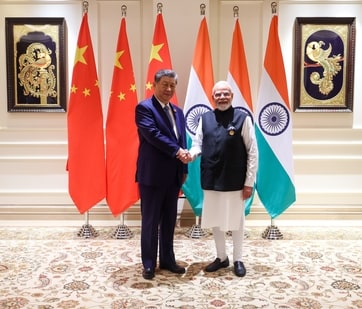
The somewhat belated announcement that President Xi Jinping will lead his country’s delegation to the 18th BRICS summit was widely welcomed. This has given the BRICS meet a certain heft. Equally importantly, it marks the first visit of the Chinese leader to this country since 2019, at a time when there is an uptick in ties between the two countries after a downturn arising from Chinese actions in eastern Ladakh in 2020.
Also Read | ‘Differences should not become disputes’: PM Modi tells Xi peace on border key to India-China ties
The optics matter more than the agenda items in this instance: A Chinese head of State on Indian soil is itself a data point in the slow, wary normalisation between the two capitals.
As a founder member of the organisation, now expanded to include Egypt, Ethiopia, Iran, Saudi Arabia and the United Arab Emirates, India sees its role as carrying a special responsibility to advance the interests of the developing world, while safeguarding its own strategic autonomy. For this reason, it is anchoring the summit around four pillars — Resilience, Innovation, Cooperation and Sustainability — deliberately technocratic language chosen to keep the bloc’s centre of gravity on delivery rather than rhetoric.
{{/usCountry}}As a founder member of the organisation, now expanded to include Egypt, Ethiopia, Iran, Saudi Arabia and the United Arab Emirates, India sees its role as carrying a special responsibility to advance the interests of the developing world, while safeguarding its own strategic autonomy. For this reason, it is anchoring the summit around four pillars — Resilience, Innovation, Cooperation and Sustainability — deliberately technocratic language chosen to keep the bloc’s centre of gravity on delivery rather than rhetoric.
{{/usCountry}}BRICS is not a talking shop, but a platform for practical cooperation, and India is pushing an agenda focused on digital public infrastructure (DPI) , artificial intelligence (AI), supply chain resilience and global financial reform. It is worth remembering — because many in India have forgotten — that it was India’s 2012 presidency that led to the establishment of the New Development Bank, also known as the BRICS Bank, and the Contingent Reserve Arrangement, giving members both a development-funding window and a financial safety net for balance-of-payments stress.
Also Read | PM Modi, Putin and Xi hold hands at BRICS summit in a powerful show of unity
It was during India’s 2021 presidency that the grouping took up the idea of a virtual constellation of remote-sensing satellites for disaster management and climate monitoring.
This year’s push on DPI and AI standards is a continuation of that pattern: India using its presidencies to build low-visibility public goods rather than headline-grabbing declarations.
Yet each BRICS member has its own agenda, and these need not align with the organisation’s stated one. Even as other members supported UN Security Council reform to expand its membership, China resisted the idea, unsurprisingly, since it already holds a permanent seat.
Given its trade and industrial weight, China brings its own institutional shadow to the table — the Belt and Road Initiative, the Digital Silk Road, the Asian Infrastructure Investment Bank and now the World Artificial Intelligence Cooperation Organisation (WAICO) — each shaping how it approaches the global development agenda on its own terms.
Beijing also runs a more aggressive line on de-dollarisation and a prospective BRICS currency. It has joined the Bank of Thailand, the UAE, Saudi Arabia and the BIS Innovation Hub in building mBridge, a multi-central-bank digital currency platform enabling instant, low-cost cross-border payments and forex settlement using digital currencies — chiefly the digital yuan. It is, in effect, an alternative rail chipping away at the dollar’s traditional dominance in trade settlement.
Also Read | BRICS nations condemn Pahalgam attack, seek action against terror safe havens
The Chinese agenda here is layered rather than straightforward. On the one hand, Beijing wants BRICS to harden into a genuine counterweight to western-led institutions, accelerating national-currency use and staking out leadership in next-generation industries. On the other, it is simultaneously building an entente with Washington.
A week after the summit, Xi travels to Washington for a summit with President Trump — and you can safely bet that Beijing’s de-dollarisation rhetoric at BRICS will be kept deliberately muted, given Trump’s public hostility to the idea.
India’s posture is narrower: It wants to stay close to BRICS’s original development and financial-governance mandate and resists any framing of the bloc as an anti-western project. Like China, it wants IMF and Bretton Woods reform, but its preferred instrument is national-currency trade settlement, not a parallel BRICS currency.
The real test for the expanded grouping will be producing a joint statement at all. Consensus on trade and financial governance is plausible.
Political fault lines — the US strikes on Iran, and Tehran’s retaliatory attacks on UAE, Saudi Arabia and Persian Gulf shipping — are not going to paper over easily, and India’s interest lies less in resolving them, than in ensuring the summit’s economic architecture survives the argument.
This is where India’s role becomes important. It cannot make the competing geopolitical interests of China, Russia, Iran and the Gulf States disappear, nor should it try to turn BRICS into an instrument of Indian foreign policy. Its task is more modest: to demonstrate that countries can cooperate on issues of common interest even when they disagree profoundly on geopolitics.
That would give practical meaning to India’s strategic autonomy.