
 E-Paper



22 young rowers in limbo as a doping probe drags on
22 members of the national under-18 rowing squad were caught in an alleged doping scandal after testing positive for a banned substance in mid 2019 during the national preparatory camp of the Rowing Federation of India (RFI) in Hyderabad.

 Prefer HTon Google


With little to fall back on, a teenager in Madhya Pradesh had hoped to achieve sporting success, land a job in the Army while using its infrastructure to improve proficiency and fulfil the dream of representing India. That dream is fast turning sour for him, like many other young athletes.
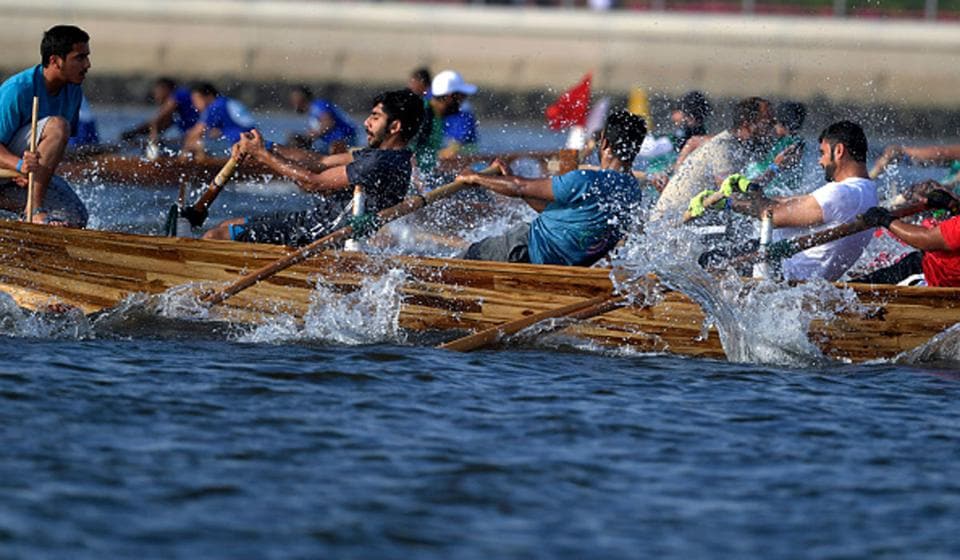
The youngster is one among 22 members of the national under-18 rowing squad to be caught in an alleged doping scandal after testing positive for a banned substance in mid 2019 during the national preparatory camp of the Rowing Federation of India (RFI) in Hyderabad.
The large number of positives came as a shock as the rowers—it included girls— were between 16 to 18 years. They were all provisionally suspended.
An agonisingly slow process in the case though has caused anguish for the contingent, which was seen as India’s rowing future. The Madhya Pradesh rower, son of a small-time farmer is at his wit’s end as selection to the Army’s strong rowing squad would have helped support his family too. He is fast running out of time as he will soon be over the age limit for that selection.
As the pandemic-ravaged year ends, he has no clue about progress of the case, which is followed by RFI. Only if he gets a clean chit can he resume training at the MP government’s Bhopal sports academy or join the Army.
With no other option, he works as farm hand in his village, for a daily wage of R200 for eight hours of labour. “Mera training nahin ho raha hai. Is liye mujhe kam karna hai (I can’t train, so I’ve to do this work for a living),” says the rower, who did not wish to be identified.
Many others in the group too face such uncertainty. “Doing odd jobs at the moment,” says another rower, also hailing from a central Indian state.
Pandemic as excuse
A rower from a northern state is in misery. A year ago, coaches constantly praised his performances and the federation wanted to draft him into the senior squad. That was then. “Now when I call to know the status of the case, the coaches are rude and the federation doesn’t respond to calls,” he says. “I’ve not told my parents, they might get depressed. I keep telling them that due to the pandemic there is no rowing activity and I can’t go to the camp.”
When contacted, RFI secretary general MV Sriram says, “The case is about young athletes, I can’t reveal anything.”
It has been 18 months since the rowers tested positive, amazingly all for the same substance, probenecid—it is found in medicine for gout but can act as masking agent and is banned by the World Anti Doping Agency. A first doping offence is punishable with a four-year ban. While it can raise concerns of systematic doping, poor supplement choice could also be a reason for the positives.
32 rowers tested
In July 2019, the National Anti doping Agency (NADA) had in out-of-competition tests collected the urine samples of 32 rowers preparing for international meets. In June this year, after 11 months, NADA announced that such a big number had failed the dope test.
After giving the sample, the junior team had taken part in two meets abroad last year—the Tokyo world junior championships in August and the Asian junior meet in Thailand in December, where India won silver in the coxless pairs and fours.
With New Delhi’s National Dope Testing Laboratory (NDTL) suspended by WADA for not following international norms, the samples were tested at its accredited lab in Doha, Qatar.
It is not unusual for rowers to continue competing before test results are out, says Dr. Ashok Ahuja, former head of Sports Authority of India’s (SAI) sports medicine department who is a member of the Indian Premier League’s anti-doping panel. “This happens when the sample is sent in a routine manner to a lab,” he says.
In high profile cases, or in an event like IPL with little gap between matches, results can be obtained in 48 hours or less. “In such cases, the cost of sample testing goes up,” he says.
Ismail Baig, India’s senior rowing team coach, says: “We don’t have any competition this year, otherwise it (the delay) would have hurt the youngsters more.”
When contacted, NADA director general, Navin Aggarwal, said: “The disciplinary panel would know better about when the case will conclude.”
The Madhya Pradesh teenager HT spoke to, who stands at over six feet and is well built to become a strong rower, had in 2017 joined the state-run Bhopal Water Sport Academy, progressing to the national camp.
His short career though, says a rowing coach, could end as he won’t be allowed to train till the case concludes. “It’s important to keep the young minds focused in such difficult times,” the coach adds.
The rowers claim they were only verbally informed about the doping offence. “Koyi letter nahin mila ab tak (No written communication from RFI or others till now),” says the Madhya Pradesh rower. “Mena kuch kiya nahin (I haven’t done anything wrong),” he says.
Three of the rowers are from that state. When contacted, the Bhopal academy coach Dalvir Singh said he isn’t authorised to give any details.
Rajiv Jairaj, chairman of a three-member panel set up by RFI to probe the scandal, also refused comment. A panel member, who didn’t wish to be identified, says a 40-page report submitted to RFI gives a clean chit to the coaches and support staff who were at the Hyderabad camp.
“It was a difficult task as we had to probe a 12-month-old issue; we crossed-checked a lot of things—from the food, water intake and supplements,” says the panel member. “We also spoke to the athletes but hardly anyone could recall what went wrong during the camp prior to international exposure.”
The doping process will not end until individual hearings are held, athletes are given the option to get their B, or second, sample tested, and a final verdict is pronounced.
Meanwhile, the MP teenager’s Army dream, to supplement his family’s meagre income, is fading. “Sirf ek sal hai Army may naukari ka liya (I’ve just one year left to join the Army),” he says.


