
 E-Paper



NADA to prioritise testing of Tokyo Olympics probables
This revised testing programme will be based on intelligent testing protocols and will focus on detecting doping during what has now been a long ‘off-season’.


The National Anti Doping Agency (NADA) has said that it will prioritise testing Indian athletes who are probables for the postponed Olympic Games and also those in the Registered Testing Pool (RTP) once the top athletes resume training. According to NADA, these tests are to check if any doping violations have taken place during the national lockdown. This revised testing programme will be based on intelligent testing protocols and will focus on detecting doping during what has now been a long ‘off-season’.
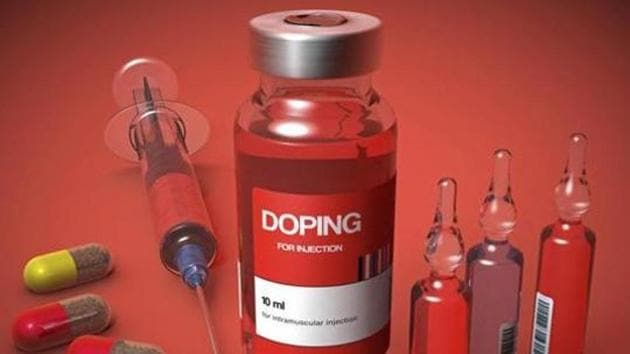
It has now been seven weeks of no training for the athletes, who have either been confined to their homes or been stuck in one of the Sports Authority of India centres in Patiala and Bangalore. That, coupled with the travel restrictions imposed by the Ministry of Home Affairs, has made it nearly impossible for NADA to conduct its anti-doping tests this year.
To get back on track, NADA’s director general Navin Agarwal said that under the revised test distribution plan, the emphasis would be on selected athletes for random tests – since there are no competitions scheduled for the near future. “There is no escape for dope cheats as we have various tools to catch the culprits,” Agarwal said.
There are more than a hundred sportspersons from different disciplines selected under the RTP programme, and these athletes have to always provide their whereabouts for random testing. The primary criteria to select athletes for RTP programme has been domestic performances. But because the Indian athletics season was cancelled after the outbreak of coronavirus, NADA could well have to rely on their list from 2019.
The anti-doping agency is currently focused on 10 disciplines -- including athletics, boxing, cycling, swimming, weightlifting and wrestling -- once they get back to training again.
“ABP, or Athletes Biological Passport, is one of the most effective tools to detect doping violations,” said Agarwal. “This works by collecting urine and blood samples over a period of time and any abnormal variation in the profile points towards a violation. This is one way to catch those who have not played by the book during the lockdown.”
The ABP test has worked in the past and caught as many as five national athletes in 2018, the year it was implemented by NADA. During the 2018 Inter State Athletics meet in Guwahati -- a qualifying event for Jakarta Asian Games -- NADA had collected in-competition urine and blood samples of athletes. All samples were tested at the National Dope Testing Laboratory in New Delhi and five cases were borderline.
When the samples of these five athletes were retested in a lab in Montreal, they turned out to be positive. And those who failed the dope tests were Nirmala Sheoran, the 2017 Asian champion in 400m, discus thrower Sandeep Kumari, shot putter Naveen Chikara and middle distance runners Sanjivani Jadhav and Jhuma Khatun.
This year, during the January edition of Khelo India Youth Games – again held in Guwahati – four weightlifters, four wrestlers and three kabaddi players were among the 15 positive tests for doping.
“The doping trend is growing in kabaddi, as the sport has spiked in visibility and finances (due to the televised Pro Kabaddi League),” said Agarwal. “Of course this will lead some of the youngsters down the wrong path. But we have also had positive cases for banned drugs in kabaddi at the university level. And that does not augur well for the sport.”


