
 E-Paper



PV Sindhu’s success secret: Olympic lifts and an extraordinary heart
Ramana, a former international volleyball player, said that Sindhu’s improved fitness regimen was key to the way she pulled off high-intensity performances over the five days of the championship in Basel.


While watching PV Sindhu rule the courts at the badminton World Championships on her way to a historic victory, there was one thing that stood out—apart from the mastery of the game of course—and that’s her superb conditioning. On a badminton court, Sindhu sported the physique of an elite sprinter.
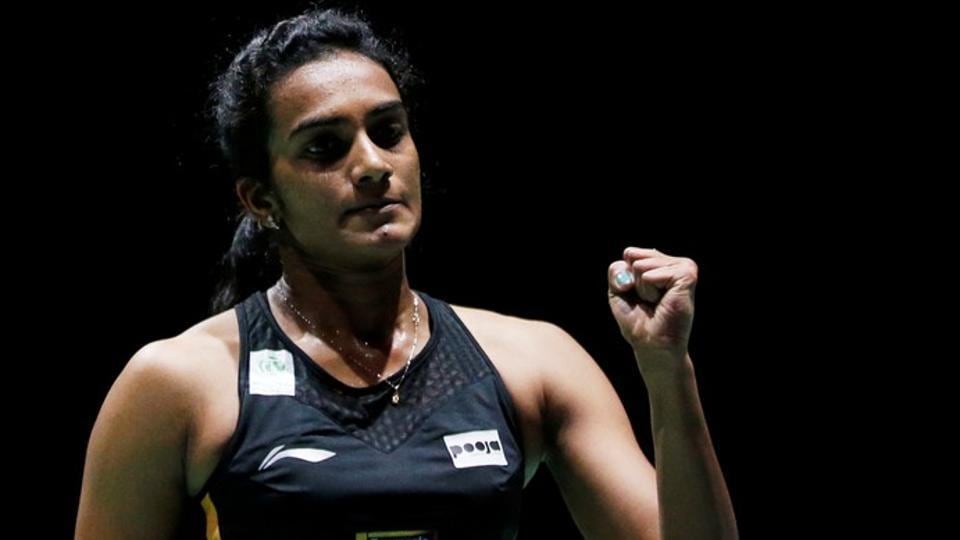
The game was there for all to see, but what few people have witnessed, said her father PV Ramana, is the hours of intense physical training Sindhu put in to enhance her naturally athletic built.
Ramana, a former international volleyball player, said that Sindhu’s improved fitness regimen was key to the way she pulled off high-intensity performances over the five days of the championship in Basel.
“Her morning pulse rate is 38 (beats per minute) and below,” Ramana said.
READ: Exclusive | Tokyo not far but want to enjoy this: PV Sindhu
Ramana is referring to what is commonly known as Resting Heart Rate (RHR), an excellent indicator of a person’s heart capacity. The average person’s RHR range is between 60 and 100. An RHR of below 40 is generally the domain of extraordinary endurance athletes—the Spanish cyclist Miguel Indurain had a recorded RHR of 28bpm.
“This means that Sindhu has the ability to recover quickly from hard workouts. Both the qualities attributed to her success in Basel,” Ramana said.
Look no further than her gruelling, one hour 11 minute quarter-final; she won that, and came back the next day looking as fresh for the semi-final as if it was her first match in the tournament.
These physiological gifts, to varying degrees, are genetic.
“When we were preparing for the 1986 Seoul Asian Games the Russian coach overseeing the training wouldn’t believe that my resting heart rate was below 38,” Ramana said. “So one day the coach himself came to my room to check my pulse rate and was surprised.”
fitness focus
After the 2017 World Championships, Ramana said Sindhu drastically changed her fitness regimen. She was introduced to Hyderabad-based strength and conditioning coach Srikanth Verma, who began to tailor a programme very specific to her requirements.
Verma refused to talk about the programme, but revealed that it was meant “to improve her leg strength with focus on calf and quadriceps muscles.”
The upper body, also constantly in use in badminton, was also addressed. Five key exercises were added to her routine: the half-squat, lunges with directional changes, the bench-press, the dead lift and the clean & jerk.
While the dead lift is considered by most trainers as the gold standard for building overall strength, with a focus on the lower body, the clean & jerk, an Olympic lift, is thought to be the most explosive overall lift there is. It is technically challenging, and improves both strength, stamina, and the body’s ability to perform a complex move that involves the entire musculoskeletal system. This is one exercise that challenges both the strength of the legs, as well as overhead strength through the shoulders and the arms—essential for a badminton player hitting those savage smashes.
To avoid fatigue and injury, Sindhu was monitored carefully by a physio every day.
“Any stiffness in the back or legs was taken care of before the training,” Ramana said. “In case there was soreness in any muscle, the training would change so as not to stress it.”
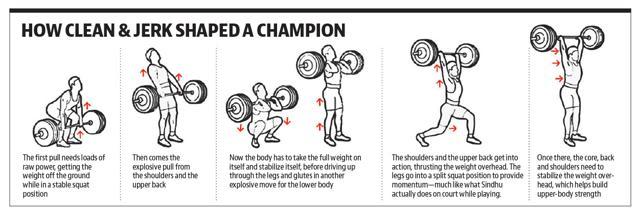
In the build up to Basel, Sindhu’s weight training programme was similar to sprinter Dutee Chand’s, who also trains at the Gopichand academy.
Broadly, said Verma, the shuttler did four repetitions of half squats in one set with 110kg weights, 30kg more than she lifted a couple of years ago. Her dead lift is around 130kg.
“The repetitions and sets mainly depended on Sindhu’s physical fitness assessment before the training,” said Verma.
Sindhu also added two sessions of track workouts a week. On an average, Verma said, “she covers 8-10km in one session.
“We also include hard tempo (covering a specific distance at a steady, fast pace) and high intensity track sessions,” he said.
As she got closer to the competition, the focus shifted from weight training to “explosive training”—plyometric exercises like box jumps—again similar to what Chand does in her sprint training programme.
Verma said Sindhu’s ability to withstand a high volume of training in one session and return fresh for a demanding session the next day left him amazed.
“It’s big advantage to recover this fast from an intense workout,” he said.


