
 E-Paper



Photos: Delhi sees the highest infection spike reported in August
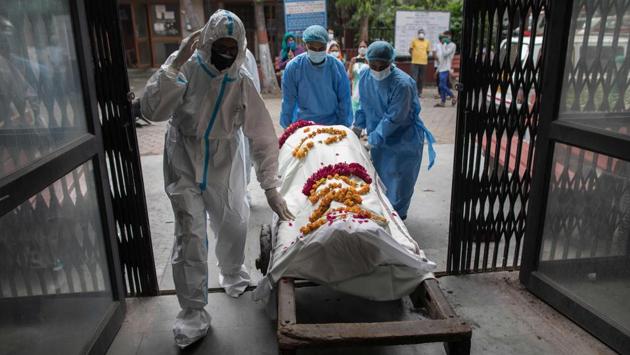
After nearly a month, Delhi recorded its highest number of Covid-19 cases on August 22. 1,412 cases were added to Delhi’s caseload after the state witnessed a slight dip in cases since July 18. Health officials have continuously reinstated that the state administration has to be cautious and continue the rampant testing to ensure that another wave of cases do not rise amid this minor increase. According to the government officials Delhi’s model of ‘test, track, treat’ and focus on high-risk groups (HRGs) as well as special surveillance groups (SSGs) is intact as the infection count rested at 160,016 on August 22.
Updated on: Aug 24, 2020 4:06 PM IST


Share via


Copy link

1/7
 View Photos in a new improved layout
Updated on Aug 24, 2020 4:06 PM
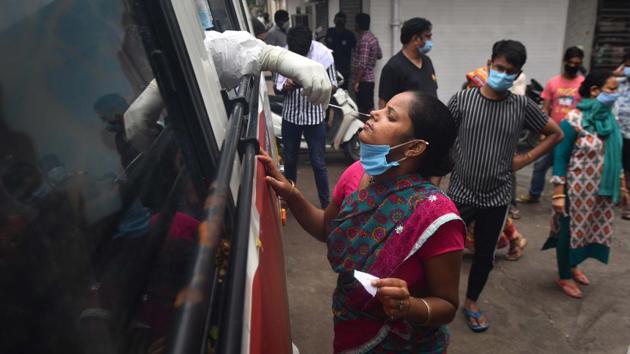
A health worker in PPE coveralls collects a swab sample from a woman to test for Covid-19 infection at Adarsh Nagar in New Delhi on August 20. Delhi saw its biggest spike in Covid-19 cases on August 22 where 1,412 cases were reported in the report shared by the health ministry. (Sanchit Khanna / HT Photo)
2/7
 View Photos in a new improved layout
Updated on Aug 24, 2020 4:06 PM
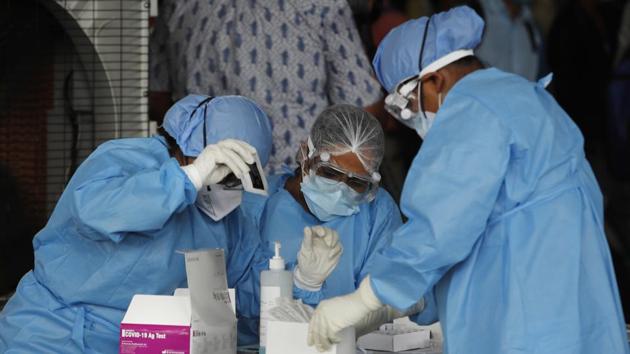
Health workers conduct COVID-19 antigen tests in New Delhi on August 18. Before this, Delhi saw 1,475 fresh cases on July 18. So far, the highest single day spike in the national capital was on June 23 when the city recorded 3,947 new cases of the infection, HT reported. (Manish Swarup / AP)
3/7
 View Photos in a new improved layout
Updated on Aug 24, 2020 4:06 PM
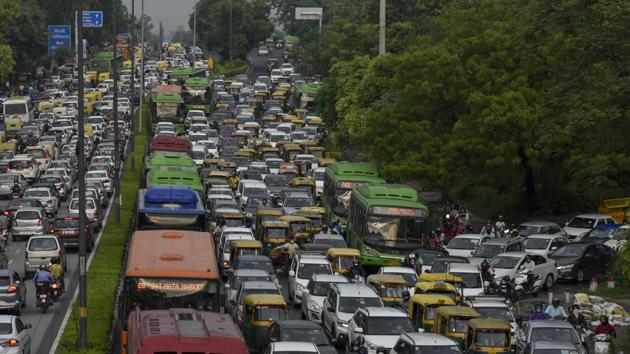
Heavy vehicular traffic at ITO in New Delhi on August 20. The spike came as 6,090 RT-PCR / CBNAAT / TrueNat tests and 13,345 rapid antigen tests were conducted in a span of 24 hours between August 21 and August 22. (Biplov Bhuyan / HT Photo)
4/7
 View Photos in a new improved layout
Updated on Aug 24, 2020 4:06 PM
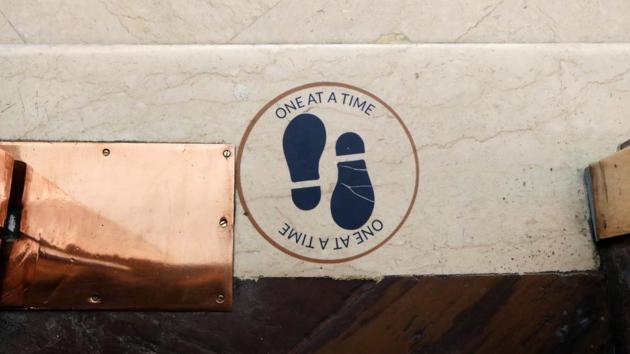
A social distancing marker is displayed on the floor inside the Bukhara Restaurant at the ITC Maurya Sheraton Hotel ahead of its reopening in New Delhi on August 22. The spike did not have much to do with opening economic activities since those decision were taken on economic and political factors, and not on epidemiological aspects, Dr Lalit Kant, former head, epidemiology, Indian Council of Medical Research (ICMR), told HT. (T Narayan / Bloomberg)
5/7
 View Photos in a new improved layout
Updated on Aug 24, 2020 4:06 PM
A relative wearing personal protective equipment (PPE) adjusts his protective face shield before entering a crematorium in New Delhi on August 22. Health officials have continuously reinstated that the state administration has to be cautious and continue the rampant testing to ensure that another wave of cases do not rise amid this ‘minor increase.’ (Adnan Abidi / REUTERS)
6/7
 View Photos in a new improved layout
Updated on Aug 24, 2020 4:06 PM
A health worker conducts a coronavirus test from the collected swab sample at Ramjas School in New Delhi on August 23. According to the government officials Delhi’s model of ‘test, track, treat’ and focus on high-risk groups (HRGs) as well as special surveillance groups (SSGs) is intact as the Covid-19 positivity rate continues to be unstable in Delhi. (Mohd Zakir / HT Photo)
7/7
 View Photos in a new improved layout
Updated on Aug 24, 2020 4:06 PM


