
 E-Paper



Photos: 3-D printing makes high-end Indian made prosthetics affordable
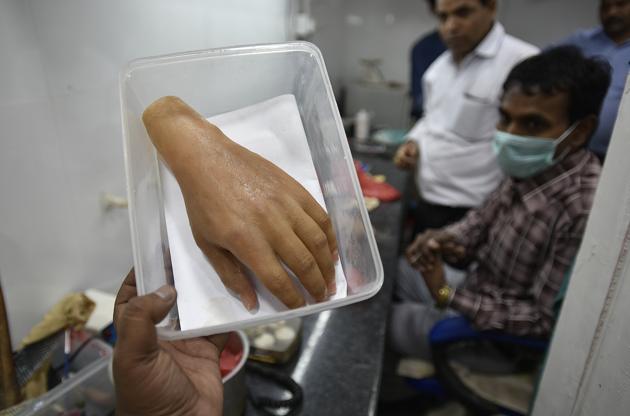
High-tech customised prosthetics for amputees are now available in India at half the price of imported ones that can cost upwards of Rs 1.5 lakh. Using 3-D printing technology, made in India prosthetics now match imported offerings and allow wearers to get the exact shape and fit of their limb down to specific purposes.
Updated on: Apr 05, 2018 12:41 PM IST

Share via


Copy link

1/6
 View Photos in a new improved layout
Updated on Apr 05, 2018 12:41 PM
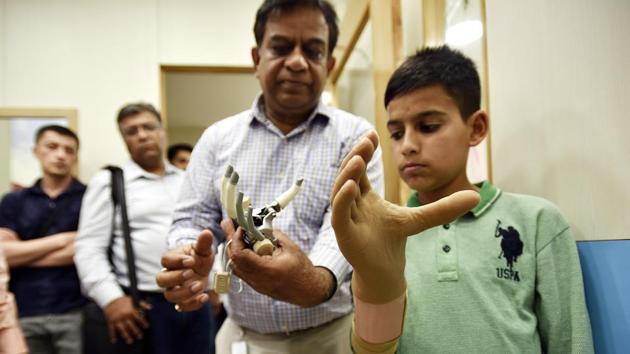
Aided by 3-D printing technology, a private firm in India is making high-tech customised prosthetics for amputees at half the price of imported ones that cost upwards of ₹1.5 lakh. Offering an alternative to imported prosthetic hands, the company is also launching an indigenously developed myoelectric prosthetic hand with thumb rotation and functions such as gripping objects. (Raj K Raj / HT Photo)
2/6
 View Photos in a new improved layout
Updated on Apr 05, 2018 12:41 PM
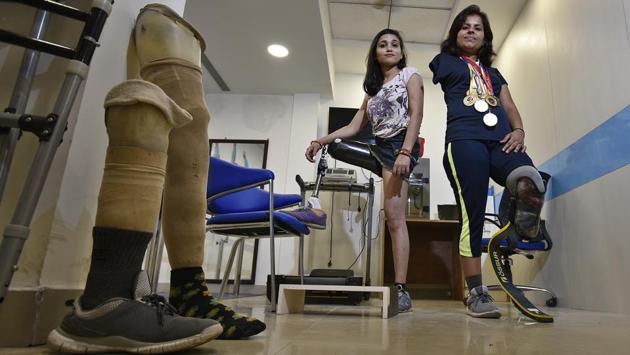
27-year-old Sangeeta Vishnoi (R), won two silver medals in the recent National Para Athletic Championships and attributes improved performance to a better quality prosthetic. Her left leg is amputated from below the knee. Nisha Thakur, 22, is another para athlete who has completed two 5-km marathons and one 10-km marathon with her new leg. (Raj K Raj / HT Photo)
3/6
 View Photos in a new improved layout
Updated on Apr 05, 2018 12:41 PM
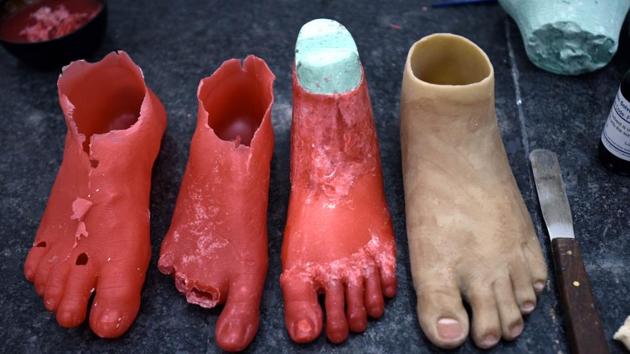
Neeraj Saxena, director of P&O International Pvt. Ltd. says 3-D printing drives down the costs of producing not prosthetic locally, giving amputees more options. Where limbs earlier took two to three days to craft, digital measurements and printing make that process feasible in 3 hours. (Raj K Raj / HT Photo)
4/6
 View Photos in a new improved layout
Updated on Apr 05, 2018 12:41 PM
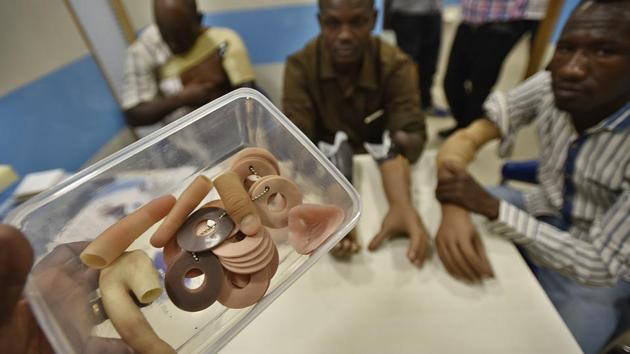
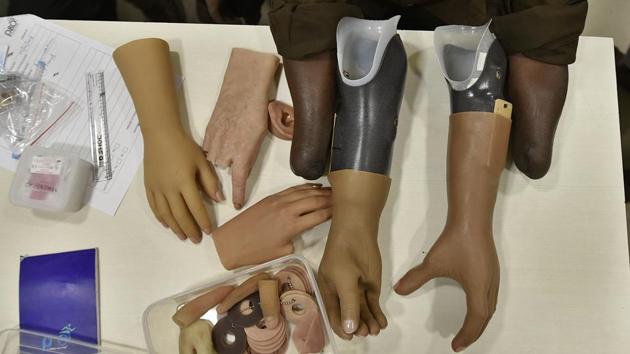
The limbs are available from as low as ₹40,000, but additional costs depend on the client’s cosmetic requirements for their prosthetic. Varying degrees of silicone covers for instance can add to the realism of the prosthetic and also drive up cost. Another factor for lower costs is that Indian made parts make up almost 70% of the firm’s products. (Raj K Raj / HT Photo)
5/6
 View Photos in a new improved layout
Updated on Apr 05, 2018 12:41 PM
Saxena says the firm’s indigenous myoelectric hand is controlled by electrical properties of the wearer’s muscles and has thumb rotation. The product is being pegged at less than half the price of current imported alternatives. (Raj K Raj / HT Photo)
6/6
 View Photos in a new improved layout
Updated on Apr 05, 2018 12:41 PM


