
 E-Paper



Photos: A silence looms over Varanasi’s famed textile weavers
Poor pay, long hours and a dip in demand have made many handloom weavers in Varanasi switch to powerlooms. Those that maintain the famed means of production find keeping pace with times increasingly hard.
Updated on: Jan 21, 2018 2:41 PM IST

Share via


Copy link

1/8
 View Photos in a new improved layout
Updated on Jan 21, 2018 2:41 PM
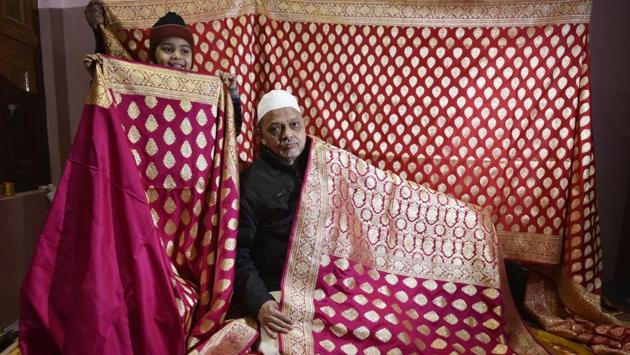
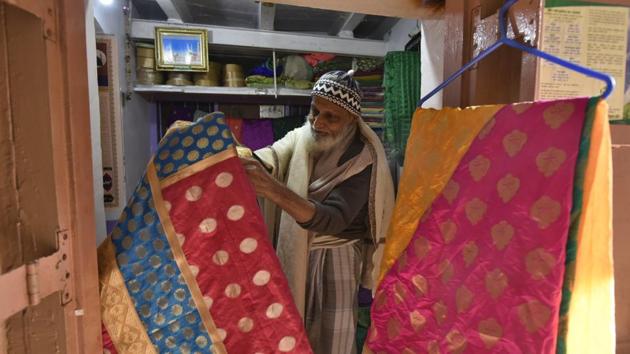
Master weaver Haji Anwar Ahmad, 60, lays out a pink silk Banarasi sari similar to the one said to have been woven by him, and worn by Anushka Sharma at her reception. In the times of lehengas and lighter weaves, the actor’s choice of this classic handloom has generated conversation and demand, but its weavers find themselves being flushed out by a changing market and technological obsolescence. (Raj K Raj / HT Photo)
2/8
 View Photos in a new improved layout
Updated on Jan 21, 2018 2:41 PM
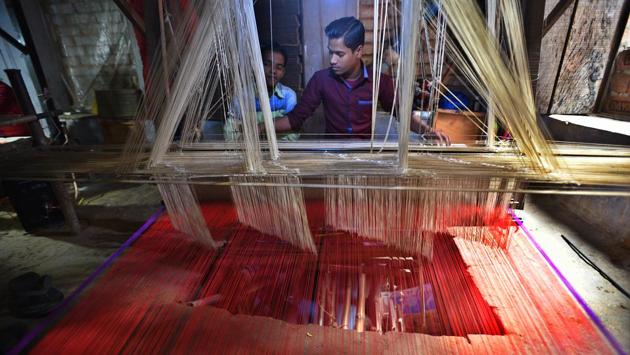
Barkhat, a weaver works with a handloom, the traditional tool for making Banarasi silk fabric. In localities where the clacking of handlooms once signalled the craft, the powerloom’s buzz has grown increasingly louder. 72-year-old Maqbool Hasan, a master weaver, remembers a time when his family owned 500 handlooms. “Now we have only 200 looms. No one wants to weave on a handloom anymore,” he said. (Raj K Raj / HT Photo)
3/8
 View Photos in a new improved layout
Updated on Jan 21, 2018 2:41 PM
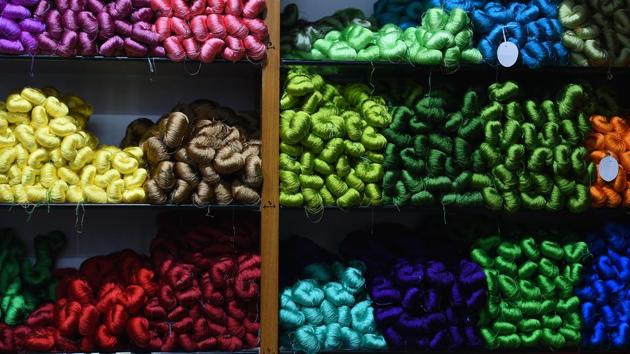
Coils of silk yarn line a store’s shelves in Varanasi. The first signs of change came in 1985 as weavers reeled from a spike in silk prices and synthetic viscose yarn began taking over markets. The powerloom’s appearance on the scene soon after, changed the business ever since. (Raj K Raj / HT Photo)
4/8
 View Photos in a new improved layout
Updated on Jan 21, 2018 2:41 PM
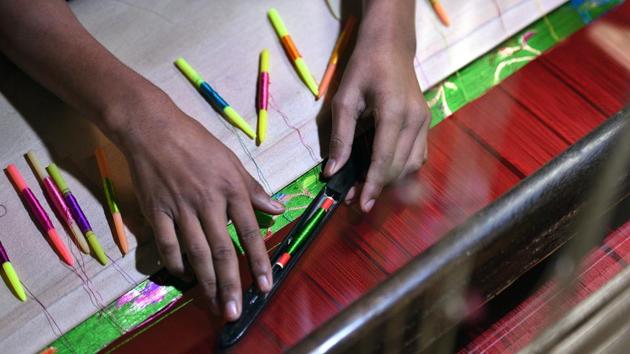
A weaving shuttle sits on an unfinished silk sari at a workshop. With electricity subsidies for powerloom users, competition from Surat’s textile mills, increased yarn prices and a faster, cheaper product from the newer looms, the traditional handloom industry has found it harder to hold on to its market share. (Raj K Raj / HT Photo)
5/8
 View Photos in a new improved layout
Updated on Jan 21, 2018 2:41 PM
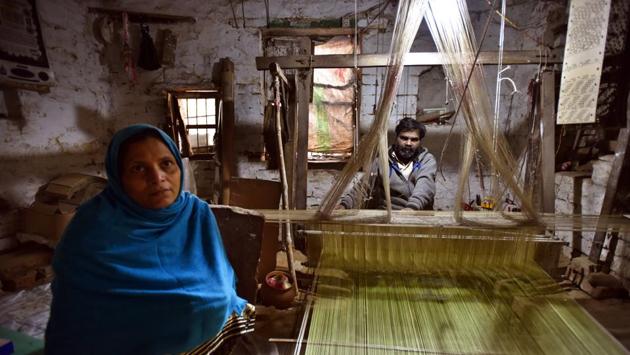
Master weaver Mohammad Sayeed with his wife Rukhsana, in his workshop. Meagre earnings have also deterred those engaged. A weaver’s share is based on the price of product. Most weavers say they earn Rs 300-350 a day, but because the fabric length may take anything from 15 days to a month or more on the handloom, monthly incomes range around Rs 6000. (Raj K Raj / HT Photo)
6/8
 View Photos in a new improved layout
Updated on Jan 21, 2018 2:41 PM
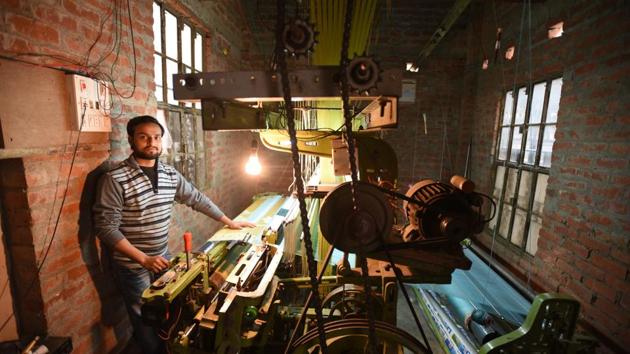
Mohammed Imraan shows his powerloom at a a workshop. The complexity of the design often demands additional weavers or the help of the women in the household to manage yarn to save time, but this comes with no extra income. In contrast the powerloom generates twice the income of a handloom, and is less laborious. (Raj K Raj / HT Photo)
7/8
 View Photos in a new improved layout
Updated on Jan 21, 2018 2:41 PM
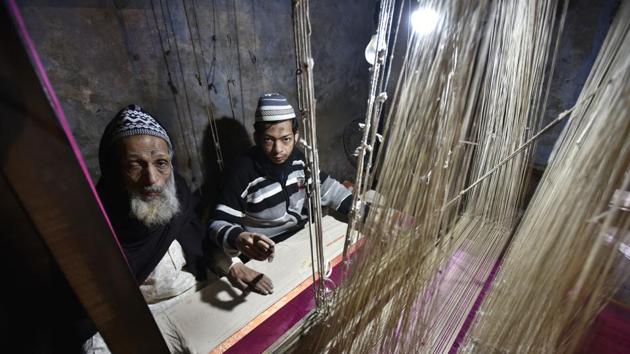
As handloom became time and cost intensive, weavers migrated – either to powerlooms, to Surat or simply to other jobs. Till the 1990s there were about 1.25 lakh handloom weavers in Varanasi. Only 20,000 remain. Those still around have also been dealing with the twin moves demonetisation and last year’s GST rollout –the latter a first for an industry that hadn’t dealt with sales tax earlier. (Raj K Raj / HT Photo)
8/8
 View Photos in a new improved layout
Updated on Jan 21, 2018 2:41 PM


