
 E-Paper



Photos| Harissa: The one-pot wonder keeping Kashmir warm in the winter
In the winter months, a dish is cooked in Srinagar that signifies both life and ritual in the entire valley of Kashmir. The Kashmiri Harissa is a delicious mash similar to the Armenian and the West Asian Harees, the Persian Dizi and the Hyderabadi Haleem – in all of them, mutton or chicken are slow cooked with rice, barley, wheat or lentils and spices. But while these dishes use ghee for tempering, Harissa with its mustard oil, infused with the ‘sweet spices’, stands apart. A few dozen Harissa shops, mainly in old Srinagar, the downtown area, begin a routine each winter that lasts till March.
Updated on: Dec 18, 2018 9:59 PM IST


Share via


Copy link

1/9
 View Photos in a new improved layout
Updated on Dec 18, 2018 9:59 PM
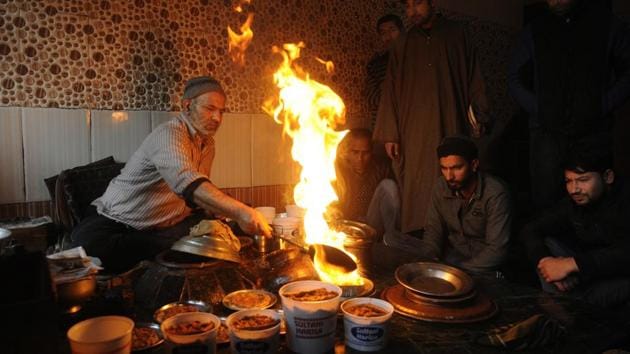
Muhammad Shafi Bhat, a Kashmiri cook, tempers servings of Harissa for his customers in Srinagar, Jammu and Kashmir. Cooked in the winter months, the Harissa has come to signify both life and ritual in the entire valley of Kashmir. A few dozen Harissa shops, mainly in old Srinagar, the downtown area, begin a routine that lasts till March. (Waseem Andrabi / HT Photo)
2/9
 View Photos in a new improved layout
Updated on Dec 18, 2018 9:59 PM
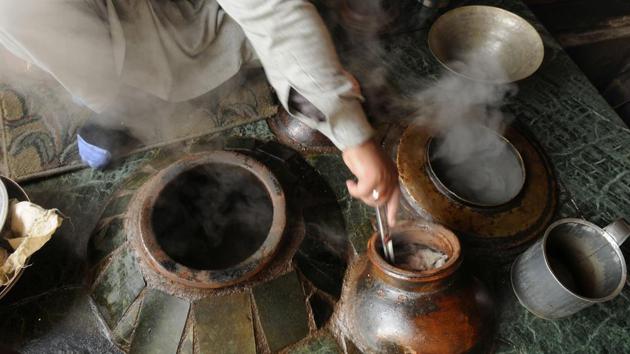
The cooking begins around 10-11pm. In a huge earthen pot, rice gruel is prepared, preferably with the short-grained, sticky Kashmiri kind. In go whole sheep legs, fennel seeds, cinnamon, green and black cardamom, cloves, crispy fried Kashmiri shallots and salt. An hour-and-a-half into cooking, the narrow-necked pot is closed with a lid. This is when Harissa-makers steal a few hours of sleep. (Waseem Andrabi / HT Photo)
3/9
 View Photos in a new improved layout
Updated on Dec 18, 2018 9:59 PM
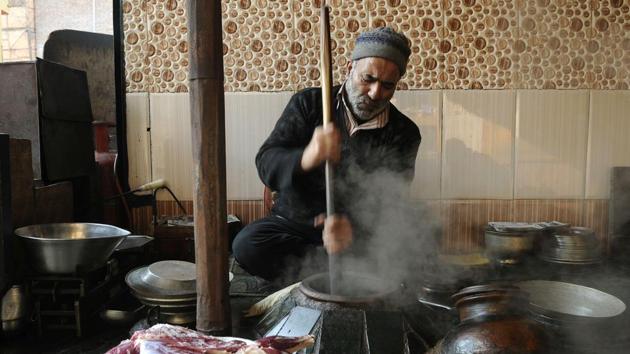
A generation ago, many Harissa makers employed workers from Gurez, known for their strength, most needed for mashing the Harissa. Muhammad Munawar Wani (not pictured), remembers coming to Srinagar half-a-century ago to work at the popular Bhat Harissa shop at Aali Kadal. “Harissa was Rs 2 per kg in the ’60s. It is Rs 800 per kg now. But it’s still made the same way,” Munawar says. (Waseem Andrabi / HT Photo)
4/9
 View Photos in a new improved layout
Updated on Dec 18, 2018 9:59 PM
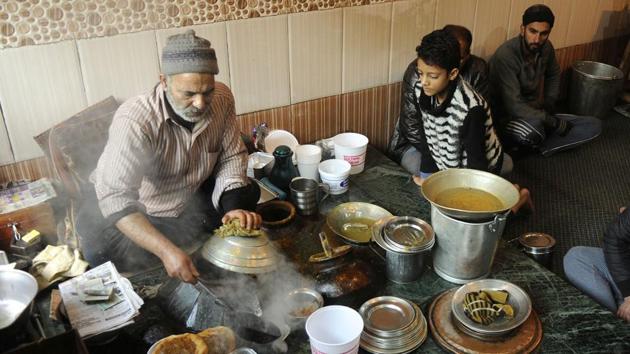
The Kashmiri Harissa is a delicious mash similar to the Armenian and the West Asian Harees, the Persian Dizi and the Hyderabadi Haleem – in all of them, mutton or chicken are slow cooked with rice, barley, wheat or lentils and spices. But while these dishes use ghee for tempering, Harissa uses mustard oil, which it infuses with the ‘sweet spices’ used. (Waseem Andrabi / HT Photo)
5/9
 View Photos in a new improved layout
Updated on Dec 18, 2018 9:59 PM
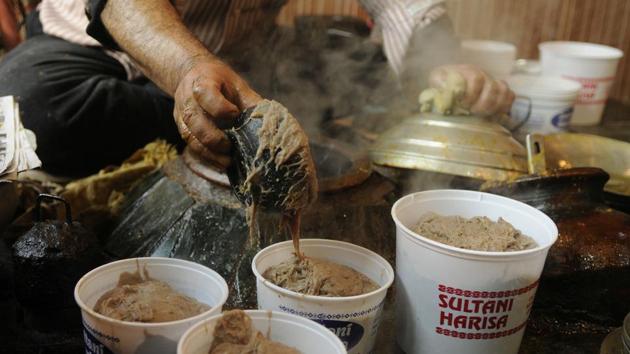
Visiting a Harissa shop in winter is an experience unique to Old Srinagar, sustained in large part by the egalitarian culture of the densely populated mohallas. People who have moved out of the old city into the mushrooming housing colonies in the suburbs often leave utensils at Harissa shops a day before and collect them the next morning. (Waseem Andrabi / HT Photo)
6/9
 View Photos in a new improved layout
Updated on Dec 18, 2018 9:59 PM
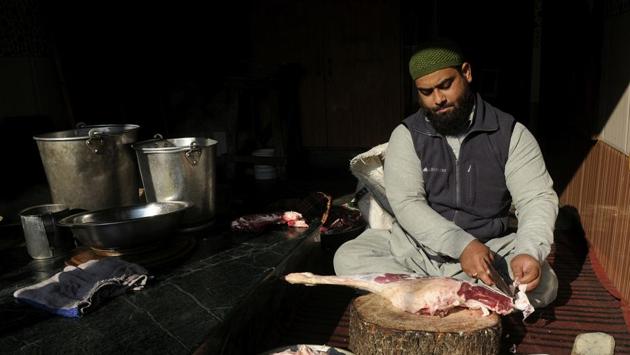
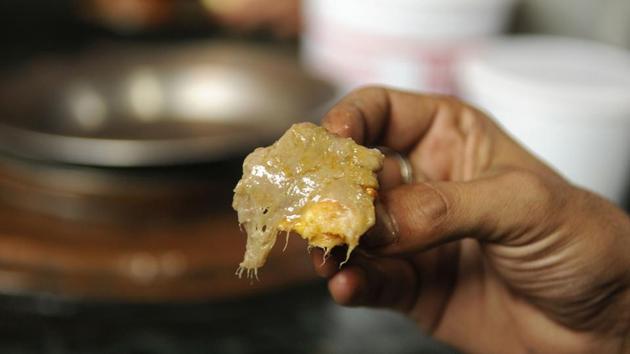
Umar Shafi Bhat, preps for a batch of Harissa at Sultani Harissa in Fateh Kadal. Cooked overnight, service is wrapped by 10am. By then, the master cooks are usually scraping off the crust at the bottom of the pot. The crust, called phuher, is a favourite with children. Once the pot is cleaned, preparations begin for the next morning. Harissa-making is a round-the-clock job. (Waseem Andrabi / HT Photo)
7/9
 View Photos in a new improved layout
Updated on Dec 18, 2018 9:59 PM
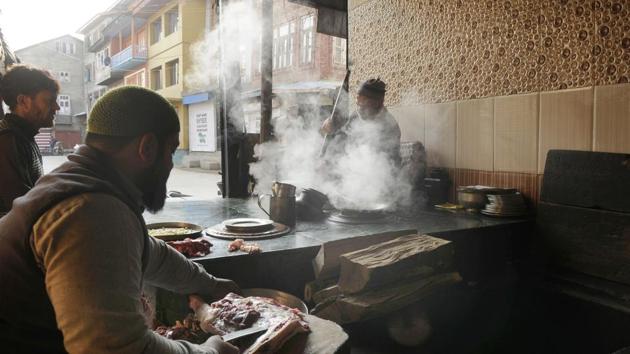
Aijaz Bhat, a popular Harissa maker, is not happy about Harissa’s growing publicity because more customers mean they can’t cater to the rush. “It doesn’t feel good that people wake up early to drive to our shop and return empty-handed,” he says. “We can’t increase production simply by hiring more assistants. Unless we do all of it ourselves, I don’t feel it’s the real thing,” Aijaz adds. (Waseem Andrabi / HT Photo)
8/9
 View Photos in a new improved layout
Updated on Dec 18, 2018 9:59 PM
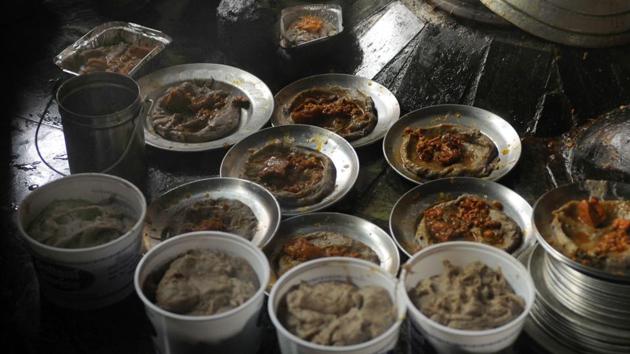
Poet Zarif A Zarif links the Harissa’s arrival in Kashmir to the region’s transition to Islam from Hinduism, when Central Asian, Arabic and Turkish influences transformed Kashmiri culture. Zarif says Kashmir’s tradition of slow cooking is tied to what works best to provide nutrition and warmth during Kashmir’s long winters. Many of these culinary traditions can be traced to Kashmir’s Hindu and Buddhist influences, Zarif adds. (Waseem Andrabi / HT Photo)
9/9
 View Photos in a new improved layout
Updated on Dec 18, 2018 9:59 PM


