
 E-Paper



Photos: Indian hair for the Gods ends up on heads abroad
Human hair grown over long periods by devotees in India for donations to Hindu temples for the fulfilment of oaths and divine repayments finds its way in the markets of Europe, Africa, the United States and Asia as high end wigs and hair extensions.
Updated on: Aug 01, 2017 9:20 AM IST

Share via


Copy link

1/9
 View Photos in a new improved layout
Updated on Aug 01, 2017 9:20 AM
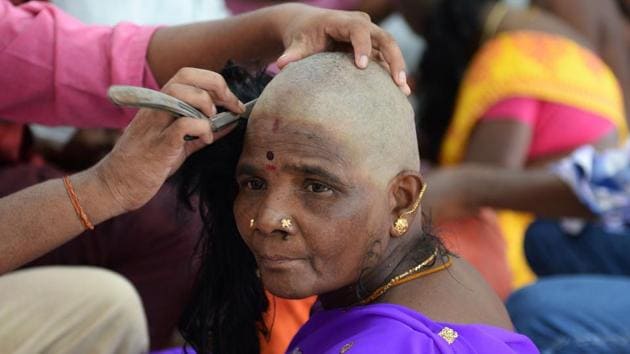
The donation of hair at Hindu temples across India is considered an act of devotion by millions, symbolising a ritualistic purification and a repayment of the debt to the gods. This sacrifice on the part of the devotee also translates into big bucks for the Indian and international fashion and wig making industries. (Arun Sankar / AFP)
2/9
 View Photos in a new improved layout
Updated on Aug 01, 2017 9:20 AM
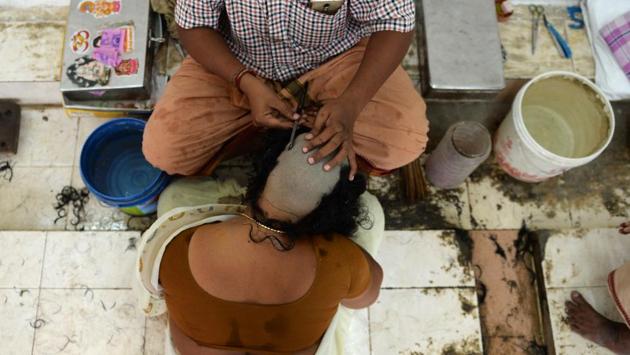
An Indian Hindu devotee gets her head shaved at the Thiruthani Murugan Temple in Thiruthani, Tamil Nadu. One legend has it that the Hindu preserver god Vishnu took out a loan for his wedding and found the sum so large that his devotees have been aiding the repayment of that debt with the only offering they have - -the hair from their heads. (Arun Sankar / AFP)
3/9
 View Photos in a new improved layout
Updated on Aug 01, 2017 9:20 AM
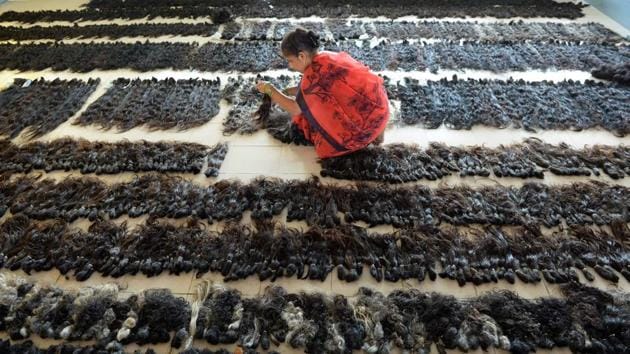
An Indian worker sorts and arranges human hair according to its length and texture at Raj Hair International's processing centre in Alinjivakkam, on the outskirts of Chennai. India has long been the world's biggest exporter of human hair -- in money terms -- and businesses say the country earns several hundred million dollars a year from its high quality locks. (Arun Sankar / AFP)
4/9
 View Photos in a new improved layout
Updated on Aug 01, 2017 9:20 AM
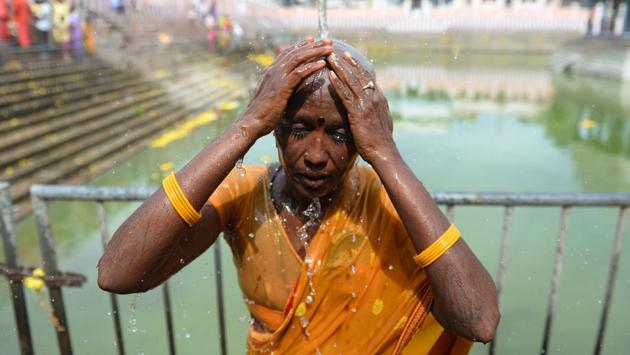
A devotee takes a shower after getting her head shaved at the Thiruthani Murugan Temple. The hair donated at such temples eventually finds its way into the markets of Europe, Asia, the United States as well as parts of Africa in the form of hair extension and replacement products. (Arun Sankar / AFP)
5/9
 View Photos in a new improved layout
Updated on Aug 01, 2017 9:20 AM
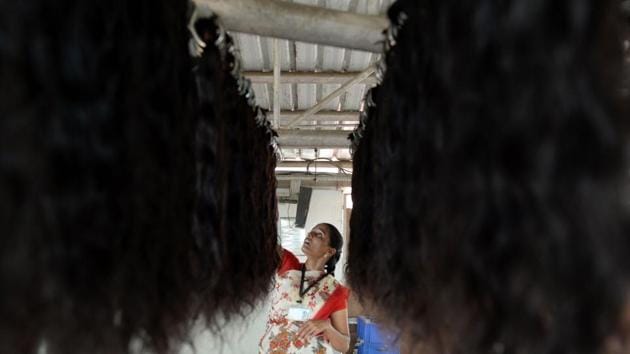
A worker hangs human hair to dry after being washed at a hair collection firm’s processing centre in Alinjivakkam, Chennai. Once collected by the temples, attendants sort the hair on the basis of length and quality, which is then auctioned off to various processing plants. (Arun Sankar / AFP)
6/9
 View Photos in a new improved layout
Updated on Aug 01, 2017 9:20 AM
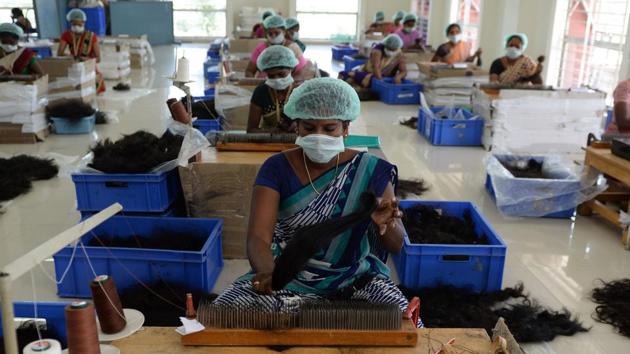
Workers at one of the hair processing plants sort and segregate hair on the basis of quality and cut. Indian hair is considered more valuable in foreign markets due to its higher quality and a lack of chemical dyes and processing done by the wearer. (Arun Sankar / AFP)
7/9
 View Photos in a new improved layout
Updated on Aug 01, 2017 9:20 AM
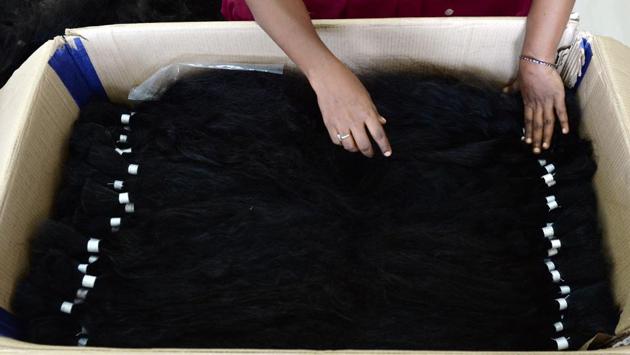
A worker packs sorted hair into a container for extort to its intended markers at a processing plant. Hair sheared straight from the scalp of a single donor fetches a higher sum for its source integrity and is often braided by temple attendants to make processing at later stages more efficient. Lower quality hair called comb waste is also collected from barbershops and donation drives in villages. (Arun Sankar / AFP)
8/9
 View Photos in a new improved layout
Updated on Aug 01, 2017 9:20 AM
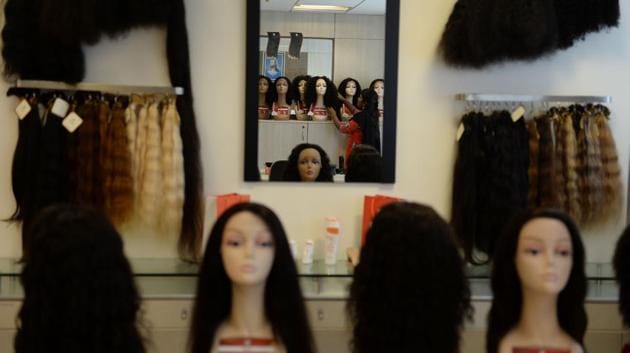
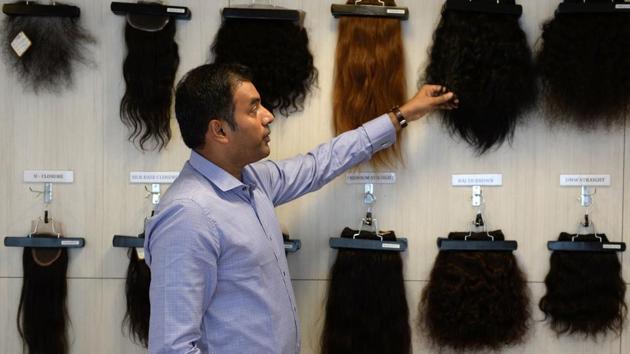
Human hair products seen at a display centre in Chennai. These personal donations, often involving oaths taken by the devotee and also the only form of vanity among the poorer rural women are woven and sold in international markets garnering prices in the hundreds of dollars per piece. Temple authorities have been reported as justifying this trade as a means of generating revenue from a product that would otherwise go to the trash heap and can instead help the upkeep of temples and social initiatives. (Arun Sankar / AFP)
9/9
 View Photos in a new improved layout
Updated on Aug 01, 2017 9:20 AM


