
 E-Paper



Photos: Keeping cool in Delhi, one ice block at a time
Even though the southwest monsoon has hit New Delhi, residents of the capital haven’t yet escaped the sweltering heat. To keep these souls cool and calm, fifty workers toil inside a dark and humid hangar in Noida in an ice factory to meet the city’s demand. The process is anything but state-of-the-art. From filing containers with filtered water to maintaining a temperature at minus 12 degree celcius, here’s what goes on inside these factories before they are sent out for delivery and scooped into the drinks of thirsty Delhiites.
Updated on: Jul 04, 2018 12:05 PM IST

Share via


Copy link

1/7
 View Photos in a new improved layout
Updated on Jul 04, 2018 12:05 PM
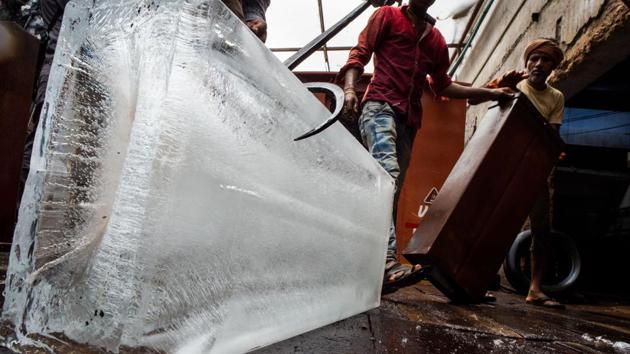
Labourers load ice blocks into a transportation van at an ice factory in Noida. For the fifty workers toiling inside a dark and humid hangar in Noida rushing to meet booming demand from the markets and small shops serving Delhi’s 20 million inhabitants, keeping people cool in the capital’s baking summer is hot work. (Chandan Khanna / AFP)
2/7
 View Photos in a new improved layout
Updated on Jul 04, 2018 12:05 PM
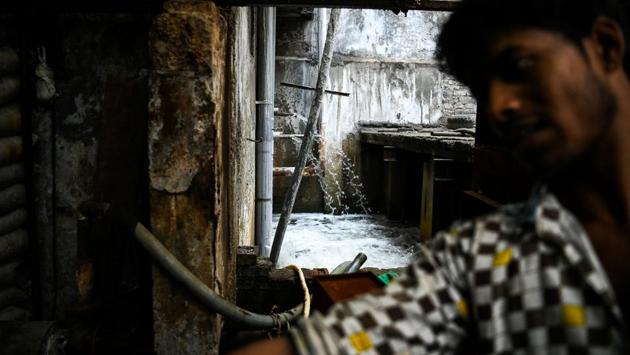
A water treatment area is pictured in an ice factory. The process of making these slabs is anything but state-of-the-art. The first step involves workers filling up large rectangular containers, a bit rusty on the outside, with filtered water. (Chandan Khanna / AFP)
3/7
 View Photos in a new improved layout
Updated on Jul 04, 2018 12:05 PM
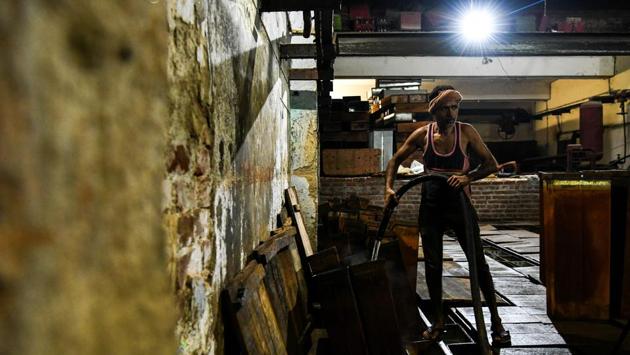
A labourer fills an ice block with water for freezing. Once sealed, the vessels are placed for 24 hours in large tanks filled with salt water, which has a lower freezing point than ordinary water and is chilled with ammonia.The containers are then taken out and workers extract the ice blocks, each weighing around 50 kilogrammes. (Chandan Khanna / AFP)
4/7
 View Photos in a new improved layout
Updated on Jul 04, 2018 12:05 PM
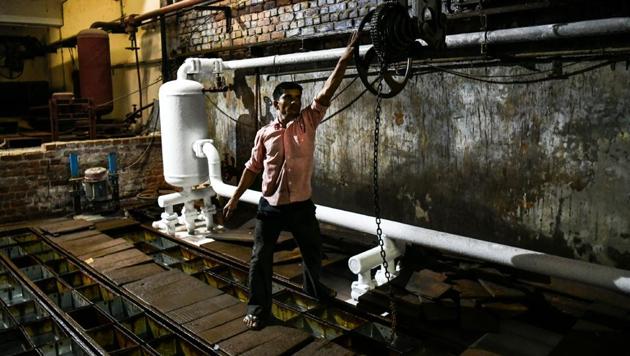
A worker fills cans with water to freeze into ice. According to the factory’s manager, the whole capacity of the tanks is 1,100 slabs of ice. It takes 55 litres of water to fill one tank and get one slab of ice. There are coils in the tanks, and the motor keeps rotating the salt water inside. (Chandan Khanna / AFP)
5/7
 View Photos in a new improved layout
Updated on Jul 04, 2018 12:05 PM
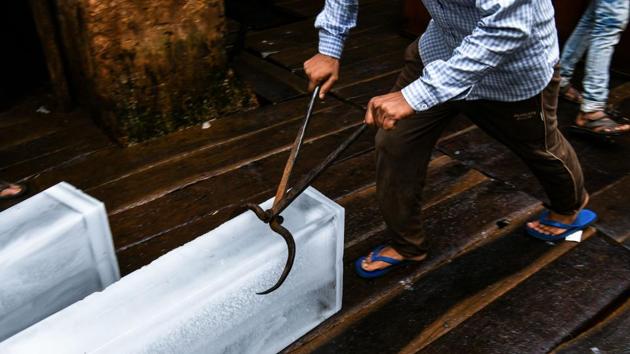
The temperature inside the tanks has to be minus 12 degrees Celsius to freeze the water. Once extracted the blocks are moved and slid about with large metal tongs along the floor into the back of clients’ waiting refrigerated lorries. Each chunk costs 130 rupees. (Chandan Khanna / AFP)
6/7
 View Photos in a new improved layout
Updated on Jul 04, 2018 12:05 PM
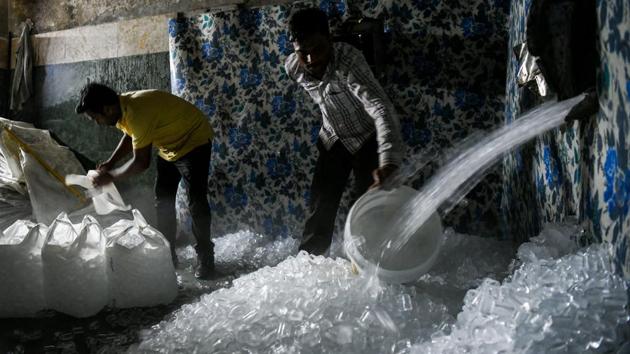
If not sold to clients, the blocks go into large machines that break them up and churn out thousands upon thousands of ice cubes that are gathered into bags, sent out for delivery and scooped into the drinks of thirsty Delhiites. (Chandan Khanna / AFP)
7/7
 View Photos in a new improved layout
Updated on Jul 04, 2018 12:05 PM


