
 E-Paper



Photos: The children hitching trains to fetch water in Aurangabad
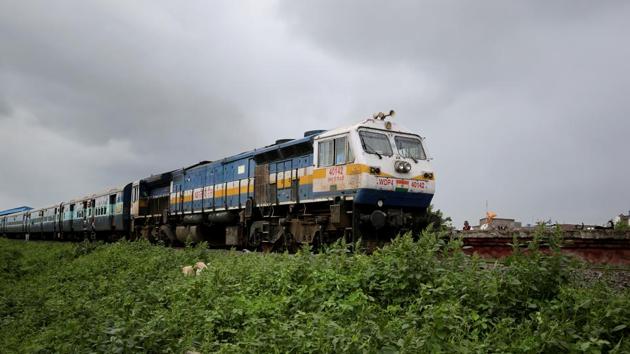
Millions of Indians do not have secure water supplies, according to WaterAid. It says about 163 million Indians do not have access to clean water near their homes - the biggest proportion of any country. Recognising the issue, Prime Minister Modi has promised to spend more than 3.5 trillion rupees to bring piped water to every Indian household by 2024. While that is in the distance; for a small group of children in Aurangabad, the reality of access is taking a 14 km return train journey from their village to fetch water or wash clothes rather than play after school.
Updated on: Sep 26, 2019 12:12 PM IST

Share via


Copy link

1/14
 View Photos in a new improved layout
Updated on Sep 26, 2019 12:12 PM
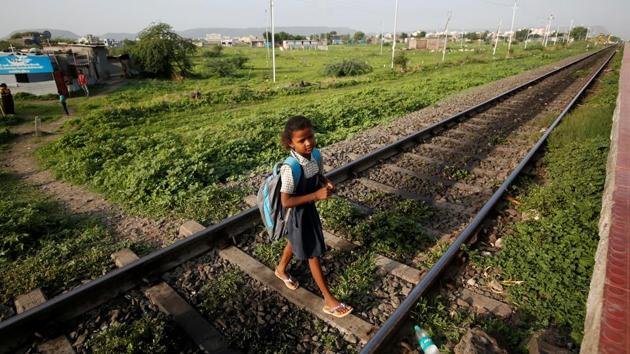
Sakshi Garud crosses the railway tracks at Mukundwadi railway station on her way to school, in Aurangabad. While their classmates set off to play after school each day, nine-year-old Sakshi Garud and her neighbour Siddharth Dhage, 10, are among a small group of children who take a 14-km return train journey from their village in Maharashtra to fetch water. (Francis Mascarenhas / REUTERS)
2/14
 View Photos in a new improved layout
Updated on Sep 26, 2019 12:12 PM
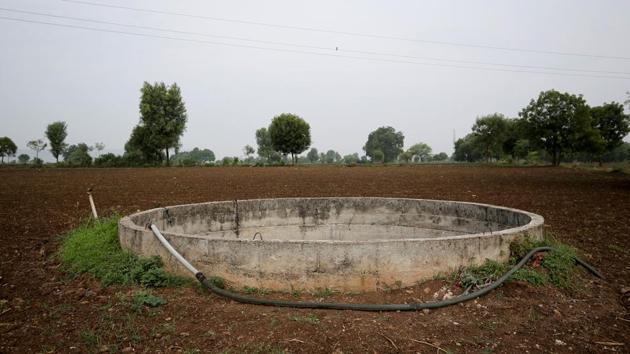
A well is seen in a field in Aurangabad. The monsoons have brought abundant rain and even floods in many parts of the country this time, but rainfall in the region around Mukundwadi has been 14% below average this year and aquifers and borewells are dry. (Francis Mascarenhas / REUTERS)
3/14
 View Photos in a new improved layout
Updated on Sep 26, 2019 12:12 PM
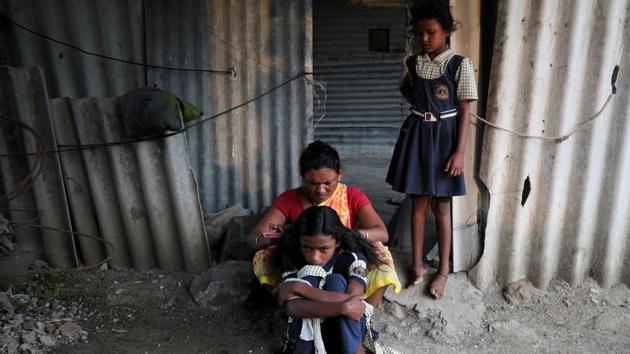
Sakshi Garud looks on as her mother Swati, ties her sister Aaysha's hair, as she gets ready to go to school. Garud and Dhage’s families are some of the poorest in the hamlet of Mukundwadi,, a village that has suffered back-to-back droughts. “This is my daily routine,” said Garud. “After coming from school, I don’t get time to play. I need to get water first.” (Francis Mascarenhas / REUTERS)
4/14
 View Photos in a new improved layout
Updated on Sep 26, 2019 12:12 PM
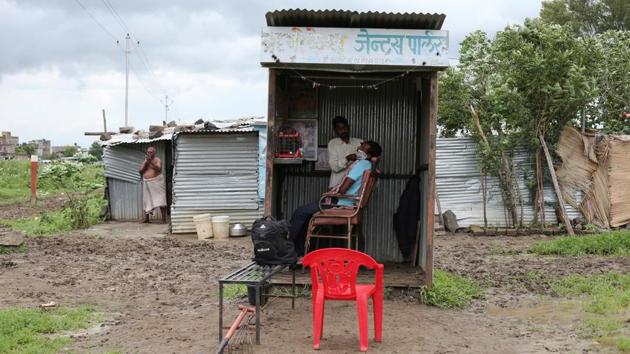
A man has a shave at a barber's shop right along the railway tracks in Aurangabad. The children’s cramped shanty homes are just 200 metres from the train station. (Francis Mascarenhas / REUTERS)
5/14
 View Photos in a new improved layout
Updated on Sep 26, 2019 12:12 PM
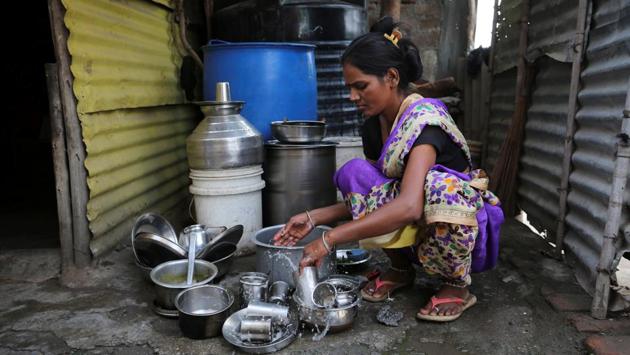
A woman washes utensils outside her house in Aurangabad. These families are not alone. Millions of Indians do not have secure water supplies, according to the UK-based charity, WaterAid. It says 12% of Indians, or about 163 million people, do not have access to clean water near their homes - the biggest proportion of any country. (Francis Mascarenhas / REUTERS)
6/14
 View Photos in a new improved layout
Updated on Sep 26, 2019 12:12 PM
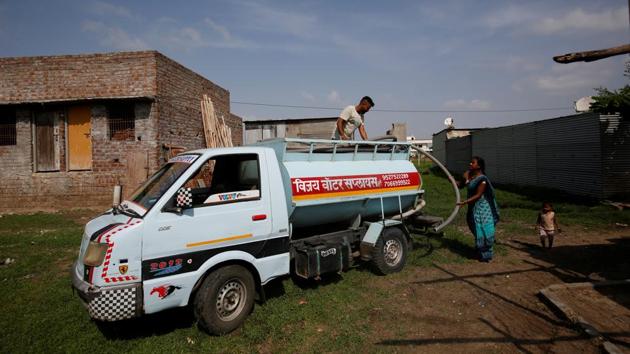
A woman takes hold of a pipe from a water tanker in Aurangabad. More than 100 families in Garud and Dhage’s neighbourhood do not have access to piped water and many depend on private water suppliers, who charge up to 3,000 rupees ($42) for a 5,000-litre tanker during summer months. (Francis Mascarenhas / REUTERS)
7/14
 View Photos in a new improved layout
Updated on Sep 26, 2019 12:12 PM
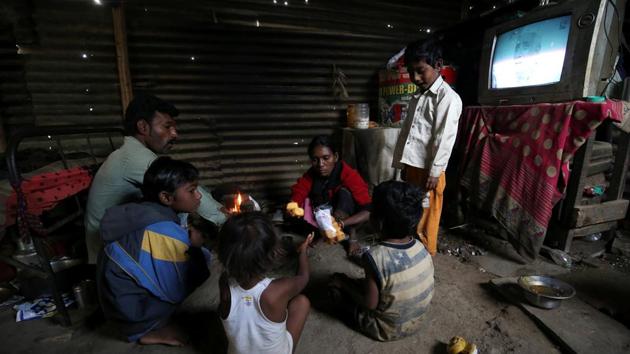
Siddharth Dhage, 10, and his family gather for breakfast at his home. Private water supply is something Garud and Dhage’s parents say they cannot afford. “Nowadays, I don’t get enough money to buy groceries. I can’t buy water from private suppliers,” said Dhage’s father, Rahul, a construction worker. “I am not getting work every day.” (Francis Mascarenhas / REUTERS)
8/14
 View Photos in a new improved layout
Updated on Sep 26, 2019 12:12 PM
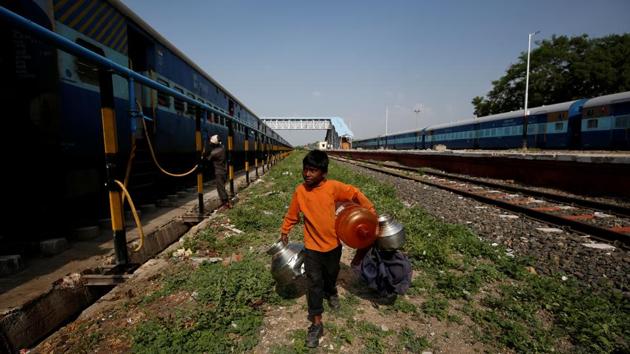
Siddharth Dhage carries empty water containers along railway tracks at Aurangabad railway station. The children take the train daily to fetch water from the nearby city of Aurangabad. The train is often overcrowded, so a group of small children jostling to get on board with pitchers to fill with water is not always welcome. (Francis Mascarenhas / REUTERS)
9/14
 View Photos in a new improved layout
Updated on Sep 26, 2019 12:12 PM
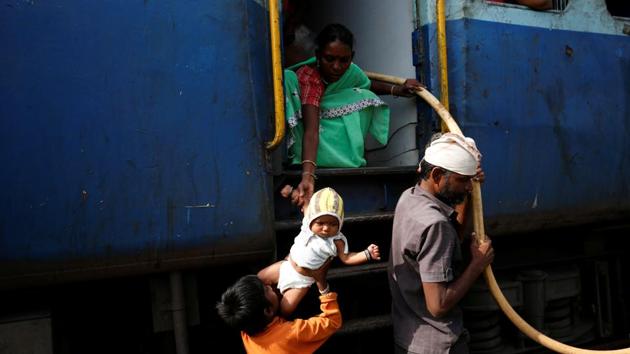
Jyoti Dhage passes her daughter Akansha to her son Siddharth at Aurangabad railway station. “Some people help me, sometimes they complain to railway officials for putting pitchers near the door. If we don’t put them near the door, we cannot take them out quickly when the train stops,” Siddharth said. (Francis Mascarenhas / REUTERS)
10/14
 View Photos in a new improved layout
Updated on Sep 26, 2019 12:12 PM
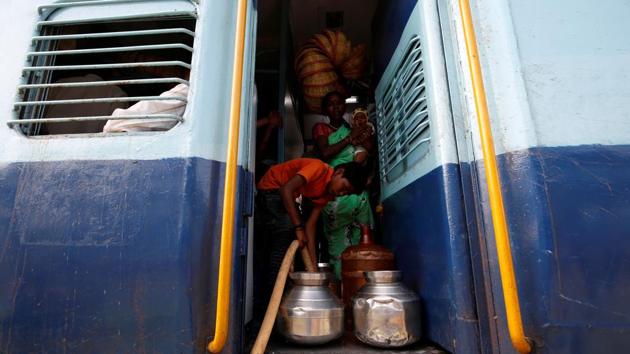
Siddharth’s mother Jyoti watches her neighbour Gaurav Ganesh, 13, as he helps fill the containers with water. When the train pulls into Aurangabad thirty minutes later, they scramble to fill the pitchers at nearby water pipes. Garud can’t reach the tap, so she relies on her taller sister, Aaysha, 14, and grandmother. (Francis Mascarenhas / REUTERS)
11/14
 View Photos in a new improved layout
Updated on Sep 26, 2019 12:12 PM
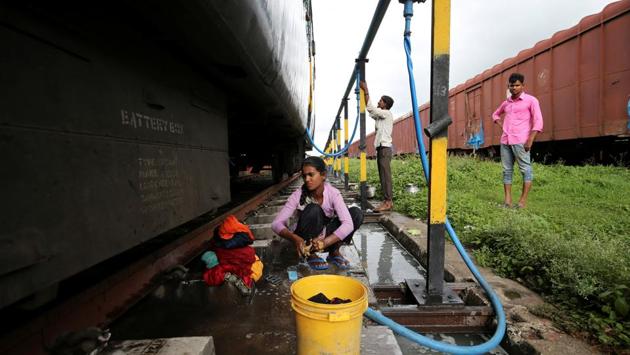
Anjali Gaikwad, 14, washes clothes at Aurangabad railway station. Gaikwad and her sisters, also board the train every few days to collect water and wash clothes. Their neighbour Prakash Nagre often tags along with soap and shampoo. “There’s no water to bathe at home,” he said. (Francis Mascarenhas / REUTERS)
12/14
 View Photos in a new improved layout
Updated on Sep 26, 2019 12:12 PM
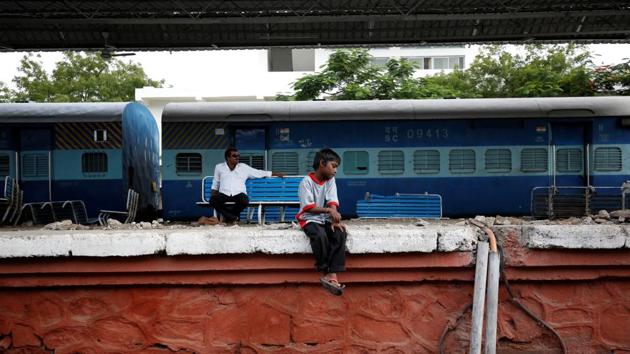
Siddharth Dhage waits for the train to arrive after filling his containers with water at Aurangabad railway station during one of his runs. “I don’t like to spend time bringing water, but I don’t have a choice,” Dhage said of his compulsion. (Francis Mascarenhas / REUTERS)
13/14
 View Photos in a new improved layout
Updated on Sep 26, 2019 12:12 PM
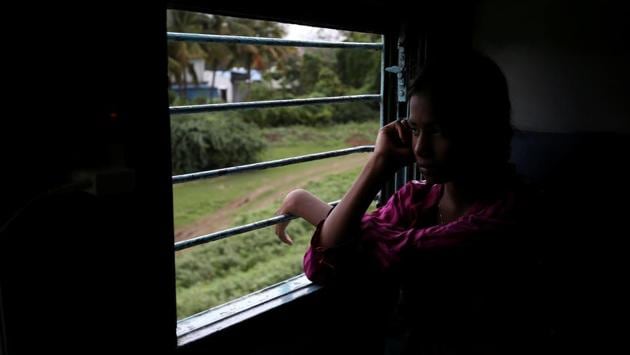
Manju Gaikwad, 11, looks out of the window of a train on her way back home to Mukundwadi railway station. When the train returns them to Mukundwadi, they have just under a minute to disembark. At times, Dhage’s mother, Jyoti, is waiting at the station to help. (Francis Mascarenhas / REUTERS)
14/14
 View Photos in a new improved layout
Updated on Sep 26, 2019 12:12 PM


