
 E-Paper



Photos| World Heritage Day: Gurugram’s history in monuments
The International Day for Monuments and Sites also known as World Heritage Day is an international observance held on 18 April each year around the world. On the occasion of World its 2019 iteration, HT delves into the Millennium City’s best-kept secrets — from the havelis across the city to 14th century constructions in Farrukhnagar and Nuh
Updated on: Apr 18, 2019 3:04 PM IST

Share via


Copy link

1/9

 View Photos in a new improved layout
Updated on Apr 18, 2019 3:04 PM
The 17-th century Sarai Lashkarabad dating to Aurangzeb’s era in Tauro proclaims its antiquity through the late 17th century through an inscription on the gateway. The inscription — penned in classical Persian on a marble slate — mentions its year of construction as 1696 CE. Visitors here can find remains of Mughal era construction. (Parveen Kumar / HT Photo)
2/9
 View Photos in a new improved layout
Updated on Apr 18, 2019 3:04 PM
Located in the busy Sadar Bazaar area, Cawn Sarai or Kaman Sarai, according to locals, is a souvenir of the city’s largely forgotten past. The sarai served as a resting place for travellers crossing the area and later, for British troops. As per records of the state department of archaeology and museums, the monument dates to 1825 AD. (Parveen Kumar / HT Photo)
3/9
 View Photos in a new improved layout
Updated on Apr 18, 2019 3:04 PM
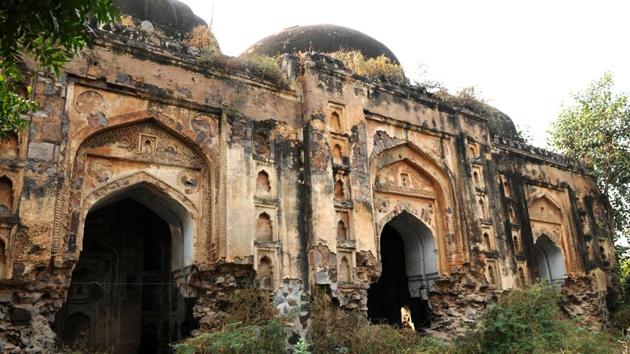
Next to Laburnum Public School, Bhondsi is this imposing centuries old mosque. It can be traced to the Sultanate period of the 14th-15th century. The Bhondsi Mosque also finds a mention in Alexander Cunningham’s travelogue of eastern Rajputana in 1882-83. (Parveen Kumar / HT Photo)
4/9
 View Photos in a new improved layout
Updated on Apr 18, 2019 3:04 PM
In a quiet corner of Civil Lines, the Church of Epiphany stands as an embodiment of Victorian architecture. Built in 1862, it is the oldest in Gurugram and was consecrated in 1866 by the Bishop of Calcutta for British officers. The church, earlier under the Diocese of Lahore, was transferred to the Diocese of Delhi in 1944. A fresh departure from the chaotic nature of the city, the quaint little church is among the city’s most popular. (Parveen Kumar / HT Photo)
5/9
 View Photos in a new improved layout
Updated on Apr 18, 2019 3:04 PM
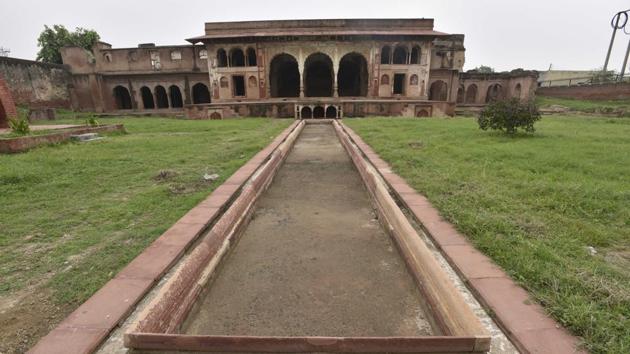
Shish Mahal, the palace of mirrors, in Farrukhnagar was once as impressive as the Red Fort in Delhi but the site today seems to be a pale shadow of its former self, say heritage enthusiasts. The palace’s edifice used to be embedded with intricate mirror work. Now largely in ruins, one can spot the various chambers and the courtyard where the king’s court was held. (Sanjeev Verma / HT Photo)
6/9
 View Photos in a new improved layout
Updated on Apr 18, 2019 3:04 PM
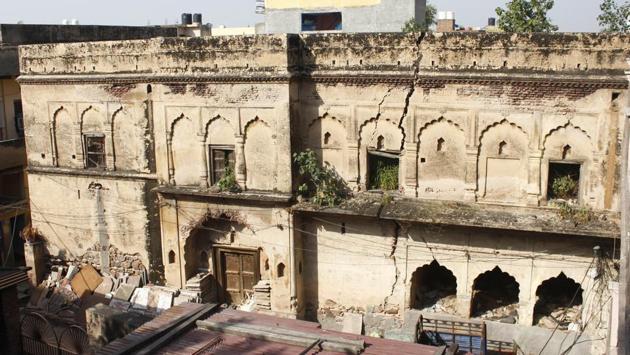
A 200-year-old haveli, this building is located in the 8 Biswa area of Gurgaon village. Popularly known as Mahalwala, this haveli is the largest haveli in Gurgaon gaon. The two-storey picturesque haveli is adorned with alcoves and arches. The architecture is an assimilation of Mughal and Rajput styles. This particular haveli stands out among other historical structures since it continues to host occupants. (Yogendra Kumar / HT Photo)
7/9
 View Photos in a new improved layout
Updated on Apr 18, 2019 3:04 PM
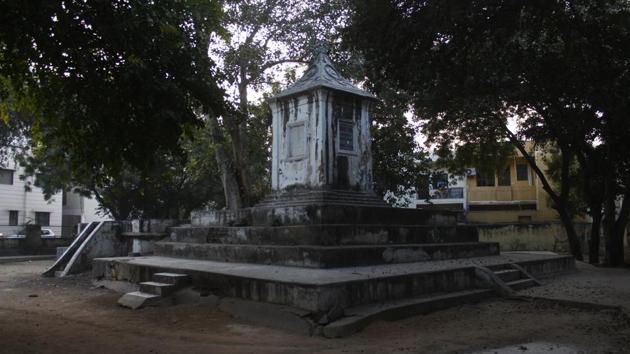
An almost 200-hundred-year-old memorial dedicated to a French soldier, this monument is tangible remains of Begum Samru alias Sombre’s, connection to the city, Samru presided over the Jharsa-badshahpur area until her death in 1836. One end of the pillar has a poignant epitaph, in honour of Jean Etienne, a French soldier who served in Samru’s army for 35 years, until his death. (Yogendra Kumar / HT Photo)
8/9
 View Photos in a new improved layout
Updated on Apr 18, 2019 3:04 PM
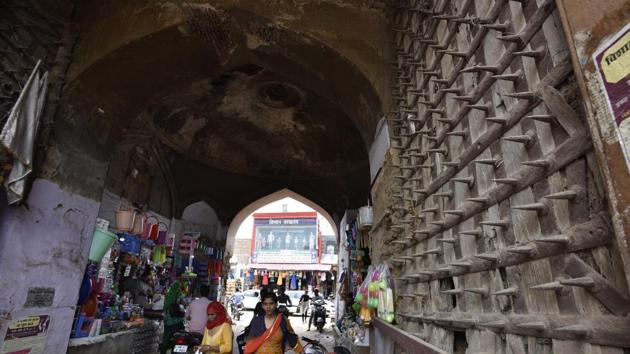
In the Main Market of the 18th century octagonal walled town Farrukhnagar is this towering structure. At a walking distance from the Shish Mahal, it is the sole survivor of five gates that were once erected in Farrukhnagar, according to a local heritage enthusiast. The gate is called the Dilli Gate since it points in the direction of Delhi and was renovated several years ago but has fallen into disrepair. (Sanjeev Verma / HT Photo)
9/9
 View Photos in a new improved layout
Updated on Apr 18, 2019 3:04 PM


